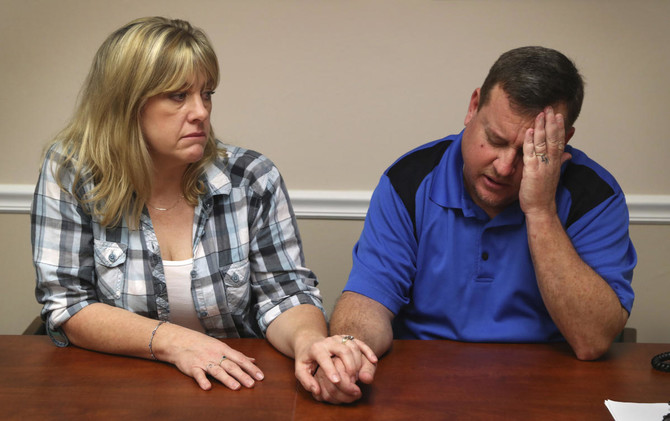
WASHINGTON: The couple who took in Florida school shooter Nikolas Cruz after his mother's death have described him as quirky but pleasant and seemingly on the right track, saying they had no idea they had a "monster living under our roof."
Cruz, 19, moved in with James and Kimberly Snead of Parkland, Florida in late November after his adoptive mother died earlier that month from complications of pneumonia, they told the South Florida Sun Sentinel in an interview published Sunday.
He was a friend of their son.
Prone to odd eating and sleeping habits and unused to any form of housework, he was nevertheless making progress in dealing with his grief and kept himself busy with adult education classes along with his job at a discount store, the couple said.
"I told him there'd be rules and he followed every rule to the T," James Snead, 48, an army veteran and military intelligence analyst, told the paper.
"We had this monster living under our roof and we didn't know," added Kimberly Snead, 49, a neonatal nurse. "We didn't see this side of him."
Cruz killed 17 people at his former high school last Wednesday using an AR-15 rifle that he had legally purchased. It was the country's worst school massacre since the horror at Sandy Hook six years ago that left 26 dead.
He also owned several other guns including two other assault rifles as well as knives, according to the Sneads who own firearms themselves and did not find this unusual.
And his ultimate aim was to join the army and become an infantryman, something he had become excited about after a recent meeting with a military recruiter.
A profile has emerged of a troubled young man who was expelled from school last year for "disciplinary reasons."
The FBI admitted receiving a detailed warning last month about Cruz's gun ownership, erratic behavior, and disturbing social media posts, as well as the potential for him carrying out a school shooting.
The agency took no action, despite the tip-off.
Cruz was also known to police after his mother repeatedly reported him for violent outbursts, while records obtained by the same newspaper showed authorities investigated Cruz in 2016 after he cut his arms on messaging app Snapchat and threatened to buy a gun.
But he was eventually deemed a low risk and later passed a background check, allowing him in February 2017 to buy the AR-15 rifle used in the massacre.
The Sneads said it appeared he had grown up without ever having to do common chores -- he couldn't cook, do laundry, pick up after himself or even use a microwave.
"He was very naive. He wasn't dumb, just naive," James Snead told the Sun Sentinel.
Cruz had quirky habits, like putting a chocolate chip cookie on a steak and cheese sandwich, and going to bed at 8:00 pm.
He seemed lonely and badly wanted a girlfriend, and was also depressed about the death of his mother, the couple said.
Kimberly Snead had taken Cruz to the office of a therapist just five days before the shooting, and he had said he was open to therapy if his medical insurance would cover it.
Cruz told the Sneads he would inherit at least $800,000 from his parents, with most of the funds becoming available when he turned 22 -- and the claim appeared to be borne out by paperwork the couple have subsequently seen, they said.
On the day of the attack, Cruz sent several text messages to the Sneads' son, who was still studying at the Marjory Stoneman Douglas High School.
In one, he asked what classroom the boy was in, adding in another that he had "something important" to tell him. But he then wrote: "Nothing man."
The couple last saw Cruz at the Broward County Sheriff's office. Dressed in a hospital gown, he was handcuffed and surrounded by deputies.
"He said he was sorry. He apologized. He looked lost, absolutely lost," said James Snead. "And that was the last time we saw him."

‘No idea we had a monster under our roof’ say couple who took in Florida gunman
US allows oil majors to broadly operate in Venezuela, new energy investments
- Treasury Department issues general license allowing Chevron, BP, Eni, Shell and Repsol to operate oil and gas operations in Venezuela
- Move is the most significant relaxation of sanctions on Venezuela since US forces captured and removed President Nicolas Maduro
WASHINGTON: The US eased sanctions on Venezuela’s energy sector on Friday, issuing two general licenses that allow global energy companies to operate oil and gas projects in the OPEC member and for other companies to negotiate contracts to bring in fresh investments. The move was the most significant relaxation of sanctions on Venezuela since US forces captured and removed President Nicolas Maduro last month.
The Treasury Department’s Office of Foreign Assets Control issued a general license allowing Chevron, BP, Eni, Shell and Repsol to operate oil and gas operations in Venezuela. Those companies still have offices in the country and stakes in projects, and are among the main partners of state-run company PDVSA.
The authorization for the oil majors’ operations requires payments for royalties and Venezuelan taxes to go through the US-controlled Foreign Government Deposit Fund.
The other license allows companies around the world to enter contracts with PDVSA for new investments in Venezuelan oil and gas. The contracts are contingent on separate permits from OFAC.
The authorization does not allow transactions with companies in Russia, Iran, or China or entities owned or controlled by joint ventures with people in those countries.
The licenses “invite American and other aligned companies to play a constructive role in supporting economic recovery and responsible investment, ” the US State Department said in a release. Additional authorizations may be issued “as necessary,” it said.
A spokesperson for Chevron, the only US oil firm currently operating in Venezuela, said the company welcomed the new licenses.
“The new General Licenses, coupled with recent changes in Venezuela’s Hydrocarbons Law, are important steps toward enabling the further development of Venezuela’s resources for its people and for advancing regional energy security,” the spokesperson said in a statement.
Eni said it is assessing the opportunities in Venezuela that the authorization opens up.
Oil law reform
The US licenses follow a sweeping reform of Venezuela’s main oil law approved last month, which grants autonomy for foreign oil and gas producers to operate, export and cash sale proceeds under existing joint ventures with PDVSA or through a new production-sharing contract model.
The US has had sanctions on Venezuela since 2019 when President Donald Trump imposed them during his first administration. Trump is now seeking $100 billion in investments by energy companies in Venezuela’s oil and gas sector. US Energy Secretary Chris Wright said on Thursday, during his second day of a trip to Venezuela, that oil sales from the country since Maduro’s capture have hit $1 billion and would hit another $5 billion in months.
Wright said the US will control the proceeds from the sales until Venezuela stands up a “representative government.” Since last month, the Treasury issued several other general licenses to facilitate oil exports, storage, imports and sales from Venezuela. It also authorized the provision of US goods, technology, software or services for the exploration, development or production of oil and gas in Venezuela.
The Venezuelan government expropriated assets of Exxon Mobil and ConocoPhillips in 2007 under then-President Hugo Chavez. The Trump administration is trying to get those companies to invest in Venezuela as well. At a meeting at the White House with Trump last month, Exxon Mobil CEO Darren Woods said Venezuela was “uninvestable” at the moment.
Wright said on Thursday that Exxon, which no longer has an office in Venezuela, is in talks with the government there and gathering data about the oil sector. Exxon did not immediately comment.
The Treasury Department’s Office of Foreign Assets Control issued a general license allowing Chevron, BP, Eni, Shell and Repsol to operate oil and gas operations in Venezuela. Those companies still have offices in the country and stakes in projects, and are among the main partners of state-run company PDVSA.
The authorization for the oil majors’ operations requires payments for royalties and Venezuelan taxes to go through the US-controlled Foreign Government Deposit Fund.
The other license allows companies around the world to enter contracts with PDVSA for new investments in Venezuelan oil and gas. The contracts are contingent on separate permits from OFAC.
The authorization does not allow transactions with companies in Russia, Iran, or China or entities owned or controlled by joint ventures with people in those countries.
The licenses “invite American and other aligned companies to play a constructive role in supporting economic recovery and responsible investment, ” the US State Department said in a release. Additional authorizations may be issued “as necessary,” it said.
A spokesperson for Chevron, the only US oil firm currently operating in Venezuela, said the company welcomed the new licenses.
“The new General Licenses, coupled with recent changes in Venezuela’s Hydrocarbons Law, are important steps toward enabling the further development of Venezuela’s resources for its people and for advancing regional energy security,” the spokesperson said in a statement.
Eni said it is assessing the opportunities in Venezuela that the authorization opens up.
Oil law reform
The US licenses follow a sweeping reform of Venezuela’s main oil law approved last month, which grants autonomy for foreign oil and gas producers to operate, export and cash sale proceeds under existing joint ventures with PDVSA or through a new production-sharing contract model.
The US has had sanctions on Venezuela since 2019 when President Donald Trump imposed them during his first administration. Trump is now seeking $100 billion in investments by energy companies in Venezuela’s oil and gas sector. US Energy Secretary Chris Wright said on Thursday, during his second day of a trip to Venezuela, that oil sales from the country since Maduro’s capture have hit $1 billion and would hit another $5 billion in months.
Wright said the US will control the proceeds from the sales until Venezuela stands up a “representative government.” Since last month, the Treasury issued several other general licenses to facilitate oil exports, storage, imports and sales from Venezuela. It also authorized the provision of US goods, technology, software or services for the exploration, development or production of oil and gas in Venezuela.
The Venezuelan government expropriated assets of Exxon Mobil and ConocoPhillips in 2007 under then-President Hugo Chavez. The Trump administration is trying to get those companies to invest in Venezuela as well. At a meeting at the White House with Trump last month, Exxon Mobil CEO Darren Woods said Venezuela was “uninvestable” at the moment.
Wright said on Thursday that Exxon, which no longer has an office in Venezuela, is in talks with the government there and gathering data about the oil sector. Exxon did not immediately comment.
© 2026 SAUDI RESEARCH & PUBLISHING COMPANY, All Rights Reserved And subject to Terms of Use Agreement.