KARACHI: The foundation set up by the Pakistani philanthropist Abdul Sattar Edhi is in urgent need of funds.
After the death of Abdul Sattar Edhi at the age of 88 in 2016, commentators expressed a fear that the Edhi Foundation’s humanitarian service would suffer, and subsequently it did experience a significant drop in contributions.
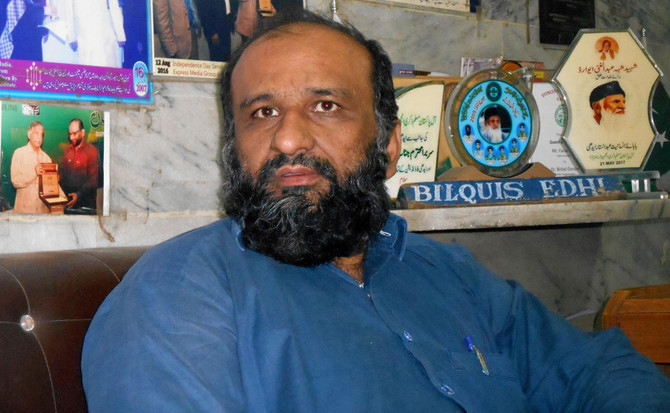
“After the death of Edhi sahib, the foundation suffered a setback as its donations dropped by almost 30 percent,” said Faisal Edhi, the son of Abdul Sattar Edhi. “But things are turning again as during last Ramadan we saw a substantial (rise) in donations, but still we are in crisis,” he said.
The Edhi Foundation needs about 1.5 billion Pakistani rupees ($13 million) annually to run its operations, which includes a fleet of 1,800 ambulances.
“Our major fund-consuming department is transport, 40 percent of total funds go into that to run (ambulances), followed by salaries and the allowances of staff,” Edhi told Arab News.
He added that because of a drop in contributions many departments were suffering. One of the reasons for the decline in donations to the Edhi Foundation was the emergence of new charity organizations that took a share of the available funding.
Edhi said the foundation was still much needed to provide social services. “Just in Karachi, we need 2,000 ambulances to cater for the needs of a growing population,” he said.
Akhtar Baloch, an analyst and historian, told Arab News: “Edhi sahib was a great personality but he also left behind a strong organization that has roots not only in Pakistan but also abroad.”
Ahsan Abdullah, 40, a resident of Saddar, Karachi, told Arab News that his father used to give money to the organization and “I too donate to this foundation.”
“Edhi had a cause to serve humanity without any prejudice and left a huge network that needs our support,” he said.
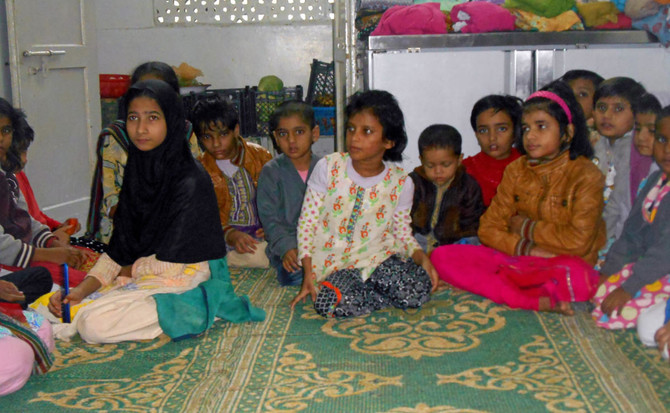
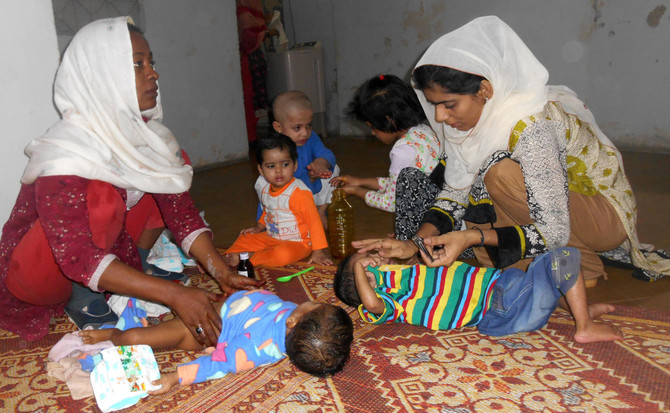
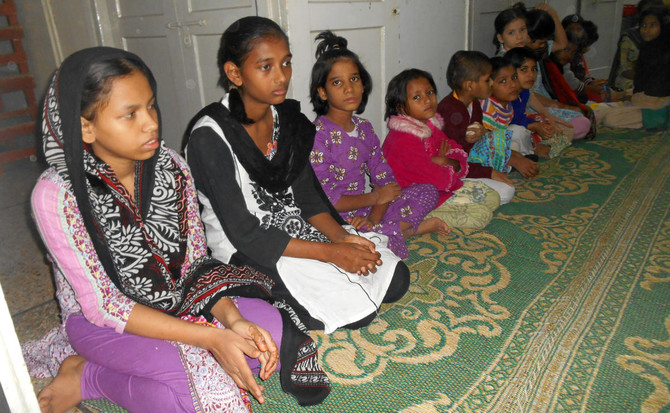
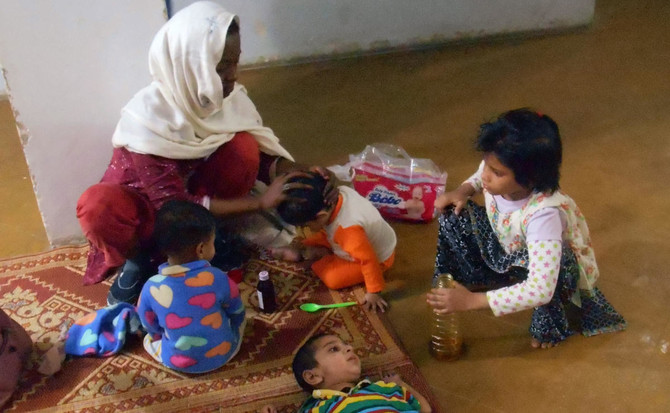
The foundation also runs a shelter for children.
Humaira Faiz, a worker at a children’s home in the Kharadar area in Karachi, said: “Some of them were admitted by their relatives and parents who (had) a second marriage and could not bear their burden.” She pointed to a 12-year-old girl who was admitted by her aunt after the death of her parents.
The Edhi Foundation also began an air-ambulance service, which was grounded 23 years ago after the death of the pilot who ran the service.
Faisal has plans to revive it. “We have started test flights and soon it will be available,” he said. “It is a costly affair as it is around half a million rupees per month, even if it is grounded. Its flying cost per hour stands around Rs 100,000.”
Sindh’s provincial government has said that it might be able to share some of the funding burden.
“The air ambulance service (of the) Edhi Foundation has not approached the chief minister, but if they come up with a proposal the Sindh government will definitely provide assistance as it has previously supported the foundation,” Rasheed Channa, the spokesman for the Chief Minister of Sindh, Syed Murad Ali Shah, said.
“The chief minister has taken notice; he has offered not only support but has offered to allot land for offices. In the case of Hyderabad, the government has offered a place in civil hospital premises for the offices,” Channa said.
From his base in Karachi’s inner city, Abdul Sattar Edhi started a social services network in 1951 that later expanded nationwide.
The Edhi Foundation provides a broad range of free social services, including ambulances, orphanages and support for the elderly and disabled as well as blood banks and homes for abandoned infants.


![]()
![]()
![]()
![]()
![]()
![]()

Edhi Foundation faces financial crisis
Edhi Foundation faces financial crisis
Latest updates





© 2026 SAUDI RESEARCH & PUBLISHING COMPANY, All Rights Reserved And subject to Terms of Use Agreement.