ISLAMABAD: Pakistan’s major opposition parties have asked the government to make the multibillion-dollar Liquefied Natural Gas (LNG) contract that it signed with Qatar in February 2016 public.
“We want the government to make the document public for the sake of transparency,” Fawad Chaudhry, information secretary of Pakistan Tehreek-e-Insaf (PTI), told Arab News.
“If the government has done nothing wrong, why is it hiding the contract?” he asked. “The government has not even presented the document in parliament, despite our repeated demands.”
Chaudhry said his party was discussing the issue with legal experts and was likely to file a reference against Prime Minister Shahid Khaqan Abbasi with the country’s anti-graft body, the National Accountability Bureau (NAB).
The Pakistan People’s Party (PPP), the largest opposition faction, seconds PTI’s contention.
“This government does not believe in transparency and has failed to unveil the full LNG contract in parliament despite our repeated demands,” PPP Sen. Taj Haider told Arab News.
“We smell a rat in the LNG deal and this must be investigated by anti-graft bodies,” he said, complaining that the government was spending billions of dollars on importing gas instead of developing domestic resources.
“We know that the ruling family of Sharif brothers has personal relations with Qatar’s royal family, and this LNG contract seems to benefit the Qataris more than our own nation,” he added.
Pakistan’s Prime Minister Shahid Khaqan Abbasi signed off on the $16 billion LNG agreement for 15 years with Qatar in 2016 — when he was minister for petroleum and natural resources — to meet domestic energy requirements.
Briefing senators in October last year, Abbasi defended the agreement, calling it a “big achievement” for Pakistan. However, he claimed the full agreement could not be revealed due to a “commercial confidentiality clause.”
Talking to Arab News, Shahzadi Umerzadi, parliamentary secretary for petroleum and natural resources, also defended the agreement, saying that Pakistan was buying LNG from Qatar at the cheapest possible price and dismissing concerns there is anything unethical or illegal in the contract.
“We negotiated with Qatar for over a year and got the cheapest possible rate with respect to the international market,” she said.
Umerzadi claimed the opposition parties had not provided any evidence of corruption or mismanagement in the LNG contract.
“I challenge them to prove even a penny of corruption or undue influence used in the LNG contract,” she said, adding that the government was willing to present the facts at all available forums.
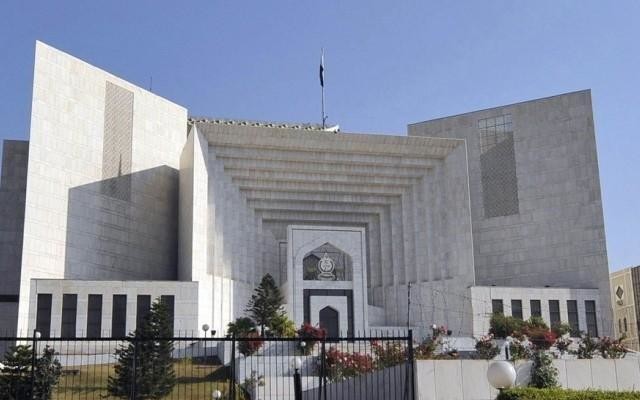
Sheikh Rasheed Ahmed, head of the Awami Muslim League (AML), petitioned the Supreme Court against Prime Minister Abbasi for alleged corruption in the LNG contract. But the court dismissed that petition on Monday, saying the matter should be taken to NAB for investigation.
Senior Advocate Sharafat Ali told Arab News that the Supreme Court had dismissed the petition because the issue did not fall under Article 184(3) of the Constitution, which is related to the protection of fundamental rights.
“The issue of the LNG contract requires detailed investigation to (discover any) corruption or any other element of fraud. Therefore, it must be taken to anti-graft bodies first,” he said.
“Our institutions, unfortunately, lack the expertise to investigate white-collar crime and it is not always easy to trace corruption in government-sponsored contracts such as this one,” he added.


![]()
Government hiding truth behind LNG deal with Qatar, say Pakistan opposition parties
Government hiding truth behind LNG deal with Qatar, say Pakistan opposition parties
Latest updates


© 2026 SAUDI RESEARCH & PUBLISHING COMPANY, All Rights Reserved And subject to Terms of Use Agreement.