ZAGREB: The presidents of Croatia and Serbia on Monday admitted that ties between the former foes were still frosty due to past events and pledged to improve them.
"Unfortunately, relations between Serbia and Croatia are still burdened with history ... still preventing us from describing the ties between the states as friendly," Croatian President Kolinda Grabar-Kitarovic told reporters.
Her Serbian counterpart Alexandar Vucic echoed her view, saying that "Serbia and Croatia will ... need to have much better relations in future."
"We want to build the best possible relations" with Croatia, he said, stressing the importance of good ties between them for the whole Balkan region.
Vucic arrived in Croatia on Monday for a two-day visit, the first by a Serbian head of state since 2010.
The relationship between the two former Yugoslav republics has gradually improved since Croatia's 1990s independence war, in which Belgrade backed rebel Serbs.
But ties remain fragile, with the two sides continuing to trade accusations over war crimes committed during the 1991-1995 conflict as well as World War II.
The two presidents said they discussed a border dispute, minority rights and the fate of more than 1,900 people still missing from the 1990s war.
"We did not agree on many issues. On some we got closer, on some we will get closer in the coming months," Grabar-Kitarovic said.
The presidents also said the border issue on the Danube river should be solved within the next two years -- and if it is not, it should be put before international arbitration.
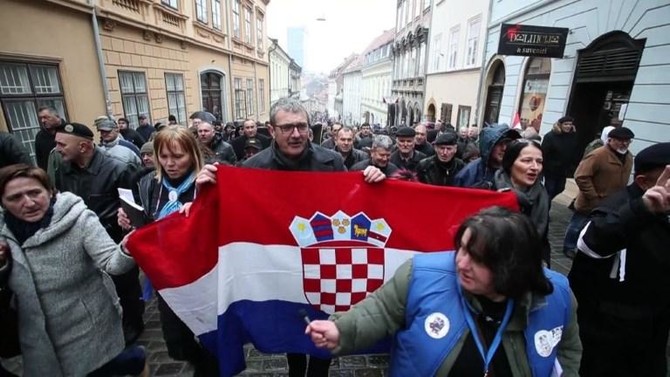
Two small protests were held in Zagreb against Vucic's visit, organised by war veterans and a small far-right party.
Some 400 people gathered at Zagreb's main square, calling Vucic a "Chetnik criminal", a reference to a notorious World War II Serbian nationalist movement and the president's ultranationalist politics in the 1990s.
"I'm not a Chetnik, no one in my family was a Chetnik," Vucic told reporters.
Media reports in both countries also reflected tensions ahead of the visit.
"The Ustasha are hysterical over Vucic's visit," read the front-page headline of Serbia's pro-Vucic tabloid Informer, referring to Croatia's WWII Nazi-allied regime.
"All the media in Zagreb are calling for violent protests and a new war," the newspaper claimed.


![]()
Croatia and Serbia leaders admit frosty ties
Croatia and Serbia leaders admit frosty ties

Latest updates


© 2026 SAUDI RESEARCH & PUBLISHING COMPANY, All Rights Reserved And subject to Terms of Use Agreement.