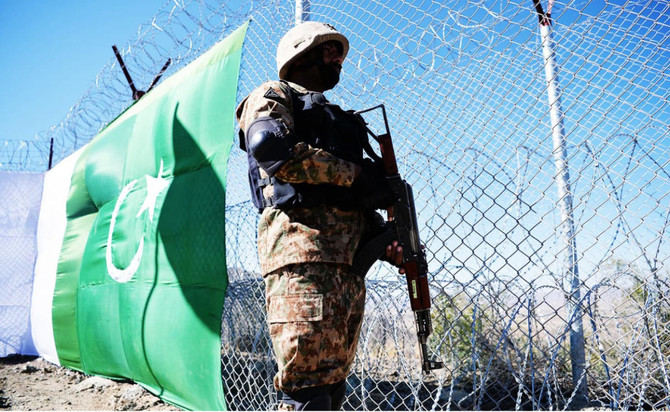
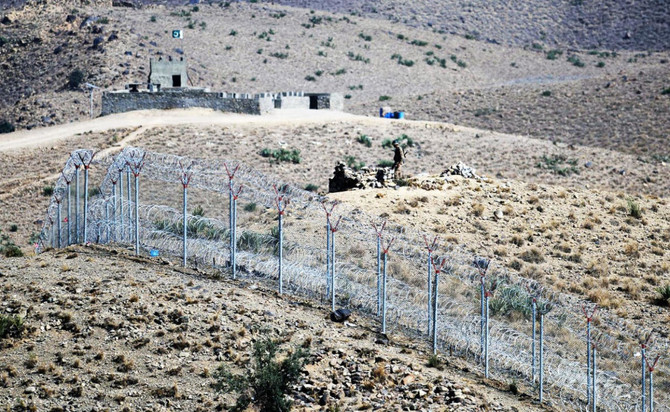
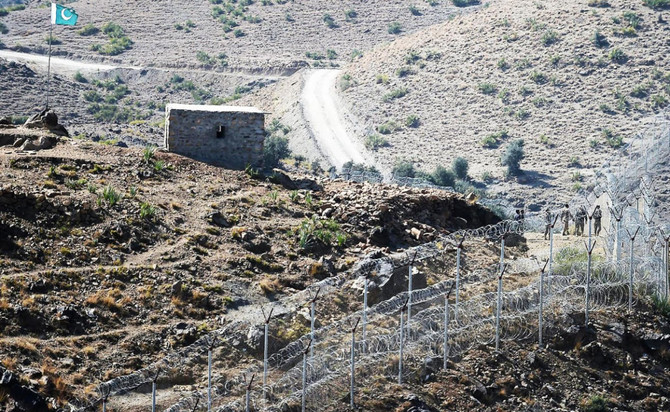
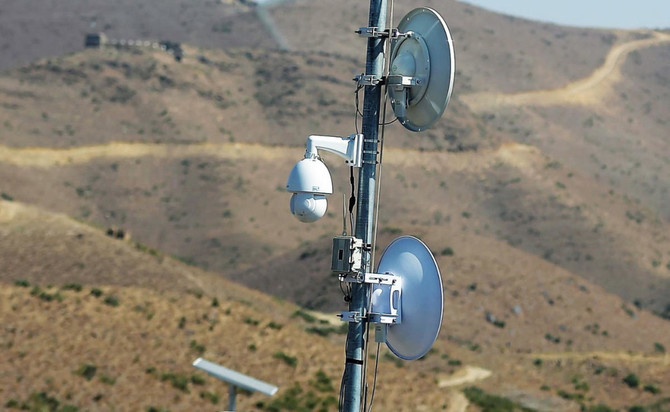
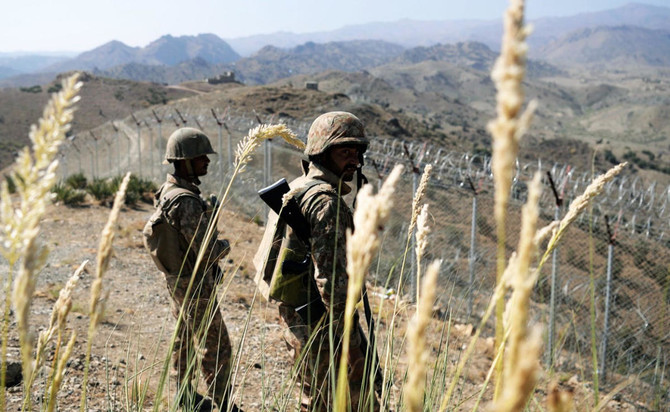
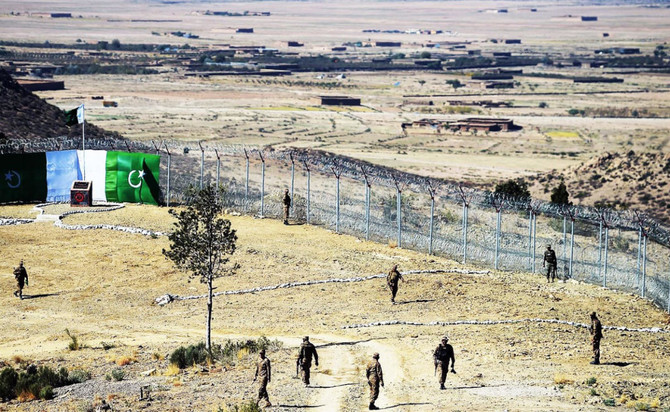
MIRAN SHAH, Pakistan: Pakistan started fencing its border with Afghanistan to thwart the illegal movement of people and goods, military officials said.
Arab News visited the fencing area in North Waziristan and was among the media which was briefed by Inter Services Public Relations (ISPR) on Friday regarding the fencing process.
The two countries share a mostly porous 2,600-km-long border. Military officials said 160 km of the border have already been fenced.
The whole fence will be completed by December 2019 at an estimated cost of 56 billion Pakistani rupees ($505.68 million).
The aim is “effective border control” that is “managed and regulated as per international best practices,” a military officer said.
A total of 750 border posts and forts will be built; 140 have already been built and 15 are under construction, officials said.
Pakistan plans to bolster its Frontier Corps (FC), which will take full responsibility for border security, said a senior FC officer.
A terminal is being built at Ghulam Khan, the third-largest border crossing with Afghanistan, which will reopen within a month after being closed since June 2014 due to a major Pakistani military operation, an official said.
“The problem is they (the Afghans) don’t have effective (border) control. Most of the areas on their side aren’t under their control,” said a military officer.
There are 93 Pakistani checkpoints along the border in North Waziristan, but only 11 on the Afghan side of the region, he added.
Pakistan started fencing its northwestern border with Afghanistan in 2017.

Pak-Afghan border fencing to complete by end of 2019: Pakistan Army
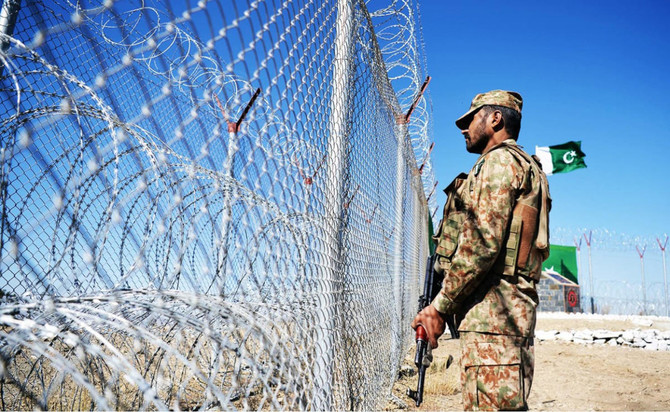
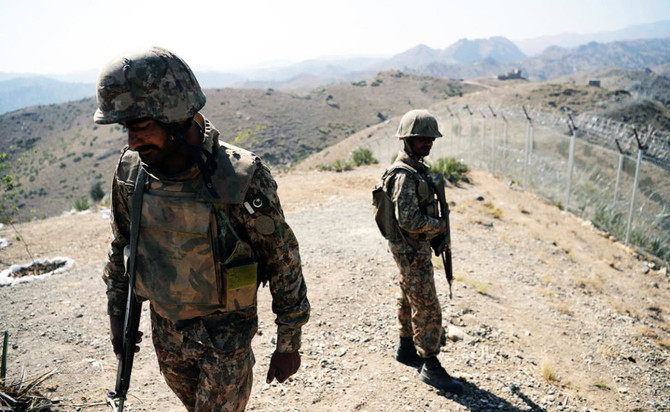
Pakistan PM directs ministries to fast-track foreign investment recommendations
- Pakistan’s foreign direct investment fell by over 25 percent during July-November period, official data states
- Premier directs ministries to provide support via embassies worldwide to facilitate foreign investors
ISLAMABAD: Prime Minister Shehbaz Sharif on Thursday directed all ministries to prepare recommendations for domestic, foreign investment and development projects related to their sectors, state media reported as Islamabad eyes sustainable economic growth.
The premier’s directives came while he chaired a meeting of the federal ministries on the implementation of economic governance reforms, state broadcaster Radio Pakistan reported.
Foreign direct investment inflows in Pakistan fell by more than 25 percent to $927 million during the July-November period, as per data from the central bank. Pakistan’s FDI inflows have never surged beyond $3 billion in nearly 20 years, worrying Islamabad as it seeks to escape a prolonged macroeconomic crisis.
“Prime Minister Shehbaz Sharif has directed all ministries to promptly prepare recommendations for domestic and foreign investment and development projects related to their respective sectors,” Radio Pakistan reported.
Sharif said it was his government’s top priority to provide institutional and administrative facilitation to investors.
The prime minister instructed federal ministries to provide “special importance” to proposals that promote exports.
“The prime minister directed the concerned ministries to provide effective support through Pakistani embassies worldwide to facilitate foreign investors,” the state media said.
Sharif stressed that equal attention be provided to industrial production, agriculture, and other key sectors to increase investment.
Pakistan’s government has said it is eyeing sustainable economic growth, driven by exports and foreign investment.
The South Asian country has recently signed agreements worth billions of dollars with regional allies such as Gulf nations, China and Central Asian nations to enhance cooperation in trade, investment, tourism, livestock, mines and minerals, and other sectors.