Uber says hackers behind data breach were in Canada, Florida

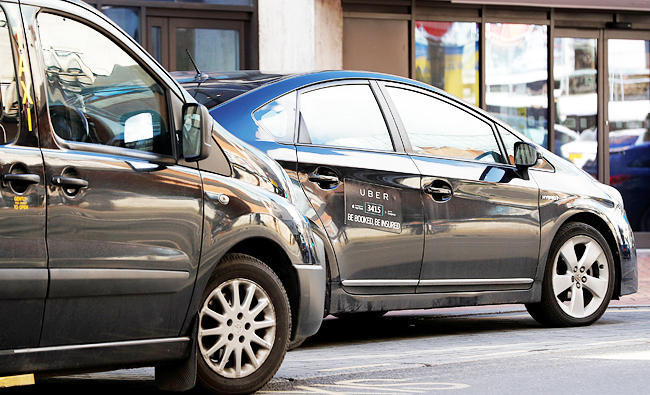
An Uber taxi and a black cab wait outside a hotel in Birmingham, Britain on Monday. (REUTERS)
Updated 07 February 2018
Follow

Uber says hackers behind data breach were in Canada, Florida

WASHINGTON: The two individuals behind the 2016 data breach at Uber Technologies Inc. were found to be in Canada and Florida, an Uber cybersecurity executive told the US Congress on Tuesday.
About 25 million users affected by the breach are users located in the United States, John Flynn, chief information security officer at Uber, said in written testimony to the Senate Commerce Committee. Uber announced the breach of 57 million worldwide users in November.
Of those impacted in the United States, 4.1 million were drivers, according to the testimony.
The testimony from Flynn is the most comprehensive public account to date of the Uber hack, the handling of which prompted newly appointed Uber Chief Executive Dara Khosrowshahi to fire two of the company’s top security officials.
Reuters reported in December that a 20-year-old man was primarily behind the massive data breach, and that he was paid by Uber to destroy the data through a so-called “bug bounty” program normally used to identify small code vulnerabilities.


Japan to test mine rare-earth mud from deep seabed

Updated 5 sec ago
Follow

Japan to test mine rare-earth mud from deep seabed

TOKYO: Japan will conduct test mining of rare-earth-rich mud from the deep seabed off Minamitori Island, some 1,900 ​kilometers (1,180 miles) southeast of Tokyo, from January 11 to February 14, the head of the government-backed project said on Tuesday.
The operation will mark the world’s first attempt to continuously lift rare-earth mud from a depth of around 6,000 meters on to a vessel.
Tokyo, like its Western allies, is seeking to secure stable supplies of critical minerals as China, the ‌dominant supplier ‌of rare earths, tightens export controls.
“One of ‌our ⁠missions ​is ‌to build a supply chain for domestically produced rare earths to ensure stable supply of minerals essential to industry,” Shoichi Ishii, program director of the Cabinet Office’s national platform for innovative ocean developments, told reporters.
The Japanese government is pressing ahead with a national project as part of broader efforts to strengthen maritime and economic ⁠security.
The January test will focus on connecting the deep-sea mining system and confirming ‌its ability to lift 350 metric ‍tons of rare-earth mud per day. ‍Environmental impacts will be monitored both on board and on ‍the seabed throughout the operation.
No production target has been set, but if successful, a full-scale mining trial will be conducted in February 2027.
The government-funded project has spent about 40 billion yen ($256 million) ​since 2018, Ishii said, though estimated reserves have not been disclosed.
Ishii also said that while their research ⁠vessel was conducting rare-earth surveys within Japan’s exclusive economic zone (EEZ) around Minamitori Island from May 27 to June 25, a Chinese naval fleet entered the waters on June 7.
“We feel a strong sense of crisis that such intimidating actions were taken, despite our activities being limited to seabed resource surveys within our EEZ,” he said.
China’s foreign ministry said the activities of its military vessels are in line with international law and international conventions, and called on Japan to “refrain from hyping up threats and provoking ‌confrontation,” in a reply to Reuters’ request for comment.