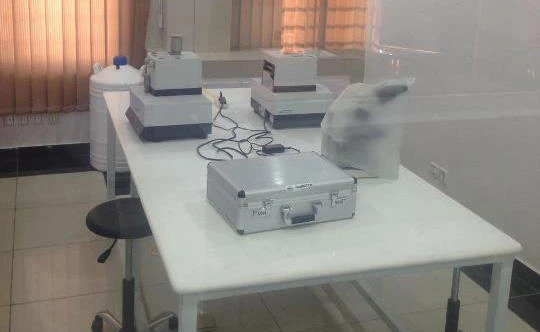
PESHAWAR: Pakistan’s Khyber Pakhtunkhwa (KP) province inaugurated its first DNA laboratory at Khyber Medical College (KMC) on Tuesday.
Among the attendees at the ceremony were KP’s leading molecular biologists and the provincial government’s health secretary, Abid Majeed.
“When I joined Khyber Medical College in 2013, we only had a PCR machine, which is just one of the components of a DNA lab,” said KMC Principal Dr. Noorul Iman. “Today, our vision for a proper DNA-testing facility has materialized.”
Talking to Arab News, he said that the DNA lab had state-of-the-art American equipment and had cost Rs45 million ($405,900).
Asked how much the lab would charge for performing a DNA test, he said it would “hopefully be less than the Punjab Forensic Science Agency’s Rs25,000,” but added that no final pricing decision has yet been made.
Iman said the DNA lab should have been finished in 2013, but was delayed due to lack of funds. “However, the recent cases of child abuse in the province and other parts of the country have led to public awareness and probably influenced the provincial authorities’ decision to bankroll the project,” he said.
Jamil Khan, a molecular biologist who will be working at the lab, said he had previously worked at the National Forensic Science Agency, Islamabad and performed DNA tests in the wake of the 2007 Red Mosque operation in the federal capital and after the 2012 Baldia Town factory fire in Karachi.
Police Superintendent Shahzada Kokab Farooq told Arab News that, until now, law enforcement agencies in KP had to send samples to Lahore or Islamabad for DNA testing.
“DNA testing is required to identify individuals in various cases, such as suicide attacks, murders and sexual assaults,” he explained. “Setting up the lab in Peshawar will save time and make it easier for us to investigate important cases.”
Among the attendees at the ceremony were KP’s leading molecular biologists and the provincial government’s health secretary, Abid Majeed.
“When I joined Khyber Medical College in 2013, we only had a PCR machine, which is just one of the components of a DNA lab,” said KMC Principal Dr. Noorul Iman. “Today, our vision for a proper DNA-testing facility has materialized.”
Talking to Arab News, he said that the DNA lab had state-of-the-art American equipment and had cost Rs45 million ($405,900).
Asked how much the lab would charge for performing a DNA test, he said it would “hopefully be less than the Punjab Forensic Science Agency’s Rs25,000,” but added that no final pricing decision has yet been made.
Iman said the DNA lab should have been finished in 2013, but was delayed due to lack of funds. “However, the recent cases of child abuse in the province and other parts of the country have led to public awareness and probably influenced the provincial authorities’ decision to bankroll the project,” he said.
Jamil Khan, a molecular biologist who will be working at the lab, said he had previously worked at the National Forensic Science Agency, Islamabad and performed DNA tests in the wake of the 2007 Red Mosque operation in the federal capital and after the 2012 Baldia Town factory fire in Karachi.
Police Superintendent Shahzada Kokab Farooq told Arab News that, until now, law enforcement agencies in KP had to send samples to Lahore or Islamabad for DNA testing.
“DNA testing is required to identify individuals in various cases, such as suicide attacks, murders and sexual assaults,” he explained. “Setting up the lab in Peshawar will save time and make it easier for us to investigate important cases.”