DAMASCUS: Syria on Saturday denied recent accusations by the United States that it had used chemical weapons on opposition forces near the capital Damascus, shrugging them off as "lies."
"The foreign ministry condemns the false claims by the United States that the Syrian government used chemical weapons in Eastern Ghouta," a foreign ministry source said, cited by Syrian state news agency SANA.
Eastern Ghouta is a rebel-controlled enclave adjacent to Damascus.
On Friday, US Defence Secretary Jim Mattis told reporters his government was concerned sarin gas may have been recently used in Syria.
The Pentagon chief cited reports from NGOs and rebel groups in the battlefield who say the toxic gas has been used, although he stressed that the United States currently has no proof to support those accusations.
Syria's foreign ministry seized on his comments, saying even the US acknowledged their own statements were "not based on evidence".
"Claims that the Syrian state used chlorine gas one moment and sarin gas the next prove that these are nothing more than lies," the statement said.
"These are lies based on stories from America's so-called partners on the ground."
Last month, 21 people were treated for respiratory problems after rockets were fired on the rebel bastion of Eastern Ghouta outside Damascus.
Syria has staunchly denied the claims, pointing to its 2013 handover of its chemical stores as part of a deal between the United States and Russia.
That agreement came after accusations that Damascus used sarin gas on Eastern Ghouta in August 2013.
But the United Nations found that Syrian government forces were responsible for chlorine attacks in Syria in 2014 and 2015, as well as sarin use in 2017.
The April 2017 attack on Khan Sheikhun left scores dead and prompted the US to fire 59 Tomahawk cruise missiles at a Syrian air field.
On Thursday, senior US administration officials said Washington was not ruling out fresh military action in the wake of new suspected attacks.


![]()
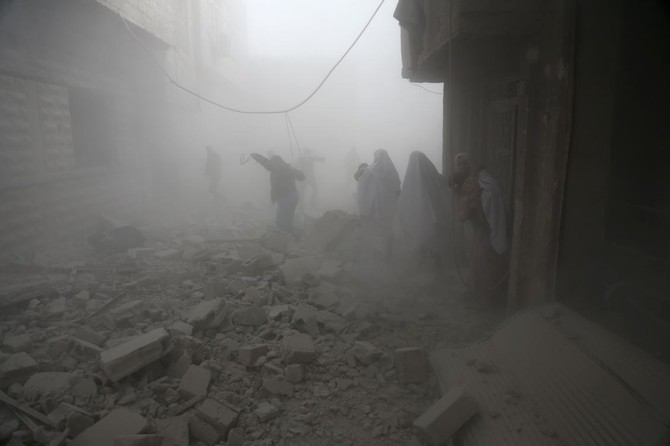
Syrian regime denies US allegation about chemical weapon usage in Ghouta
Syrian regime denies US allegation about chemical weapon usage in Ghouta
Latest updates


© 2026 SAUDI RESEARCH & PUBLISHING COMPANY, All Rights Reserved And subject to Terms of Use Agreement.