ADEN: Yemeni ministers were holed up in Aden’s presidential palace on Wednesday after separatist forces seized effective control of the southern port city.
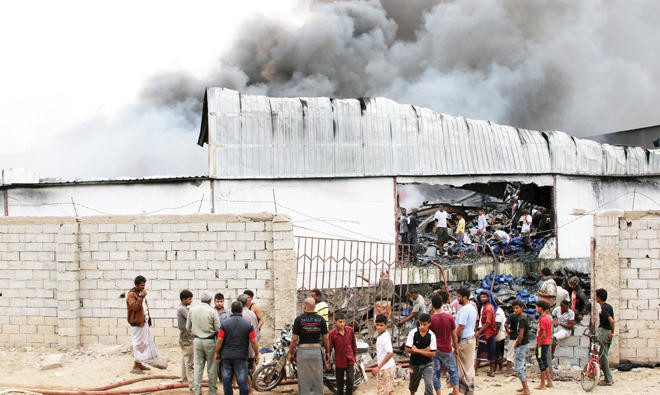
Pro-separatist forces fanned out across the city — the country’s de facto capital — after three days of fighting that left 38 people dead.
In the wake of these developments, the Arab coalition supporting the legitimate government of President Abed Rabbo Mansour Hadi has urged the separatists to exercise restraint and called on the government to weigh up the demands of its rivals.
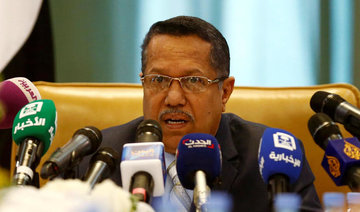
While Yemen’s president resides in the Saudi capital, the infighting in the anti-Houthi camp has left Prime Minister Ahmed bin Dagher and a number of senior government figures holed up in the Aden presidential palace.
A high-ranking military source said the separatists had also taken over the prime minister’s office chief overnight. By Wednesday morning, the clashes appeared to subside.
The UN raised alarm bells on Wednesday over the impact of the violent standoff on more than 40,000 Yemenis recently displaced to Aden, and now cut off from aid.
“UNHCR emergency aid distributions and humanitarian assessments planned this week for vulnerable, displaced Yemenis have now been postponed and UNHCR humanitarian cargo remains at Aden port unable to be released,” the UN refugee agency (UNHCR) said via Twitter.
“We are also particularly concerned for those newly displaced in Aden who have fled other areas in Yemen. More than 40,000 people fled to Aden and nearby governorates since December and we anticipate more displacement as people continue to flee from hostilities in the west coast.”
At least 38 people have been killed and 222 wounded in Aden since Sunday, according to the International Committee of the Red Cross.
The separatists, who for months have pushed for the reinstatement of South Yemen as an independent country, now control most of the city.
Since 2015, Aden had served as a refuge for tens of thousands of Yemenis fleeing conflict in their hometowns across the country, as the government battled Houthi rebels allied with Iran.
Separatists, mainly based in Aden, have gained traction since April in their push for self-rule, demanding the reinstatement of South Yemen under a self-proclaimed Southern Transitional Council (STC).
Before the fighting broke out, the STC had called on Hadi to make changes to his government, accusing it of corruption and mismanagement.
The clashes have sparked fears of a repeat of South Yemen’s 1986 civil war, a failed socialist coup which killed thousands in just six days and helped pave the way for the 1991 unification of South and North Yemen.
The separatists, who enjoy popular support and are backed by some regular troops, have rapidly gained control over all but one district in Aden since Sunday.
The Arab coalition said it would take “all necessary steps to restore security” in Aden but has not intervened on the government’s behalf.


![]()
Separatists pin down Yemen govt in Aden
Separatists pin down Yemen govt in Aden


Latest updates


Recommended


© 2026 SAUDI RESEARCH & PUBLISHING COMPANY, All Rights Reserved And subject to Terms of Use Agreement.