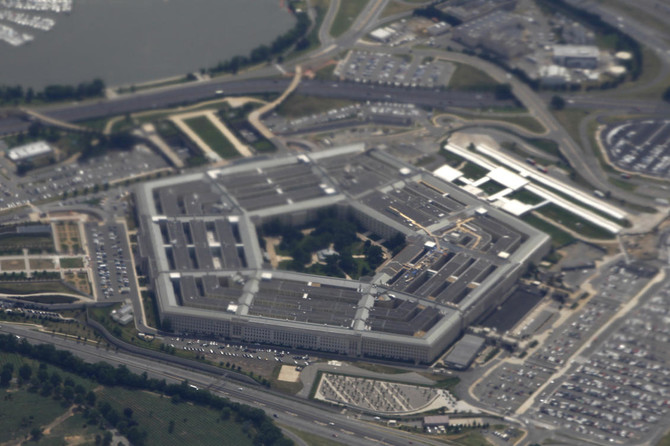
WASHINGTON: The Pentagon has ordered an independent federal auditor to stop providing the public with key information about US war efforts in Afghanistan, accelerating a clampdown on data, such as the size of the Afghan military and police forces, that indicate how the 16-year-old stalemated war is going.
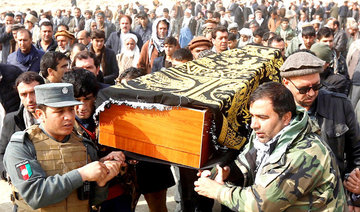
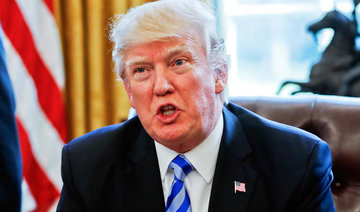
The crackdown on information comes just months after President Donald Trump announced a new Afghanistan strategy aimed at breaking a battlefield stalemate by accelerating Afghan-led operations against the Taliban and other insurgent groups in the country. Trump on Monday railed against the recent string of attacks in Afghanistan, and ruled out any US discussions with the Taliban as part of the effort to seek peace talks between the Afghan government and the insurgents.
The auditing agency, established by Congress and known as the Special Inspector General for Afghanistan Reconstruction, or SIGAR, revealed the new gag order in its latest three-month assessment of conditions in Afghanistan. The restrictions fly in the face of Pentagon assertions over the past year that it was striving to be more transparent about the US war campaigns across Iraq, Syria and Afghanistan.
Over the years, the SIGAR auditing effort has revealed many dubious practices by the US, including instances of contractor fraud. Since January 2016 it had published data on the number of governing districts controlled by Kabul, the number controlled by the Taliban, and the number that are contested.
John F. Sopko, head of the auditing organization, expressed disappointment that the Pentagon had forbidden release of the data on relative control of the governing districts.
“This development is troubling for a number of reasons, not least of which is that this is the first time SIGAR has been specifically instructed not to release information marked ‘unclassified’ to the American taxpayer,” Sopko wrote.
“Aside from that, the number of districts controlled or influenced by the Afghan government had been one of the last remaining publicly available indicators for members of Congress — many of whose staff do not have access to the classified annexes to SIGAR reports_and for the American public of how the 16-year-long US effort to secure Afghanistan is faring,” he added.
In response, the Pentagon said the US-led coalition of NATO and allied nations in Afghanistan made the decision to restrict the public release of the information.
The Defense Department told SIGAR this month that it doesn’t “have the authority to overrule the classification determination made by NATO Resolute Support,” said Lt. Col. Michael Andrews. He said that similar information was included in the department’s December 2017 semi-annual report to Congress, and the Pentagon encouraged SIGAR to use that data.
The Defense Department report said the Afghan government has control or influence over 60 percent of the population, while insurgents had control or influence over approximately 10 percent of the population, with the remainder contested.
In November, Gen. John Nicholson described the Afghan government control during remarks to reporters at the Pentagon. He said it remained “roughly the same” as in 2016. “About 64 percent of the population is controlled by the government, about 24 percent live in contested areas, and the Taliban control the remaining 12 percent,” he said. He did not reveal the number of districts held by each side.
Sopko wrote that historically, the number of districts controlled or influenced by the government has been falling since his office began reporting on it, while the number controlled or influenced by the insurgents has been rising — “a fact that should cause even more concern about its disappearance from public disclosure and discussion.”
The war effort has sometimes faded from US public attention, even though the US has invested about $120 billion in reconstructing Afghanistan since 2002.
Sopko said in his report that the Pentagon also classified or otherwise restricted information that his organization had previously reported publicly, including such “fundamental metrics” of the Afghan military and police performance as Afghan casualty figures and most measurements of the battlefield capabilities of the Afghans military.


![]()
Pentagon restricts release of Afghanistan war data
Pentagon restricts release of Afghanistan war data

Latest updates


Recommended


© 2026 SAUDI RESEARCH & PUBLISHING COMPANY, All Rights Reserved And subject to Terms of Use Agreement.