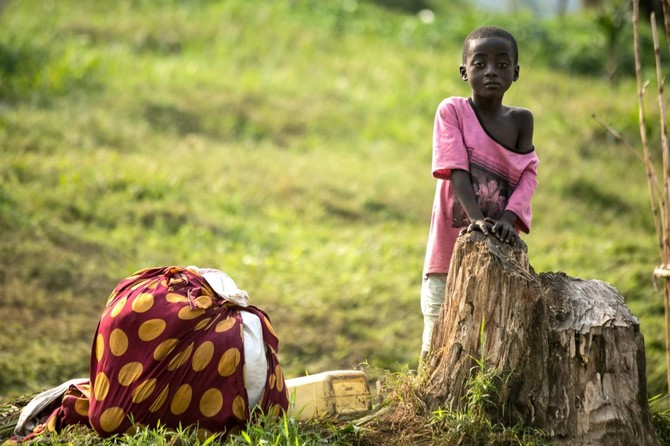
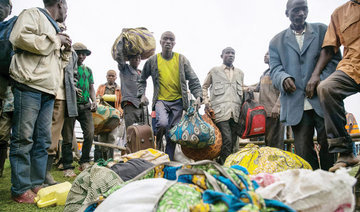
BUKAVU: Laden with mattresses, suitcases, solar panels, chairs and plastic buckets, thousands of refugees have crossed into Burundi in the past three days to flee fierce fighting in the Democratic Republic of Congo, Burundi police said Friday.
Nearly 7,000 Congolese have crossed Lake Tanganyika and taken refuge in Burundi since Wednesday as clashes raged between DR Congo government forces and rebels in the troubled eastern province of South Kivu.
“Yesterday, Lake Tanganyika seemed to be completely covered by hundreds of boats of all sizes, packed with refugees and their property, it was quite sight,” one rights activist told AFP.
Burundi police said a total of 6,692 people had registered as refugees since Wednesday to escape fighting between the army and the Yakutumba militia, although the flow appeared to have since slowed.
President Joseph Kabila, speaking at a rare press conference, described the security situation in the east, much of which is in the hands of rival militias, as “worrying.”
A refugee who crossed into Burundi described “very difficult living conditions” there, adding: “There has been no food or water for the vast majority of us, we don’t have any toilets.”
There was no immediate comment from the UN refugee agency or the Burundian authorities about the situation.
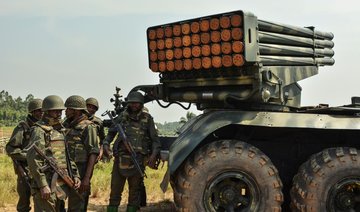
The DR Congo government last week announced it was waging “war” against two militias in the east — the Yakutumba and the Ugandan Islamist rebels of the Allied Democratic Force (ADF).
The ADF are active in North Kivu while the Congolese Yakutumba are several hundreds of kilometers away in South Kivu. Both regions border Uganda, Rwanda, Burundi and Tanzania.
Rival militia groups have long held sway over large areas in the two provinces, often competing for their rich mineral resources.


![]()
7,000 flee DR Congo fighting for Burundi in just three days
7,000 flee DR Congo fighting for Burundi in just three days
Latest updates


© 2026 SAUDI RESEARCH & PUBLISHING COMPANY, All Rights Reserved And subject to Terms of Use Agreement.