The approach is being considered, alongside several other options for the sale of shares in Aramco, but so far no decision has been taken on whether it will proceed to a full deal, according to people familiar with the Russian move, who did not want to be identified. They were speaking at the World Economic Forum annual meeting in Davos.
There is also the possibility of a joint investment by Russian and Chinese investors. Several institutions from the two counties have formed joint vehicles for investment, with a big emphasis on energy and other infrastructure projects.
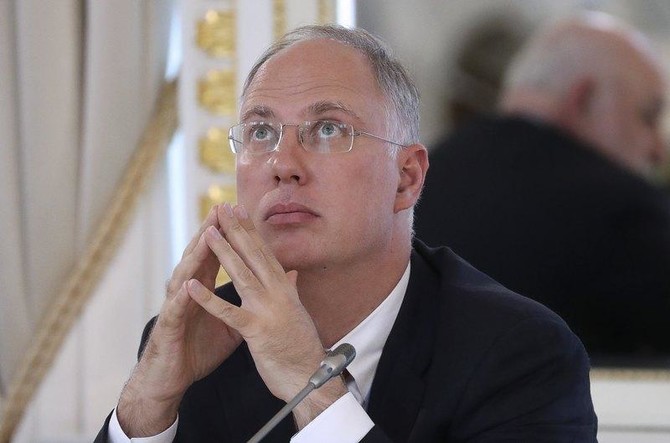
Reuters reported that Kirill Dmitriev, head of the Russian Direct Investment Fund, was considering an investment in Aramco as part of a long-term strategy for Russia and Saudi Arabia to coordinate energy policy more closely.
“We see great interest in the Aramco IPO from Russian pension funds as well as from our Chinese partners,” Dmitriev told Reuters.
Aramco has already said it is considering a wide range of options for the IPO, which would be by far the biggest in history if it meets official valuations.
Policymakers in the Kingdom have said they would sell 5 percent of Aramco, with an official valuation of $2 trillion on the whole company.
If the Russians bought $10 billion of shares — as has been speculated — it would represent 10 percent of the shares in sale in an IPO at the official valuation.
Options under discussion include a big sale on an international stock exchange in conjunction with a listing on the Tadawul market in Riyadh; an option for a private sale of shares to foreign investors; or a trade sale at the same time as a Riyadh listing with a commitment to sell more on a global exchange later on.
Policymakers have repeatedly committed to undertake an IPO In 2018, without specifying the exact form the share offering would take.
Aramco’s priority is to maximize the valuation of the IPO as a way of demonstrating the value of Aramco to the KIngdom, and in comparison with its international peers in the oil industry.
Aramco has by far the biggest reserves of crude of any oil company in the world, and even after agreeing cuts with non-OPEC member Russia last year, still exports more oil than any other company.
Independent valuations of Aramco’s reserves are in progress, and regarded as essential to helping achieve IPO targets.


![]()
Russian investors eye Aramco share deal ahead of IPO
Russian investors eye Aramco share deal ahead of IPO
DAVOS: Russian investors have approached Saudi Aramco with a proposal to take a stake in the Kingdom’s oil giant as it gears up for an initial public offering on local and global stock markets later this year.


Latest updates


© 2026 SAUDI RESEARCH & PUBLISHING COMPANY, All Rights Reserved And subject to Terms of Use Agreement.