LAHORE: A number of Pakistan’s top talent have crossed the border to act in Bollywood, however, relations between the countries took a negative turn last year and Pakistanis were loudly told that they and their acting prowess would not be welcomed in India.
After Fawad Khan’s massively successful turn in “Khoobsurat” and “Kapoor and Sons,” it seemed as though a new tide was turning with the sharing of talent from both sides of the border. Following the ban by the Indian Motion Picture Producers’ Association (IMPPA) on Pakistani actors, singers and technicians from working on Indian films, Pakistani actress Mahira Khan was famously not able to attend promotions for her debut in “Raees.” Sajal Aly and Adnan Siddiqui were also held back from their promotions for the critically-acclaimed “Mom” and Saba Qamar too was not able to be as hands on with her promotions for “Hindi Medium” as she would have liked.
Despite the controversy of asking Pakistani actors to vacate the premises, Qamar continued filming Hindi Medium, a film that went on to become a major box office success and was loved by critics with a tremendous amount of praise coming Qamar’s way for her role as a middle class woman wanting to keep up with the Jones’ and get her daughter into a posh school.
That praise, those box office numbers and the appreciation of fans on both sides of the Pakistan-India border all resulted in Qamar being the first Pakistani actress to score a Leading Actor nomination at India’s Filmfare Awards.
The recognition by the Filmfare Awards, held by the Times Group and in its 63rd year, is not a small one. Often dubbed as the Indian Oscars, the awards celebrate artistic and technical excellence across Bollywood’s booming film industry. For actors from Pakistan who head to India to make films, backlash has always been swift and quick.
Qamar, whose talents are largely undisputed in her home country, was not spared the fan hate for heading over and shooting her film. When the film was slated for release in Pakistan, few were expecting it to be worthy of her talent as Pakistani actors’ (particularly for female actors) roles in Bollywood have so far left little to be desired, but the film spoke for itself.
In addition to her nomination, the film itself received a total of five nominations at the Filmfare Awards, including Best Film, Irfan Khan for Best Actor in a Leading Role (Male), Saket Chaudhary for Best Director and Deepak Dobriyal for Best Actor in a Supporting Role (Male). It was also announced that Hindi Medium was chosen by the Indian Embassy to be screened at the annual Festival of Indian films in Armenia.


![]()
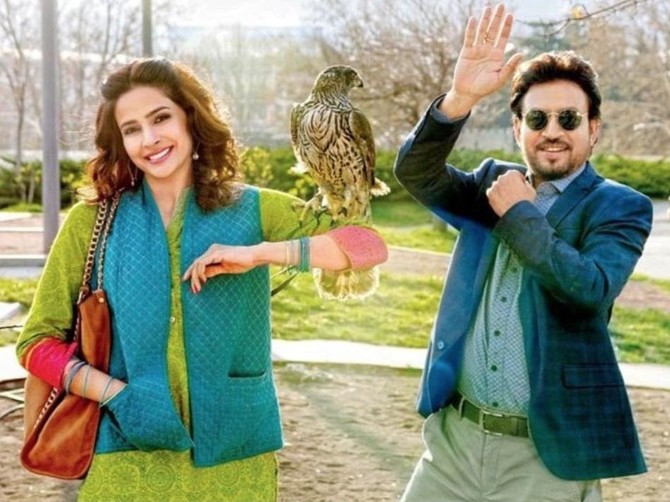
Pakistani actress Saba Qamar breaks Bollywood
Pakistani actress Saba Qamar breaks Bollywood

Latest updates


© 2026 SAUDI RESEARCH & PUBLISHING COMPANY, All Rights Reserved And subject to Terms of Use Agreement.