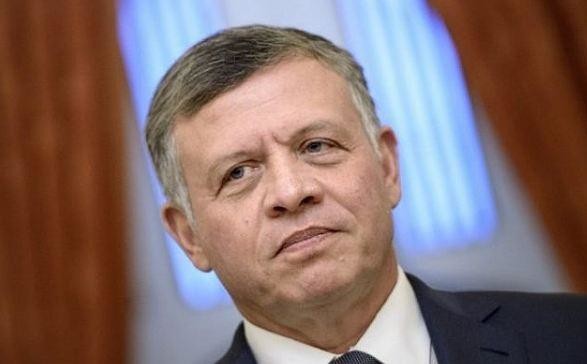
AMMAN: Jordan’s King Abdullah expressed concern on Sunday over a decision by Washington to recognize Jerusalem as Israel’s capital, saying East Jerusalem had to be the capital of a future Palestinian state.
In remarks during talks with US Vice Mike Pence in Amman, the king said the only solution to the Israeli-Palestinian conflict was a two-state one.
Jordan lost East Jerusalem and the West Bank to Israel during the 1967 Arab-Israeli war.
US endorsement of Israel’s claim to Jerusalem as its capital broke with decades of US policy that the city’s status must be decided in negotiations with the Palestinians, who want East Jerusalem as the capital of their future state.
King Abdullah said the US move would fuel radicalism and inflame Muslim and Christian tensions.
“For us, Jerusalem is key to Muslims and Christians, as it is to Jews. It is key to peace in the region and key to enabling Muslims to effectively fight some of our root causes of radicalization,” he said.

Jordan’s king says East Jerusalem must be capital of Palestinian state
Iran offers clemency to over 2,000 convicts, excludes protest-related cases
- The decision comes ahead of the anniversary of the Islamic revolution
TEHRAN: Iran’s supreme leader Ayatollah Ali Khamenei granted pardons or reduced sentences on Tuesday to more than 2,000 people, the judiciary said, adding that none of those involved in recent protests were on the list.
The decision comes ahead of the anniversary of the Islamic revolution, which along with other important occasions in Iran has traditionally seen the supreme leader sign off on similar pardons over the years.
“The leader of the Islamic revolution agreed to the request by the head of the judiciary to pardon or reduce or commute the sentences of 2,108 convicts,” the judiciary’s Mizan Online website said.
The list however does not include “the defendants and convicts from the recent riots,” it said, quoting the judiciary’s deputy chief Ali Mozaffari.
Protests against the rising cost of living broke out in Iran in late December before morphing into nationwide anti-government demonstrations that peaked on January 8 and 9.
Tehran has acknowledged that more than 3,000 people died during the unrest, including members of the security forces and innocent bystanders, and attributed the violence to “terrorist acts.”
Iranian authorities said the protests began as peaceful demonstrations before turning into “foreign-instigated riots” involving killings and vandalism.
International organizations have put the toll far higher.
The US-based Human Rights Activists News Agency (HRANA) says it has verified 6,964 deaths, mostly protesters.
The decision comes ahead of the anniversary of the Islamic revolution, which along with other important occasions in Iran has traditionally seen the supreme leader sign off on similar pardons over the years.
“The leader of the Islamic revolution agreed to the request by the head of the judiciary to pardon or reduce or commute the sentences of 2,108 convicts,” the judiciary’s Mizan Online website said.
The list however does not include “the defendants and convicts from the recent riots,” it said, quoting the judiciary’s deputy chief Ali Mozaffari.
Protests against the rising cost of living broke out in Iran in late December before morphing into nationwide anti-government demonstrations that peaked on January 8 and 9.
Tehran has acknowledged that more than 3,000 people died during the unrest, including members of the security forces and innocent bystanders, and attributed the violence to “terrorist acts.”
Iranian authorities said the protests began as peaceful demonstrations before turning into “foreign-instigated riots” involving killings and vandalism.
International organizations have put the toll far higher.
The US-based Human Rights Activists News Agency (HRANA) says it has verified 6,964 deaths, mostly protesters.
© 2026 SAUDI RESEARCH & PUBLISHING COMPANY, All Rights Reserved And subject to Terms of Use Agreement.