CENTURION, PRETORIA: When the umpires decided at 4:45pm that the light was too poor for play to continue, Virat Kohli’s face was as dark as the sky above. He had words with the umpires, ran to the match referee’s room, and did all he could to get his players back out there. But the conditions did not improve and play was called off with South Africa 90 for two in their second innings, a lead of 118.
A storm 20 minutes after tea kept the players off for an hour, and when they resumed, the still-wet outfield angered the Indians, who could not get the ball to reverse swing. By the time they found their rhythm, with Jasprit Bumrah looking especially dangerous, the light had dimmed. The 25-minute passage was enough for AB de Villiers to ease to a 78-ball 50 which left South Africa masters of their fate.
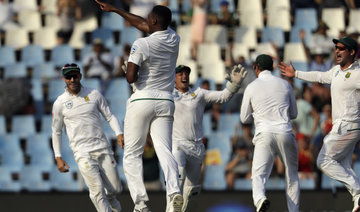
That was not the scenario six overs into their innings, with Bumrah, whose skiddy style is perfect for this surface, trapping both Aiden Markram and Hashim Amla LBW to leave South Africa in disarray at 3 for two. But De Villiers, who played some magnificent drives and cuts, rebuilt with Dean Elgar, who found the confidence to take on Ravichandran Ashwin even as he threatened the outside edge.
For the first half of the day, the narrative was all about de Villiers’ Royal Challengers Bangalore teammate. Kohli had made no excuses after twin failures in Cape Town, and he was at his fluent best on a pitch where run-scoring was seldom easy. Resuming on 85, a sublime cover-drive off Lungi Ngidi, the new boy, suggested that he did not need any time to rediscover his batting beat.
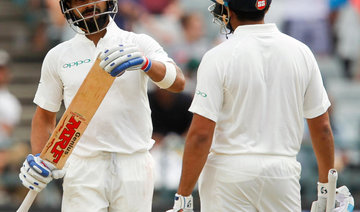
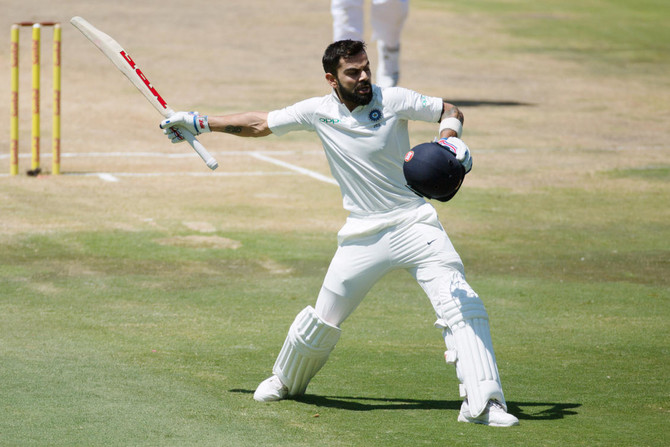
With Hardik Pandya content to play second fiddle, Kohli eased to his hundred off 146 balls, celebrating twice — once as he ran the single, and then again as India took an overthrow. The partnership was worth 45 when a moment of madness — some would say arrogance — from Pandya pushed India back. Having played the ball to Vernon Philander at mid-on, Pandya’s wish to take a single was rightly turned down. And as he lazily jogged back, Philander knocked down the stumps with a direct hit.
Ashwin overcame the pain of being hit on the glove by Kagiso Rabada with a succession of glorious strokes through the off side. He and Kohli scored at terrific pace to upset the South African bowling plans, and it was only the advent of the new ball that gave them respite.
Philander took it, and after Kohli had scorched the turf with a cover drive, Ashwin slashed one to Faf du Plessis at second slip. He had played superbly for his 38, adding 71 with Kohli, but his exit meant that Kohli had to farm the strike to protect a fragile tail. He did so expertly for a while, with one stroke just before lunch — a cover drive off Philander when there were eight fielders on the rope — simply breathtaking.
Ishant Sharma added 25 with him before fending a Morne Morkel delivery to short leg, and Kohli fell to the same bowler while trying to loft one down the ground. His 153 took just 217 balls, and contained 15 fours. Morkel finished with four for 60, and complained afterwards about a most un-Centurion-like pitch.
“I’ve played cricket here all my life, and I’ve never seen a wicket like this before,” he said. “It was hard work in the heat. It’s right up there with the hardest spells I’ve bowled. A batsman of Virat’s quality had time to adjust, and we were just trying to bowl as many dot balls as possible.”
 CLASSY IN THE CAPE: Virat Kohli
There are still some that like to pretend he’s a flat-track bully, based on one poor tour of England in 2014. But Kohli has five Test centuries in Australia, and scores of 119 and 96 on his previous visit to South Africa. After he made just five and 28 in Cape Town, the trolls were once again out in force. Here, with defeat not an option if India are to stay alive in the series, he played one of his finest innings, with only Murali Vijay and Ravichandran Ashwin offering significant support. On a sluggish pitch where the bounce was often spongy, he timed the ball magnificently and pierced the gaps with the precision that only the truly great can summon up. Knowing the competitor he is, it will mean nothing if India lose.
SORRY IN SOUTH AFRICA: Parthiv Patel
That India are not in a better position is partly down to Patel, who is deputising for Wriddhiman Saha, the regular wicketkeeper. Patel is a feisty batsman, but his keeping has always been iffy. In the first innings here, he couldn’t hold on to a leg-side chance when Hashim Amla had made just 30. He went on to make 82. Late on day three, with Bumrah building up a real head of pace, Dean Elgar fenced one behind. Patel just stood there, as the ball went between him and first slip. If Elgar, who has been in scratchy form this series, goes on to a big score, there will be even more scrutiny of an opportunity that he did not even get gloves to.