ZIGUINCHOR: Senegalese police have arrested at least 16 people suspected of involvement in a January 6 massacre of 14 young men in the troubled region of Casamance, sources said Sunday.
The arrests are the first in connection with the killings in the region separated from the rest of Senegal by The Gambia and which has been the target of an independence campaign for more than 35 years.
A rebel movement in the area has blamed the massacre on a feud in the illegal teak logging industry, ending a period of relative calm in the region.
Around 20 men were collecting wood in the protected forest of Bayottes, close to the regional capital of Ziguinchor when a 15- to 20-strong armed group attacked them.
The government says 10 were shot dead, two were stabbed to death and one was burned. Half a dozen more were wounded. Days later a 14th body was found.
One of those arrested was a woman, sources with knowledge of the investigation said.
Four of the victims of the killings in the village of Toubacouta were members of a local forestry surveillance committee, the APS news agency reported, quoting a witness.
The victims were looking for firewood, according to friends who escaped and their families. However, several sources told AFP they were potentially involved in the illegal logging trade in a region with plentiful rosewood and teak, both highly prized in China.
One resident told AFP Sunday he and 15 others, including a woman, had been detained by troops in the early hours in Toubacouta. “They combed the village,” said the man, who would not give his name.
A local youth association head, Abdou Sane, was quoted by APS as saying that “19 young men and a woman were arrested this morning by police. They are being held at Ziguinchor police station.”
Army chief of staff General Cheikh Gueye meanwhile said his troops had “yet to finger anyone” but “we are in no hurry.”
A ministerial fact-finding mission was headed to Casamance in southern Senegal on January 7, after the killings, which were the first upsurge in violence in the isolated region in years.
Justice Minister Ismaila Madior Fall on January 9 a crackdown on illegal logging in a region which, until the massacre, had enjoyed a period of relative calm since President Macky Sall came to office in 2012.


Senegal arrests 16 for Casamance massacre

Senegal arrests 16 for Casamance massacre

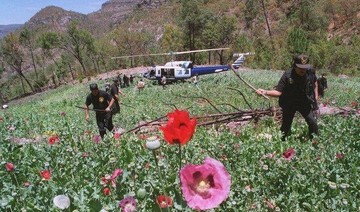
Spanish police arrest 3 men for shipping dried opium poppy by mail
- The investigation began in September 2025 after the interception of four postal shipments
- Analysis determined that the substance was “Papaver somniferum,” also known as opium poppy
MADRID: Spanish police announced Saturday they arrested three men on suspicion of shipping dried opium poppy capsules by mail across Spain and abroad, including to the United States.
The three were arrested in January and have remained in custody since then, the Civil Guard said in a statement. They were charged with crimes against public health for drug trafficking.
The investigation began in September 2025 after the interception of four postal shipments containing almost 7 kilograms (15.4 pounds) of plant-based substances at the Alicante-Elche Miguel Hernández Airport, the gateway to Alicante and the Costa Blanca area in southeastern Spain.
Analysis determined that the substance was “Papaver somniferum,” also known as opium poppy, a plant directly linked to the production of opium and its derivatives, the statement said.
Investigators noted that the same surname was used on all the shipments, both for the senders and recipients. It was also verified that all the packages had been sent from different addresses, located in the municipality of Los Alcázares, in the Murcia region.
The operation led to the identification of three men from the same clan, all born in India, who were arrested and a stash of 527 kilograms (about 1,161 pounds) of Papaver somniferum was seized.
After consulting police databases, investigators verified that the three men had been linked to recent thefts of opium poppy from legal plantations intended for pharmaceutical use and located in the province of Albacete.
“In Spain there are legal crops of this plant intended for pharmaceutical use,” said Guardia Civil spokesman Álvaro Gallardo. “But there are many people who extract opium completely illegally for consumption or trafficking, something dangerous if done uncontrollably, since it is a narcotic substance.”
The three detainees were brought before the investigating court of the judicial district of Elche, which ordered their imprisonment.