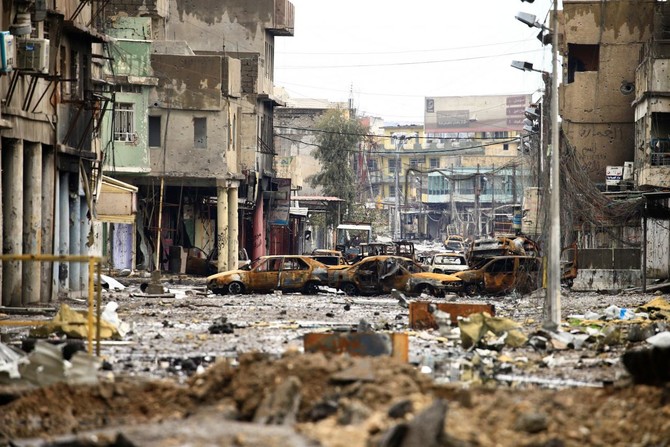
LONDON: Parts of Iraq, including the once ethnically diverse city of Mosul, remain unsafe for Christians and other minority groups, more than a month after the government declared victory over Daesh.
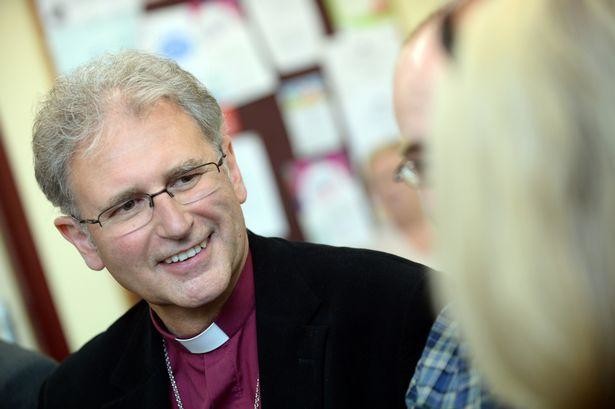
Speaking during a debate in the House of Lords on Thursday discussing the rights of religious and ethnic minorities in Iraq, Christopher Cocksworth, Lord Bishop of Coventry, described the “terrible tears in the fabric of Iraqi society” and emphasised the importance of “social reconstruction” in ensuring the stability and success of post-conflict Iraq.
Along with Christians, he said Yazidis, Kurds, Turkmens, Mandaeans and Shabaks, have not returned to Mosul, the city they once called home.
Schools and media have a vital role to play in harnessing the potential that Iraq’s large youth population affords for creating a new culture of understanding and respect through education, Cocksworth said, quoting comments made to him by an Assyrian priest ministering in Dohuk.
“We may not be able to restore the Christian demography that we had in the past, but we can preserve for the future a presence and role for the Christian community in our society so that through our schools, our skills and our hospitals, we can serve all the people of this land.”
Baroness Anelay of St. Johns said: “Daesh no longer holds significant territory there, but whilst Daesh is failing, they’re not yet wholly defeated and still pose a threat to Iraq.”
She referenced Theresa May’s visit to Iraq in December, during which the prime minister acknowledged the need to address the conditions that enabled Daesh’s rise.
“We must recognize that the challenges facing minorities didn’t begin with Daesh and will not end in their defeat alone,” the Baroness added.
“Solutions must confront longstanding issues of discrimination, exclusion and marginalization.”
Raising the brutal targeting of Yazidi and Christian minorities by Daesh, which have been recognized as genocides by the UN, and the long-time suffering of the country’s Kurdish community, Baroness Hodgson of Abinger said, “The situation there, whilst improving in some ways, is far from settled.”
While the conditions remain present for the terror group to return to the country, minority communities in Iraq are fearful that, “Unless the causes of the violence are rooted out it will return and as before minorities will be the first victims,” Cocksworth said.
He pointed to the chaos following the US-led invasion of Iraq in 2003, which, by 2014 had reduced the Christian population by some 75 percent, and, “Earlier cycles of violence which wave after wave eroded their security and forced former generations to flee.”
The UK has a “moral responsibility” and “strategic interest” in helping to secure the stability and success of Iraq, he said, calling for a “long-term commitment to a coalition of reconstruction.”
Success in Iraq, so long a land marking a failure of British foreign policy, is of vital strategic importance, he continued. “Daesh might be a hydra with heads surfacing across the world, but if it can be fatally wounded in the country of its birth, it would be starved of vital sources of energy, morale and inspiration.”

‘Social reconstruction’ is vital for long-term stability in Iraq
Libya says UK to analyze black box from crash that killed general
TRIPOLI: Libya said on Thursday that Britain had agreed to analyze the black box from a plane crash in Turkiye on December 23 that killed a Libyan military delegation, including the head of its army.
General Mohammed Al-Haddad and four aides died after a visit to Ankara, with Turkish officials saying an electrical failure caused their Falcon 50 jet to crash shortly after takeoff.
Three crew members, two of them French, were also killed.
The aircraft’s black box flight recorder was found on farmland near the crash site.
“We coordinated directly with Britain for the analysis” of the black box, Mohamed Al-Chahoubi, transport minister in the Government of National Unity (GNU), said at a press conference in Tripoli.
General Haddad was very popular in Libya despite deep divisions between west and east.
The North African country has been split since a NATO-backed revolt toppled and killed longtime leader Muammar Qaddafi in 2011.
Haddad was chief of staff for the internationally recognized GNU, which controls the west. The east is run by military ruler Khalifa Haftar.
Chahoubi told AFP a request for the analysis was “made to Germany, which demanded France’s assistance” to examine the aircraft’s flight recorders.
“However, the Chicago Convention stipulates that the country analizing the black box must be neutral,” he said.
“Since France is a manufacturer of the aircraft and the crew was French, it is not qualified to participate. The United Kingdom, on the other hand, was accepted by Libya and Turkiye.”
After meeting the British ambassador to Tripoli on Tuesday, Foreign Minister Taher Al-Baour said a joint request had been submitted by Libya and Turkiye to Britain “to obtain technical and legal support for the analysis of the black box.”
Chahoubi told Thursday’s press briefing that Britain “announced its agreement, in coordination with the Libyan Ministry of Transport and the Turkish authorities.”
He said it was not yet possible to say how long it would take to retrieve the flight data, as this depended on the state of the black box.
“The findings will be made public once they are known,” Chahoubi said, warning against “false information” and urging the public not to pay attention to rumors.
General Mohammed Al-Haddad and four aides died after a visit to Ankara, with Turkish officials saying an electrical failure caused their Falcon 50 jet to crash shortly after takeoff.
Three crew members, two of them French, were also killed.
The aircraft’s black box flight recorder was found on farmland near the crash site.
“We coordinated directly with Britain for the analysis” of the black box, Mohamed Al-Chahoubi, transport minister in the Government of National Unity (GNU), said at a press conference in Tripoli.
General Haddad was very popular in Libya despite deep divisions between west and east.
The North African country has been split since a NATO-backed revolt toppled and killed longtime leader Muammar Qaddafi in 2011.
Haddad was chief of staff for the internationally recognized GNU, which controls the west. The east is run by military ruler Khalifa Haftar.
Chahoubi told AFP a request for the analysis was “made to Germany, which demanded France’s assistance” to examine the aircraft’s flight recorders.
“However, the Chicago Convention stipulates that the country analizing the black box must be neutral,” he said.
“Since France is a manufacturer of the aircraft and the crew was French, it is not qualified to participate. The United Kingdom, on the other hand, was accepted by Libya and Turkiye.”
After meeting the British ambassador to Tripoli on Tuesday, Foreign Minister Taher Al-Baour said a joint request had been submitted by Libya and Turkiye to Britain “to obtain technical and legal support for the analysis of the black box.”
Chahoubi told Thursday’s press briefing that Britain “announced its agreement, in coordination with the Libyan Ministry of Transport and the Turkish authorities.”
He said it was not yet possible to say how long it would take to retrieve the flight data, as this depended on the state of the black box.
“The findings will be made public once they are known,” Chahoubi said, warning against “false information” and urging the public not to pay attention to rumors.
© 2026 SAUDI RESEARCH & PUBLISHING COMPANY, All Rights Reserved And subject to Terms of Use Agreement.