Saudi Shoura calls on Justice Ministry to employ women in vacant positions

Updated 11 January 2018
Follow

Saudi Shoura calls on Justice Ministry to employ women in vacant positions

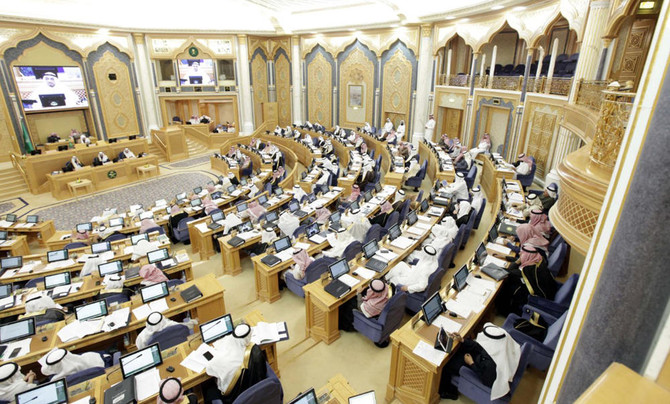
RIYADH: The Shoura Council has asked the Ministry of Justice to speed up employment of women in vacant positions and launch an awareness campaign to enlighten women on their Islamic and regulatory rights.
The decision came following comments on a report presented by the Committee of Islamic and Judiciary Affairs based on the annual report of the Justice Ministry at the Shoura Council’s 10th ordinary session on Wednesday.
The council also called on the ministry to seek global cooperation and communication, notably with equivalent departments in all countries, and sign deals and partnerships with specialized training agencies.
In another issue, the council approved a study on the draft project of an authority for national societies and foundations. The project aims to streamline, develop and protect national work and allow citizens to join such works and contribute to running communities and realizing social solidarity.
The Committee on Hajj, Housing and Services called on the Ministry of Hajj and Umrah not to allow buses over 10 years to transport Hajjis, and to coordinate with the concerned agencies for the establishment of an electronic system to control maintenance of public utilities at the holy sites.
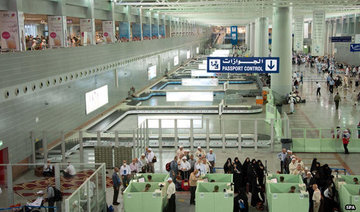
Later, Shoura members discussed a report presented by the Committee of Transport, Telecom and Information Technology based on the annual report of Saudi Arabian Airlines (SAUDIA).
In its recommendations, the Committee asked SAUDIA about the possibility of opening centers in major cities to receive baggage and finalize travel procedures.
The committee also asked the national carrier to intensify training courses for its employees to boost the confidence of customers and gain their satisfaction. Commenting on the report, one member called for a detailed financial plan to allow the national carrier shift to profitability.


Ramadan is providing inspiration to declutter and donate

Updated 57 min 38 sec ago
Follow

Ramadan is providing inspiration to declutter and donate

  • Arab News hears from those cutting consumption
  • Several local companies pick up donations for free

DHAHRAN: Some people in Saudi Arabia are choosing Ramadan to reorganize and declutter their homes and lives, moving away from consumption to helping those less fortunate.

Beyond meal prep and last-minute errands, the holy month is inspiring a different kind of ritual this year, one rooted in giving back.

“This is the first time in my life I’m entering Ramadan with the intention of doing less and gaining more,” Jeddah-based Jawaher Alfaiz, founder of Mind Spa, a communications and confidence-consulting boutique, told Arab News recently.

A Jeddawi night owl, Alfaiz has recently become an early bird, the opposite of how she lived previously. This change aligns with her renewed focus on well-being.

“The new early mornings means I have the time and energy to take charge of my day,” she said.

A working mother of two young adults, she sees the holy month as the perfect time to light the way forward.

“With Ramadan being so close to my birthday this year, I was determined on making my new home a family home again, where the space was enjoyed.

“A clear environment is crucial for a clear mind. Our minds are the most important tool we have to live a good life,” she added.

Reflecting on her personal journey, she said: “I have been divorced for three years and just recently went through all the stuff I accumulated in the almost 20 years I was married.”

Alfaiz draws a connection between decluttering and personal growth. “Ramadan has plenty of time we need to kill. I can’t think of a better time for killing your old identity and working on a new one.”

“Look at things you own, be aware of what new things you’re bringing into your space. The place you sleep, work, cook, eat, relax — the basic human needs we all engage in. Are you giving yourself the chance to do them well?”

Thanks to donation company Awon, Alfaiz has been transforming her home, one room at a time. “The company asks you to click on a link that takes you to their WhatsApp, where a message has already been curated for you.

“Once you send it, you receive a request — with cute emojis and everything — to pick a date and time for pick-up. They showed up on time the next day and were so efficient. Done in five minutes.”

“I donated 37 kg of clothes and shoes — stuff weighing almost a whole human — gone to make space for things I really love.”

Alfaiz is not alone in recognizing that Ramadan provides the perfect opportunity to quietly transform your life from within. And a locally based expert agrees.

Swedish-Assyrian Ninorta Malke, a Riyadh-based creative director and fashion stylist, told Arab News that Ramadan is the perfect time to raid your closet to find hidden gems.

She has spent the past five years immersed in Saudi Arabia’s evolving fashion landscape and understands the nuances — and temptation — to purchase a whole new wardrobe this month.

With so many intricately-designed garments at your fingertips in online stores and at physical malls — Malke urges consumers to take a moment to reflect.

“Ramadan has such a beautiful atmosphere that it naturally makes you want something new,” she said. “But I believe you don’t need a completely new wardrobe — you need one strong new element.”

“Instead of buying multiple outfits, invest in one special piece and refresh the rest through styling.”

As always, the core starts at the store. “I’m very intentional when I buy something. I always ask myself: where I will wear it, how many times I can style it, and whether it fits into my existing wardrobe.

“I focus on classic staple pieces with strong silhouettes and timeless fabrics. That naturally prevents me from over-shopping because every piece needs a purpose,” Malke added.

“The Ramadan season encourages layering and creativity. I’ll restyle the same abaya with different belts or heels, layer dresses over trousers, or elevate a simple look with statement jewelry.

“For me, it’s about reinterpretation rather than constant reinvention,” Malke said.

Shopping in one’s closet should be fun and experimental, she believes.

“I always say: don’t start by looking at full outfits, start by looking at individual pieces. Ask yourself: how else can something be worn instead of repeating it the same way?”

This can be achieved by “changing proportions, mixing textures, or simply switching accessories can completely shift a look.”

She emphasizes the importance of having a stylish trick up your sleeve. “Accessories are powerful. A statement earring, sculptural belt, metallic heel, or bold clutch can transform something you’ve already worn.”

“Before I buy anything, I ask myself if I can wear it beyond Ramadan, if I can style it at least three ways, and if it works with pieces I already own. Luxury today is not about excess — it’s about intention.”

Like Malke, Alfaiz believes in extending decluttering to one’s entire life. “Ramadan can be more about consumerism and can take your focus so far away from the cleansing and renewal month it’s meant to be.”

She added: “Just like shopping your wardrobe, I believe in shopping your own skills. Taking stock of your mind, thoughts, and traits that serve you well is no different from looking at items you own and seeing what can be re-designed or improved.”

There are several places to donate unwanted clothing in Saudi Arabia.

The company Awon accepts gently-used shoes, all sorts of bags and clothes. It requires a form to be filled in online, adding items to boxes, and the pick-up is free.

This Ramadan, they are offering the public a chance to respond to 12 riddles, with one winner each, as an extra incentive to play and give. Their website states that they handle an average of 26,000 monthly donations.

The firm Kiswa KSA, which has a motto “extra value, zero waste,” is a recycling center offering home pick-ups in Makkah, Jeddah, Taif, Riyadh, the Northern region and Eastern Province.

The Keswaty Cash company picks up unwanted clothing, weighs it, and provides money on collection.