Saudi Arabia to allow foreigners to own up to 49% of listed stocks

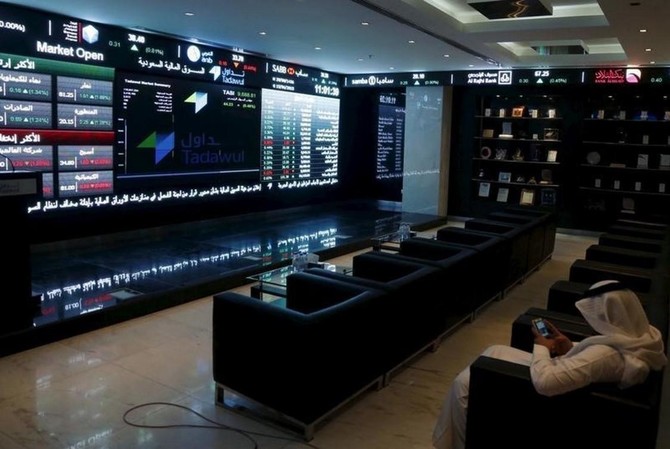
The Saudi stock exchange, known as the Tadawul, is set to be home to part of the world’s biggest initial public offering. (Reuters)
Updated 09 January 2018
Follow

Saudi Arabia to allow foreigners to own up to 49% of listed stocks

LONDON: Foreign investors will be allowed to own up to 49 percent of shares on the Saudi stock market, according to a document published by the local regulator.

The Capital Market Authority (CMA) said that a single qualified foreign investor (QFI) would be allowed to hold as much as 10 percent of shares in a company or debt instrument.

In aggregate, foreign investors will be allowed to hold up to 49 percent of shares or debt, according to the CMA document.

Each QFI “may not own 10 percent or more of the shares of any issuer whose shares are listed or convertible debt instrument of the issuer,” the CMA said.

The CMA said in May 2016 it would raise the limit on how much of a single company can be owned by a single QFI to 10 percent from 5 percent.

“The maximum proportion of the shares of any issuer whose shares are listed or convertible debt instrument of the issuer that may be owned by all foreign investors (in all categories, whether residents or non-residents) in aggregate is 49 percent,” it said in a statement published Tuesday.

With the exception of government and government-related entities, applicants must have assets under management or custody of SR1.875 billion ($500 million), the CMA said.

The move comes as the Kingdom looks to open up its market to more foreign investment.

The Saudi stock exchange, known as the Tadawul, is set to be home to part of the world’s biggest initial public offering should plans to list part of Saudi Aramco go ahead.


Dubai Aerospace to buy Macquarie AirFinance in $7bn deal

Updated 14 sec ago
Follow

Dubai Aerospace to buy Macquarie AirFinance in $7bn deal

  • Combined fleet to total 1,029 aircraft across ‌79 countries
  • Acquisition adds 37 airline customers, expands into seven new countries
  • Deal expected to close in H2 2026, subject to regulatory approvals

DUBAI: Dubai Aerospace Enterprise said on Thursday it will buy aircraft leasing firm Macquarie AirFinance for an enterprise value of about $7 billion, creating a combined fleet of 1,029 planes and one of the world’s biggest lessors.

The sale, which followed a competitive bidding process, underscores strong investor appetite ‌for aircraft ‌assets as Boeing and Airbus struggle to ​ramp ‌up ⁠production to ​meet airline ⁠demand.

The global aircraft leasing market is dominated by AerCap Holdings N.V. and SMBC Aviation Capital, both based in Ireland.

The Macquarie AirFinance deal would lift DAE into the top tier, analysts said.

“(It) ... fast tracks Dubai Aerospace Enterprise to the forefront of global aircraft leasing,” said Tim Waterer, chief market analyst at KCM Trade, ⁠adding that the deal also diversifies the Dubai ‌state-owned lessor’s customer base and increases ‌exposure to newer aircraft, even as ​supply constraints at major manufacturers ‌persist.

The combined fleet will serve 191 airlines in 79 countries, ‌with narrowbody jets accounting for about 70 percent of the portfolio, DAE said.

The acquisition, which adds 37 airline customers including carriers in seven countries where DAE has no presence, will be funded through a mix ‌of debt and equity.

DAE CEO Firoz Tarapore said the deal would create a “bigger, stronger, more ⁠diversified and ⁠well-capitalized” company, adding that the combined entity’s scale would support more competitive pricing and a broader customer offering.

DAE is owned by the Investment Corporation of Dubai, the main investment arm for the government of the emirate. The company acquired Dublin-based AWAS, the world’s tenth biggest aircraft lessor, in 2017.

Macquarie AirFinance is owned by Australia’s diversified investment service provider Macquarie Group.

The deal has been approved by DAE’s board and is subject to regulatory approvals, DAE said in a statement.

It is ​expected to close in ​the second half of 2026.