GAZA CITY: The declaration of war on Hamas by Daesh in Sinai comes amid increased tension between the Palestinian group and extremist militants.
Daesh last week released a video calling on its members and supporters in Gaza to fight Hamas, which it accused of moving closer to Iran.
The video ended with an extremist from Gaza, killing another Sinai person by shooting him in the back of the head for allegedly collaborating with Hamas’s military wing to obtain arms through Sinai.
While Daesh has made similar threats against Hamas in the past, hostility between the two sides has increased recently, especially after the Egyptian government and Hamas reached a number of agreements last year.
Extremists have also increased their activity in Sinai since the ousting of the Muslim Brotherhood president in 2013. The militant group Ansar Bait Al-Maqdis pledged allegiance to Daesh and launched an insurgency which has killed hundreds of civilians, soldiers and police officers.
Hamas has tried to dismantle all Salafist groups in Gaza, some of which are connected with other groups in Sinai.
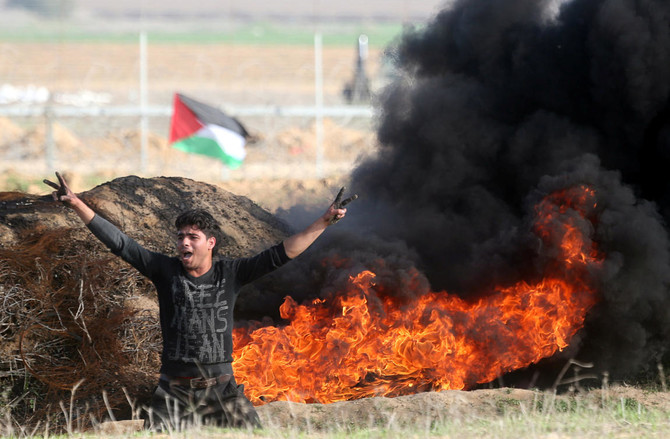
These groups have carried out a series of attacks in recent years against Hamas members and leaders in Gaza, which Hamas has ruled since 2007. Some of the attacks have also targeted shops and business with explosives.
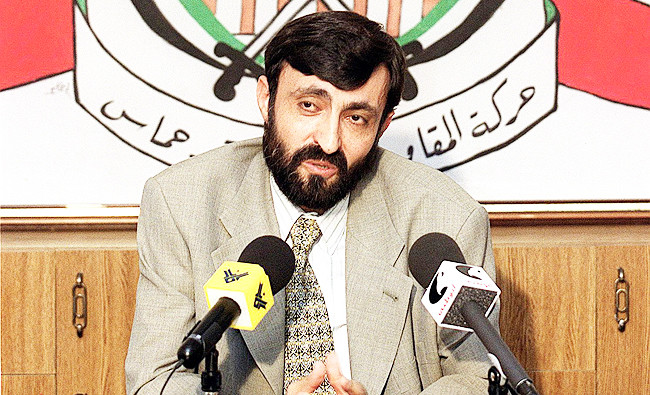
Eyad Al-Bozom, a spokesman for the interior ministry in Gaza, said the territory was stable because Hamas had imposed tight restrictions to ensure the militancy in Sinai did not spill over into Gaza.
“The security is stable in Gaza strip, the security forces are spending all efforts to sustain the stability,” he told Arab News.
“I can assure you we don’t have any of those extremist groups, there are some people believe in such thoughts but we don’t have any faction or group like in other places.”
The relationship between Gaza and the Sinai Peninsula became entrenched after 2007, when Israel enforced a blockade of the territory. The border with Sinai became the only outlet to the outside world after 2007.
A network of tunnels under the border became essential for Gaza and its economy, while providing tax revenues to the Hamas government. The tunnels also extended a corridor for arms and money to Hamas’s military wing, the Qassam Brigades.
“The geopolitical map obviously made Gaza part of Sinai on all levels, and particularly on the security one,” said Hani Habib, a political analyst based in Gaza.
“The security in Sinai connected in a way or another to Gaza strip whether positively or negatively, and in the previous 10 years at least the unrest in Sinai created incredible impact on Gaza.”
Among the various Salafist groups that emerged in Gaza were the Army of Islam (Jaish Al-Islam), which participated with Hamas in the abduction of Israeli soldier Gilad Shalit, the Nation Army (Jaish Al-Omma) and the Islamic Front for the Liberation of Palestine.
Egypt launched a large campaign to eliminate the tunnels between Gaza and Sinai after an attack across the border in August 2012. Cairo intensified its efforts during the crackdown on the Muslim Brotherhood after President Mohammad Mursi’s downfall.
Hamas was politically aligned with the Brotherhood and Mursi had tried to improve relations with the Islamist group.
With the tunnels cut off, Hamas moved to improve relations with Egypt to ease the siege on Gaza Strip and strengthen its rule.
To do this, the group considered it necessary to change its policy toward Daesh in Sinai, which had helped Hamas smuggle weapons from Libya and Sudan into Gaza.
Habib said one of the reasons that made Egypt and Hamas reach a deal to tackle Daesh, was because Hamas is more moderate than most militant groups in Sinai.
Hamas tried at different times to deal with the Salafist groups, both with dialogue and force, in order to deter them from attacks or to encourage them to comply with Hamas’s orders to fire rockets at Israeli towns during the last three conflicts with Israel.
Tensions between Hamas and the groups often escalate when they fire missiles into Israel after Hamas has agreed to a cease-fire.
It is yet to be seen whether Daesh’s video and warning to Hamas will lead to increased militant activity against the group by sympathizers based in Gaza.


![]()
![]()
Daesh warning highlights Hamas’s relationship with Sinai militants
Daesh warning highlights Hamas’s relationship with Sinai militants
Related
Latest updates


© 2026 SAUDI RESEARCH & PUBLISHING COMPANY, All Rights Reserved And subject to Terms of Use Agreement.