Russian space experts regain control of first Angola satellite

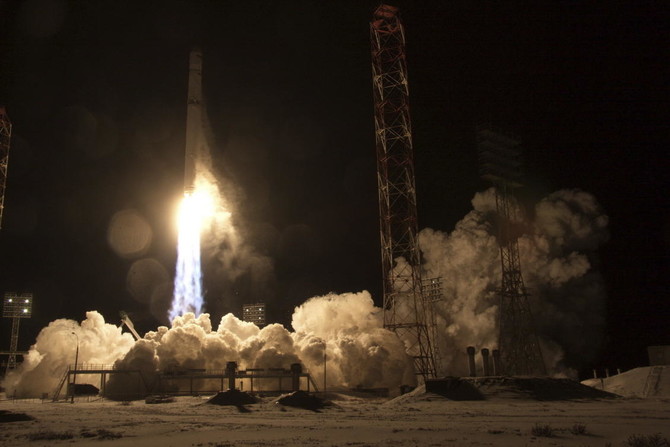
In this photo taken on Wednesday, Dec. 27, 2017, a Russian rocket Zenit-2SB AngoSat 1 satellite launches from cosmodrom Baikonur, Kazakhstan. (AP)
Updated 29 December 2017
Follow

Russian space experts regain control of first Angola satellite

MOSCOW: Russian space experts have managed to regain control of Angola’s first satellite, which was launched earlier this week, officials said Friday.
The Russian-built satellite successfully entered a designated orbit after Tuesday’s launch from the Baikonur pad in Kazakhstan, but experts couldn’t immediately establish contact.
The state-run Energia company that built the AngoSat 1 satellite said Friday its engineers have finally established communications with the craft and received data indicating that all its systems are operating properly.
Relieved with the good news, Russia’s Deputy Prime Minister Dmitry Rogozin, who oversees space programs, congratulated the Angolan ambassador on the satellite launch, saying the two nations should further deepen their cooperation.
The initial glitch with the Angolan satellite followed a failed satellite launch in November, drawing attention to the Russian space industry’s problems and causing a round of finger-pointing between top officials.
Asked about the failures, President Vladimir Putin’s spokesman Dmitry Peskov said Thursday that they warrant a thorough analysis of the situation in the space industry.


Apple to update EU browser options, make more apps deletable

Updated 22 August 2024
Follow

Apple to update EU browser options, make more apps deletable

  • iPhone maker came under pressure from regulators to make changes after the EU’s sweeping Digital Markets Act took effect on March 7
  • Apple users will be able to select a default browser directly from the choice screen after going through a mandatory list of options

STOCKHOLM: Apple will change how users choose browser options in the European Union, add a dedicated section for changing default apps, and make more apps deletable, the company said on Thursday.
The iPhone maker came under pressure from regulators to make changes after the EU’s sweeping Digital Markets Act took effect on March 7, forcing big tech companies to offer mobile users the ability to select from a list of available web browsers on a “choice screen.”
The new rules require mobile software makers to show the choice screen where users can select a browser, search engine and virtual assistant as they set up their phones, which earlier came with preferred options from Apple and Google.
In an update later this year, Apple users will be able to select a default browser directly from the choice screen after going through a mandatory list of options.
A randomly ordered list of 12 browsers per EU country will be shown to the user with short descriptions, and the chosen one will be automatically downloaded, Apple said. The choice screen will also be available on iPads through an update later this year.
Apple released a previous update in response to the new rules in March, but browser companies criticized the design of its choice screen, and the Commission opened an investigation on March 25 saying it suspected that the measures fell short of effective compliance.
The company said it has been in dialogue with the European Commission and believes the new changes will address regulators’ concerns.
It also plans to introduce a dedicated area for default apps where a user will be able to set defaults for messaging, phone calls, spam filters, password managers and keyboards.
Users will also be able to delete certain Apple-made apps such as App Store, Messages, Camera, Photos and Safari. Only Settings and Phone apps would not be deletable.