LONDON: Women may be gaining ground legally, but older generations say that over time, their liberties have been chipped away.
Pictures of Levantine women in the sixties and seventies hint at fewer restrictions — their coiffured hair, short sleeves and mini skirts portraying modes of dress that would be unthinkable in modern-day Syria or Iraq.
Layla Naffa, director of projects at the Arab Women’s Organization in Jordan, started university in the late sixties when women were moving more and more into the public sphere. “We seemed to gain so many liberties back then — women were in education, attending university and able to work.”
“You can see the difference in the way they dressed and presented themselves. We all used to wear the micro-jupe (mini skirt).”
In 1974, Jordanian women received the right to vote. Prior to this, Syria was among the earliest Arab countries to take the step in 1949, followed by Lebanon in 1952 and Egypt in 1956.
Progress started to sputter in the mid-seventies, Naffa said, with the rise of Islamic extremism, which has been gaining momentum ever since.
Since then, attitudes in conservative communities have hardened against women’s rights, with many who may once have enjoyed more freedoms, shut out of public life and consigned to the domestic sphere.
Recent regional tensions have exacerbated this inequality, said Amal Amraoui of the Chouf Organization, which campaigns for women’s rights in Tunisia.
“Mentalities are going backward and the new kind of radicalization in the region kills a little bit of our freedom day by day.”
“Before women in MENA (the Middle East and North Africa) countries had freedom, but not rights; now they are getting rights but they don’t have freedom,” she added.
Recent legal reforms, including a law eliminating violence against women in Tunisia and the abolition of rape-marriage clauses in Jordan and Lebanon, are an important first step. However, these will not translate into change on the ground without simultaneously unpicking a deep-rooted mentality that sees gender-based violence as acceptable and inequality as the norm.
“Governments passing laws is one aspect, but it isn’t everything,” said Dr. Lina Abirafeh, director of the Institute for Women’s Studies in the Arab World (IWSAW).
“It is about undoing what is so ingrained in all of us we don’t even realize it... and it begins with education.”
Aid agencies say that women and girls suffer disproportionately in times of conflict and economic hardship, which often trigger an increase in sexual harassment, domestic violence and early marriage.
“Those conflicts and insecurities exacerbate the pre-existing vulnerabilities that women and girls already have. In short, they make things much worse,” Abirafeh added.
Sara Bittar, a gender research consultant who works with international NGOs, said that women in conservative communities in the Middle East are facing more and more pressure, noting a rise in child marriage and increasing rates of domestic violence, particularly among refugees.
While access to employment and education has improved for a select few, the gap between social spheres has widened, she said, cutting the vast majority adrift from these opportunities.
“If we are to look at opportunities for women across the board, they have not increased as much as you would expect, especially in light of the recent (legal) reforms as well as social media, which should give more women a voice.”
Instead, “new channels have reinforced existing restrictions,” she explained, with those in opposition to equal rights utilizing social media platforms to condemn gender equality and criticize its advocates.
Since the start of the Arab Spring in 2011, which many women used as a platform to demand their rights, violence against activists has seen a notable increase. But while opposition to gender equality remains widespread, civil society organizations have grown stronger and more vocal, raising issues in the public sphere that would once have been taboo to touch on.
But the road to comprehensive change remains long and confidence that equality is achievable ebbs and flows for activists facing hurdles that often seem insurmountable.


![]()
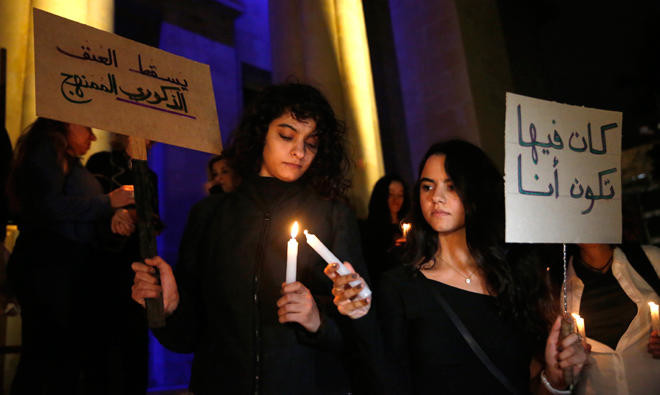
Women may have more rights ‘but female freedoms are going backward’
Women may have more rights ‘but female freedoms are going backward’
Latest updates


© 2026 SAUDI RESEARCH & PUBLISHING COMPANY, All Rights Reserved And subject to Terms of Use Agreement.