MUMBAI: Twelve workers sleeping in the loft of a dry snacks store in an industrial area of Mumbai were killed early on Monday by a fire that trapped them in small space they had rented to rest.
Most of the men who died were migrant workers, said Prabhat Rahangdale, chief fire officer of the Mumbai Fire Brigade, who said they had identified 10 of the 12 charred bodies by evening.
The fire started on the ground floor and the intense heat and smoke trapped the workers sleeping on the loft, which subsequently collapsed, he told the Thomson Reuters Foundation.
Industry studies show more than 90 percent of India’s workforce — an estimated 400 million people — are in informal employment. This includes laborers on farms and construction sites, as well as in shops, hotels and restaurants.
Many work in conditions that violate Indian laws enacted decades ago to protect labor rights.
Last December, six workers locked in by their employer at a bakery in Pune, about 150 km from the financial hub Mumbai, died in a fire.
Among those who died were migrant workers from the northern Indian state of Uttar Pradesh who were due to take part in an International Migrants Day celebration on Monday held by a labor rights charity.
“They had been taking pictures for a photography contest we were holding. This fire accident just shows how migrant workers live,” said Amrita Sharma of Aajeevika Bureau, a non-profit lobbying for migrant workers’ rights.
“They work in overcrowded, poorly ventilated spaces. Their work and living conditions are highly precarious. There is a complete void in enforcement of labor laws.”


![]()
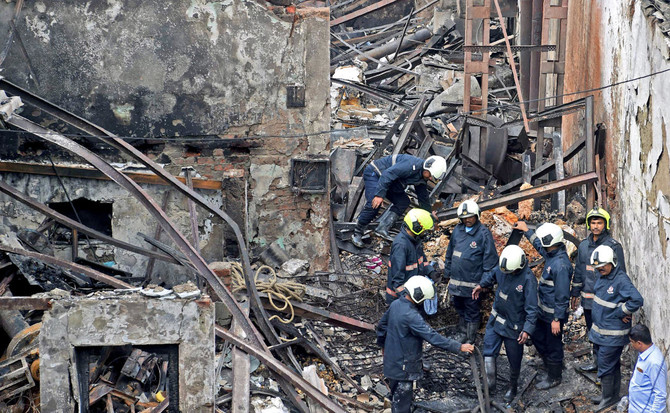

Fire kills 12 workers sleeping in shop loft in space-starved Mumbai
Fire kills 12 workers sleeping in shop loft in space-starved Mumbai

Afghan mothers seek hospital help for malnourished children
HERAT: Najiba, 24, keeps a constant watch over her baby, Artiya, one of around four million children at risk of dying from malnutrition this year in Afghanistan.
After suffering a bout of pneumonia at three months old, Artiya’s condition deteriorated and his parents went from hospital to hospital trying to find help.
“I did not get proper rest or good food,” affecting her ability to produce breast milk, Najiba said at Herat Regional Hospital in western Afghanistan.
“These days, I do not have enough milk for my baby.”
The distressed mother, who chose not to give her surname for privacy reasons, said the family earns a living from an electric supplies store run by her husband.
Najiba and her husband spent their meagre savings trying to get care for Artiya, before learning that he has a congenital heart defect.
To her, “no one can understand what I’m going through. No one knows how I feel every day, here with my child in this condition.”
“The only thing I have left is to pray that my child gets better,” she said.
John Aylieff, Afghanistan director at the World Food Programme (WFP), said women are “sacrificing their own health and their own nutrition to feed their children.”
Artiya has gained weight after several weeks at the therapeutic nutrition center in the Herat hospital, where colorful drawings of balloons and flowers adorn the walls.
Mothers such as Najiba, who are grappling with the reality of not being able to feed their children, receive psychological support.
Meanwhile, Artiya’s father is “knocking on every door just to borrow money” which could fund an expensive heart operation on another ward, Najiba said.
- ‘Staggering’ scale -
On average, 315 to 320 malnourished children are admitted each month to the center, which is supported by medical charity Doctors Without Borders (MSF).
The number of cases has steadily increased over the past five years, according to Hamayoun Hemat, MSF’s deputy coordinator in Herat.
Since the Taliban regained power in 2021, low-income families have been hit hard by cuts to international aid, as well as drought and the economic fallout of five million Afghans forced across the border from Iran and Pakistan.
“In 2025, we’d already seen the highest surge in child malnutrition recorded in Afghanistan since the beginning of the 21st century,” Aylieff said in Kabul.
The crisis is only set to worsen this year, he told AFP: “A staggering four million children in this country will be malnourished and will require treatment.”
“These children will die if they’re not treated.”
WFP is seeking $390 million to feed six million Afghans over the next six months, but Aylieff said the chance of getting such funds is “so bleak.”
Pledges of solidarity from around the globe, made after the Taliban government imposed its strict interpretation of Islamic law, have done little to help Afghan women, the WFP director said.
They are now “watching their children succumb to hunger in their arms,” he said.
- ‘No hope’ -
In the country of more than 40 million people, there are relatively few medical centers that can help treat malnutrition.
Some families travel hundreds of kilometers (miles) to reach Herat hospital as they lack health care facilities in their home provinces.
Wranga Niamaty, a nurse team supervisor, said they often receive patients in the “last stage” where there is “no hope” for their survival.
Still, she feels “proud” for those she can rescue from starvation.
In addition to treating the children, the nursing team advises women on breastfeeding, which is a key factor in combating malnutrition.
Single mothers who have to work as cleaners or in agriculture are sometimes unable to produce enough milk, often due to dehydration, nurse Fawzia Azizi said.
The clinic has been a lifesaver for Jamila, a 25-year-old mother who requested her surname not be used out of privacy concerns.
Jamila’s eight-month-old daughter has Down’s syndrome and is also suffering from malnutrition, despite her husband sending money back from Iran where he works.
Wrapped in a floral veil, Jamila said she fears for the future: “If my husband is expelled from Iran, we will die of hunger.”
After suffering a bout of pneumonia at three months old, Artiya’s condition deteriorated and his parents went from hospital to hospital trying to find help.
“I did not get proper rest or good food,” affecting her ability to produce breast milk, Najiba said at Herat Regional Hospital in western Afghanistan.
“These days, I do not have enough milk for my baby.”
The distressed mother, who chose not to give her surname for privacy reasons, said the family earns a living from an electric supplies store run by her husband.
Najiba and her husband spent their meagre savings trying to get care for Artiya, before learning that he has a congenital heart defect.
To her, “no one can understand what I’m going through. No one knows how I feel every day, here with my child in this condition.”
“The only thing I have left is to pray that my child gets better,” she said.
John Aylieff, Afghanistan director at the World Food Programme (WFP), said women are “sacrificing their own health and their own nutrition to feed their children.”
Artiya has gained weight after several weeks at the therapeutic nutrition center in the Herat hospital, where colorful drawings of balloons and flowers adorn the walls.
Mothers such as Najiba, who are grappling with the reality of not being able to feed their children, receive psychological support.
Meanwhile, Artiya’s father is “knocking on every door just to borrow money” which could fund an expensive heart operation on another ward, Najiba said.
- ‘Staggering’ scale -
On average, 315 to 320 malnourished children are admitted each month to the center, which is supported by medical charity Doctors Without Borders (MSF).
The number of cases has steadily increased over the past five years, according to Hamayoun Hemat, MSF’s deputy coordinator in Herat.
Since the Taliban regained power in 2021, low-income families have been hit hard by cuts to international aid, as well as drought and the economic fallout of five million Afghans forced across the border from Iran and Pakistan.
“In 2025, we’d already seen the highest surge in child malnutrition recorded in Afghanistan since the beginning of the 21st century,” Aylieff said in Kabul.
The crisis is only set to worsen this year, he told AFP: “A staggering four million children in this country will be malnourished and will require treatment.”
“These children will die if they’re not treated.”
WFP is seeking $390 million to feed six million Afghans over the next six months, but Aylieff said the chance of getting such funds is “so bleak.”
Pledges of solidarity from around the globe, made after the Taliban government imposed its strict interpretation of Islamic law, have done little to help Afghan women, the WFP director said.
They are now “watching their children succumb to hunger in their arms,” he said.
- ‘No hope’ -
In the country of more than 40 million people, there are relatively few medical centers that can help treat malnutrition.
Some families travel hundreds of kilometers (miles) to reach Herat hospital as they lack health care facilities in their home provinces.
Wranga Niamaty, a nurse team supervisor, said they often receive patients in the “last stage” where there is “no hope” for their survival.
Still, she feels “proud” for those she can rescue from starvation.
In addition to treating the children, the nursing team advises women on breastfeeding, which is a key factor in combating malnutrition.
Single mothers who have to work as cleaners or in agriculture are sometimes unable to produce enough milk, often due to dehydration, nurse Fawzia Azizi said.
The clinic has been a lifesaver for Jamila, a 25-year-old mother who requested her surname not be used out of privacy concerns.
Jamila’s eight-month-old daughter has Down’s syndrome and is also suffering from malnutrition, despite her husband sending money back from Iran where he works.
Wrapped in a floral veil, Jamila said she fears for the future: “If my husband is expelled from Iran, we will die of hunger.”
Latest updates


© 2026 SAUDI RESEARCH & PUBLISHING COMPANY, All Rights Reserved And subject to Terms of Use Agreement.