CAMBRIDGE, England: Parts of the world have made huge progress toward stamping out debilitating tropical diseases such as river blindness and elephantiasis, and success is “within our grasp,” British physicist Stephen Hawking said.
“The last mile on the journey to elimination is always the most difficult,” Hawking said in a speech on Tuesday, citing polio and guinea-worm as success stories of diseases on the brink of disappearing.
Hawking, who was diagnosed with motor neuron disease aged 21 and communicates via a cheek muscle linked to a sensor and computerized voice system, also honored his late father’s medical work in Africa, China and the US.
Frank Hawking pioneered a treatment for lymphatic filariasis, commonly known as elephantiasis, which causes enlarged body parts.
“He worked in sometimes very difficult conditions, but he never gave up and he believed fully in the role of science to build a better world,” said his son. “He believed in humanity and our ability to find solutions to problems.”
The event in the English city of Cambridge marked the one billionth treatment of neglected tropical diseases (NTDs) by international charity Sightsavers, dispensed in the Nigerian village of Kudaru. Hawking called it “a monumental milestone.”
NTDs are a group of painful infections affecting one in five people globally, according to Sightsavers which trains thousands of community volunteers to dispense medication and gather data.
The diseases are most prevalent in areas of extreme poverty, and often trap individuals in a cycle of social exclusion.
They are also found in parts of North America and Europe, not just in developing countries, said Anthony Solomon, medical officer for NTDs at the World Health Organization.
“Having them also increases the likelihood that people will stay poor and become poorer, because it affects people’s income-generating ability,” he said on the sidelines of the event.
Despite this, Solomon told the Thomson Reuters Foundation there is now enormous momentum to “consign these diseases to the history books.”
Philip Downs, technical director of NTDs at Sightsavers, said funding and political will had galvanized around the diseases, leading to major wins.
Ghana, for example, is on course to become the first sub-Saharan African country to eliminate trachoma, a leading cause of blindness.
Sightsavers plans to sustain progress by working with government water and sanitation departments and strengthening national health systems to build resilience.
“We don’t want the diseases to come back,” said Downs.
Britain has pledged £360 million (SR1.802 billion) toward NTD programs between 2017 and 2022.
Michael Bates, minister of state at the UK Department for International Development, told the Thomson Reuters Foundation British taxpayers had funded about a quarter of the 1 billion treatments.
Hawking said his work to answer pressing scientific questions had led him toward black holes and the Big Bang theory.
“Your challenges are huge and more practical than mine, but your search for solutions to your big questions is no less important,” he told the event.


![]()
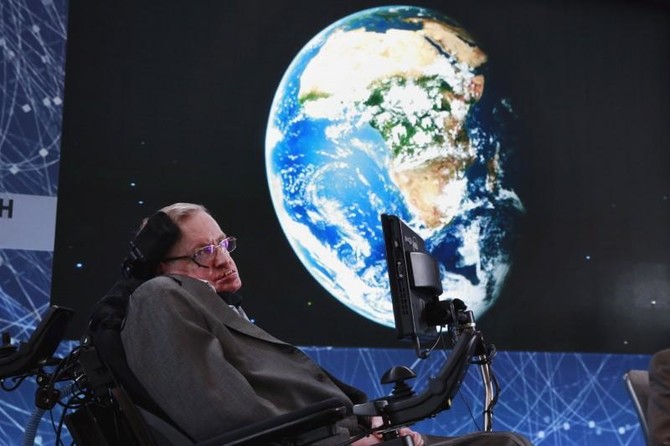
Stephen Hawking says eliminating neglected tropical diseases ‘within our grasp’
Stephen Hawking says eliminating neglected tropical diseases ‘within our grasp’



Latest updates


© 2026 SAUDI RESEARCH & PUBLISHING COMPANY, All Rights Reserved And subject to Terms of Use Agreement.