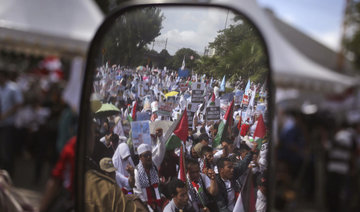
LONDON: A video of a Lebanese journalist apparently getting beaten up while covering an anti-Trump protest in front of the US embassy in Lebanon’s Awkar district went viral on social media on Sunday.
The clip shows Future Television reporter Rabih Shantaf saying that internal security forces were demanding that news agencies’ cameras were shut off.
مرّة أخرى يتعرض الجسم الاعلامي للخطر أثناء القيام بواجبه على الأرض. تعرض الزميل #ربيع_شنطف مراسل قناة المستقبل، للضرب وللمنع من التصوير من قبل عنصر أمني، من دون معرفة الأسباب.
نطالب القوى الأمنية توضيح ما جرى ومحاسبة الشخص المسؤول عن الاعتداء.#عوكر #السفارة_لأميركية pic.twitter.com/yvRNCwetns— Samir Kassir Eyes (@SK_Eyes) December 10, 2017
Moments later, the sound goes off and a security force agent is seen beating Shantaf.
“Unfortunately this is yet another example of security forces brutally assaulting journalists without any form of legitimate reasons,” Ayman Mhanna, executive director of the SKeyes Center for Media and Cultural Freedom, told Arab News.
“This is a guy who (was) standing close to a live transmission vehicles ... he was attacked, he wasn’t close to the demonstrators — it is important to respect the role of journalists when covering these protests,” Mhanna added.
Many journalists took to Twitter to condemn the beating. News reporter Yumna Fawaz tweeted, “What happened to fellow colleague Rabih Shantaf while covering the Awkar demonstration is disgraceful, shameful and unacceptable.”
Reporters Without Borders condemned “all kinds of intimidation, verbal or physical attack, against journalists who are only trying to do their job.”
“An explanation from the Internal Security Forces should be provided and the person responsible of this violent behavior should be held accountable,” Alexandra El-Khazen, head of the Middle East desk at Reporters Without Borders, told Arab News.
ما جرى مع الزميل ربيع شنطف مخزي أثناء تغطيته مظاهرة عوكر مخزي وليس غير مقبول فحسب بل وخطير جداً، ننتظر توقيفه من @LebISF ومحاسبته بتهمة الاعتداء الضرب والإيذاء المقصود ومنع صحافي من أداء عمله إضافه إلى تشويه مشهد الحريات في لبنان.
كل التضامن مع الزميل ربيع. https://t.co/8xyNAlmmwu— Yumna Fawaz (@yumnafawaz) December 11, 2017
TV Presenter Christine Habib also condemned the act saying “look at the embarrassment and ignorance! In solidarity with our respectable colleague Rabih Shantaf.”
شوفوا البهدلة والتخلّف! كلّ التضامن مع الزميل المحترم ربيع شنطف... @RabihChantaf https://t.co/CkPECaN6lw
— Christine Habib (@Christine_Habib) December 11, 2017
Violent clashes broke out during a protest in front of the US Embassy in Lebanon over US President Donald Trump’s recent decision to move the US Embassy from Tel Aviv to Jerusalem, recognizing the latter as the capital of Israel.