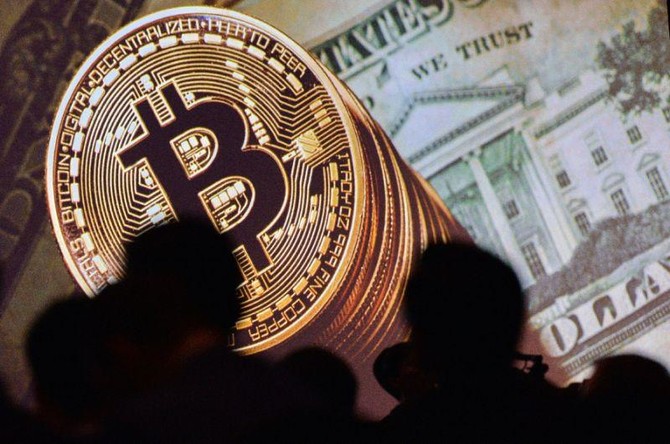
SINGAPORE: Bitcoin smashed through the $12,000 barrier for the first time Wednesday, extending the virtual currency’s stratospheric rise to new records as it gears up to take its place on mainstream markets.
The controversial cryptocurrency, which has been used to buy everything from a pizza to manicures, touched a new high of $12,590 in Asian trade before dipping back to $12,567, according to Bloomberg News.
Bitcoin — which came into being in 2009 as a bit of encrypted software and has no central bank backing it — has risen from a 2017 low of $752 in mid-January, and has surged dramatically in the past month.
Observers say the increase is due to growing interest from Wall Street, with plans for mainstream markets to offer trading in the currency’s futures despite concerns from some in the financial industry about its volatility.
US regulators last week cleared the way for Bitcoin futures to trade on major exchanges, including the world’s biggest futures center the Chicago Mercantile Exchange (CME), in news welcomed by analysts.
“The fact that CME, the biggest kid on the block, is moving early into cryptocurrency, will force other major exchanges to follow suit in the fear of not missing out,” Shane Chanel, from Sydney-based ASR Wealth Advisers, said in a note this week.
Transactions happen when heavily encrypted codes are passed across a computer network.
Bitcoin and other virtual currencies use blockchain, which records transactions that are updated in real time on an online ledger and maintained by a network of computers.

Bitcoin defies bubble fears and smashes $12,000, hits new record

Free trade negotiations between GCC, India mark new phase of partnership, says sec-gen
RIYADH: The Gulf Cooperation Council’s secretary-general affirmed that the negotiations for a free trade agreement between the GCC and India, and the signing of the joint statement, represents a new phase of strategic partnership.
Jasem Mohamed Al-Budaiwi said that this contributes to enhancing close cooperation and strengthening economic and trade ties, according to the Saudi Press Agency.
This came during the signing ceremony of the joint statement on launching the free trade agreement negotiations between the Al-Budaiwi and India’s Minister of Commerce and Industry, Piyush Goyal, which took place in New Delhi, on Tuesday.
During the signing ceremony, Al-Budaiwi said that the Terms of Reference, signed on Feb. 5, provide a comprehensive and clear framework for these negotiations. The two nations agreed to discuss enhancing cooperation in vital strategic areas, including trade in goods, customs procedures, and services.
Additionally, the framework covers Sanitary and Phytosanitary measures, intellectual property rights, cooperation on Micro, Small, and Medium Enterprises, along with other topics of mutual interest. This reflects the comprehensive nature of the agreement and its ability to keep pace with the future economy.
Al-Budaiwi expressed hope that these negotiations would lead to a comprehensive and ambitious free trade agreement that works to remove customs and non-customs barriers, enhance the flow of quality investments in both directions, and achieve further liberalization in trade and investment cooperation between the GCC and India for mutual benefit.
This would provide a stimulating economic environment and an investment climate that opens broad horizons for the business sector, supports supply chains, and accelerates the pace of economic growth in line with the ambitious developmental visions of the GCC states.
The top official affirmed the full readiness of the General Secretariat to host the first round of negotiations at its headquarters in Riyadh during the second half of this year.
The two sides held a meeting during which they reviewed the existing cooperation relations between the GCC and India and discussed ways to develop and elevate them to broader horizons, serving mutual interests and enhancing opportunities for strategic partnership between the two sides, particularly in the economic, investment, and trade fields.
They praised the role undertaken by the negotiating teams from both sides, appreciating the efforts contributing to reaching a comprehensive agreement that enhances economic integration and supports the smooth flow of trade between the two nations.