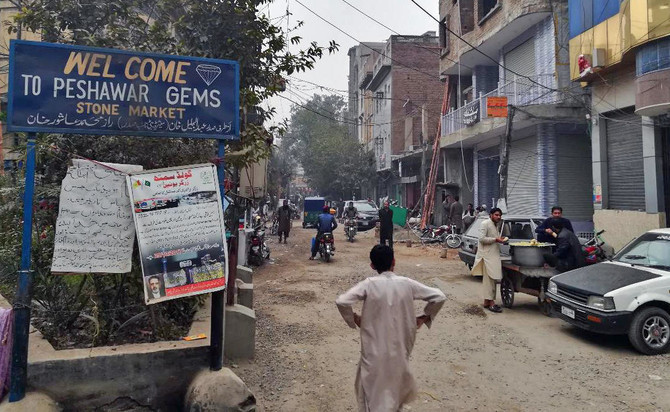
PESHAWAR: To the uninitiated, Peshawar’s famous gemstone market isn’t easy to find amid the bustling stalls and narrow lanes of Namakmandi Bazaar.
And it’s not just for directions that the first-time visitor would be advised to bring a guide along. To get the best deals, one needs someone who knows the market well.
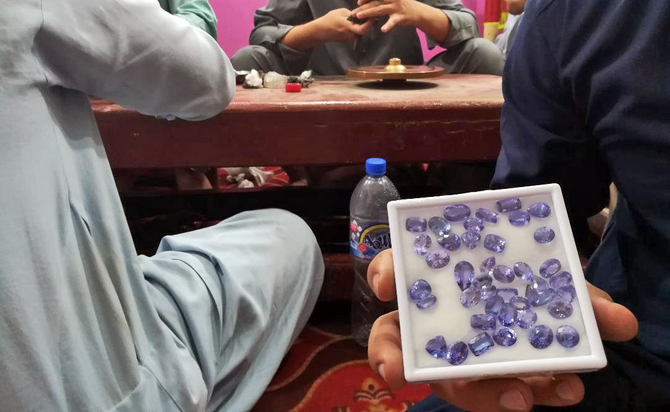
If gemstone traders here feel the buyer is merely browsing, they are unlikely to reveal their best-quality stones.
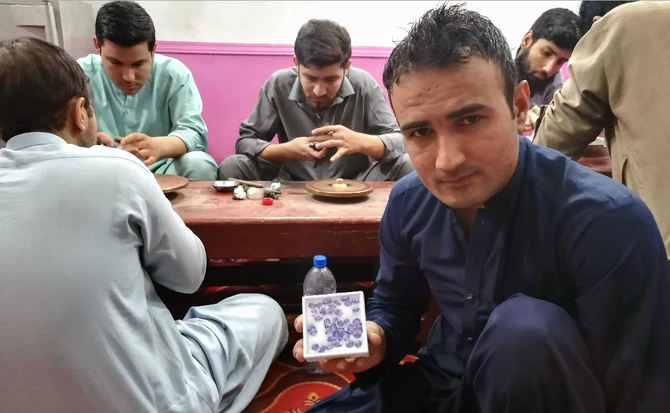
Rabbani, a 37-year old trader and owner of Rabbani Gems and Minerals, told Arab News that traders are loathe to share details of their gems even with fellow businessmen.
“They will only show you the gems if they are convinced that you are a ‘real buyer’ because they think the stones may lose value if shown to non-buyers,” Rabbani said.
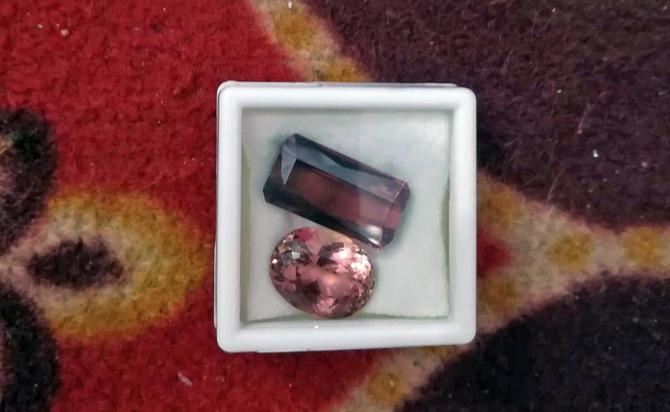
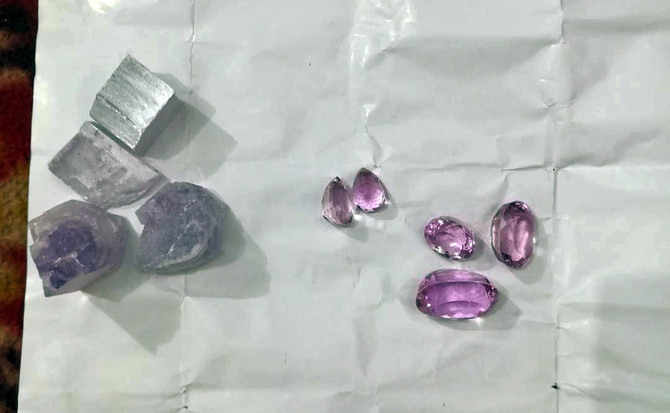
Rabbani deals in Kunzite and Tourmaline stones from Afghanistan, cut, polished and haggled for in Peshawar. “We export the stones to Thailand where traders sell locally or to other countries,” he explained.
A Chinese trader named Ziyambo — who has visited Peshawar frequently over the past 15 years — had come to the gemstone market with a guide “searching for quartz,” he told Arab
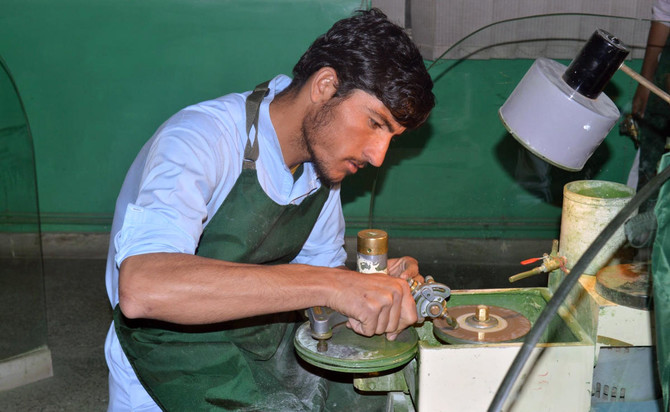
Shahzad, a skilled cutter and polisher of gems, was bent over his machine, glasses on and a light close to his forehead. His family have been in the business for over six decades.
“My father was a gemstone expert,” he said. “Me and my brothers used to work with him when we were college students.”
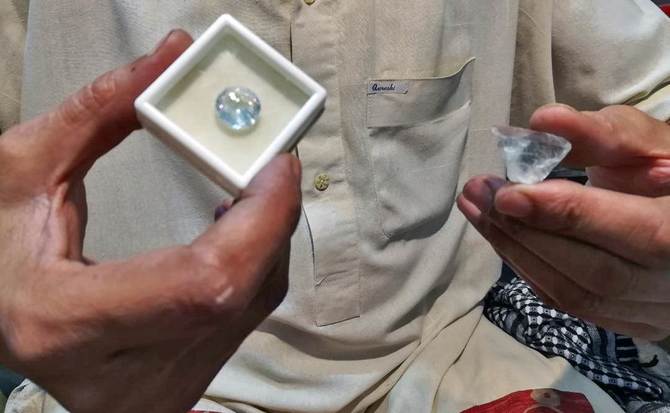
Shahzad had a variety of stones in his shop, including topaz, tourmaline, aquamarine, kunzite, and tapis.
He explained that traders get raw stones from Afghanistan and different parts of Pakistan; his job is to cut and polish them and then export them to countries including the US, UK, and China.
The Pakistani government has set up a Gems and Gemological Institute in Peshawar, where students are trained in three groups, gemology, faceting and carving.
The Institute’s director, Naveed Masood, told Arab News that the institute produces a skilled workforce for the gemstone industry.
“Since the institute was established in 2001, we have trained around 4,000 people,” he said, adding that the institute would like to send its trainers abroad “for advance training.”
Sources at the institute told Arab news that despite its efforts to produce a skilled labor force, “neither the federal nor the provincial government provides (us) with any funds, as the staff meets their expenses by offering trainings courses and other activities.”
The president of the Peshawar Gemstone Market Traders Union, Abdul Jalil, said that the market has more than 700 shops. However, he complained that they do not have the necessary facilities for proper exhibition of the stones.
Jalil, who is also the vice-chairman of the All Pakistan Commercial Exporters Association, said, “The government should build a road leading to the market and also set up a facility for exhibition of our gemstones.”


Inside Peshawar’s struggling gemstone industry



Inside Peshawar’s struggling gemstone industry

Pakistan reviews austerity measures amid Middle East crisis, urges strict nationwide implementation
- Deputy Prime Minister Ishaq Dar chairs review meeting of austerity steps
- Officials briefed on salary cuts, school closures, four‑day week, petrol conservation
ISLAMABAD: Pakistan’s government on Wednesday assessed progress on a sweeping set of austerity measures introduced to mitigate the country’s economic strain from sharply rising global oil prices and supply disruptions linked to the ongoing war in the Middle East.
Prime Minister Shehbaz Sharif this week announced a series of austerity steps, including a four‑day work week for government offices, requiring 50 percent of staff to work from home, cutting fuel allowances for official vehicles by half, grounding up to 60 percent of the government fleet and closing all schools for two weeks to conserve fuel amid the global oil crisis.
The measures were unveiled in response to global oil market volatility triggered by the conflict involving the United States, Israel and Iran, which has disrupted supply routes such as the Strait of Hormuz and pushed crude prices sharply higher, straining Pakistan’s heavily import‑dependent energy sector.
“The meeting stressed the importance of strict and transparent adherence to the austerity measures, promoting fiscal responsibility and prudent use of public resources,” Deputy Prime Minister and Foreign Minister Senator Mohammad Ishaq Dar said in a statement.
He was chairing a meeting of the Committee for Monitoring and Implementation of Conservation and Additional Austerity Measures, constituted under the directions of the PM, bringing together federal and provincial officials to review execution of the broad cost‑cutting plan.
Dar emphasized the government’s commitment to enforcing the PM’s austerity steps nationwide. The committee’s review also covered reductions in departmental expenditure, deductions from salaries of senior officials earning over Rs. 300,000 ($1,120), and coordination with provincial administrations to ensure uniform implementation of the plan.
Participants at the meeting reiterated that all ministries and divisions must continue strict monitoring and reporting, with transparent oversight mechanisms, as Pakistan navigates the economic pressures from the prolonged Middle East crisis and its fallout on global energy and trade markets.


