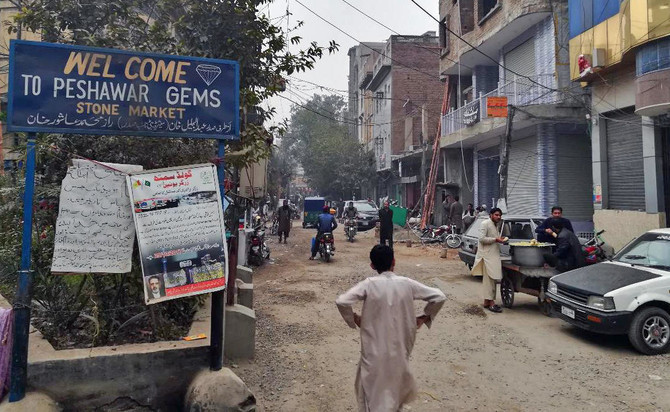
PESHAWAR: To the uninitiated, Peshawar’s famous gemstone market isn’t easy to find amid the bustling stalls and narrow lanes of Namakmandi Bazaar.
And it’s not just for directions that the first-time visitor would be advised to bring a guide along. To get the best deals, one needs someone who knows the market well.
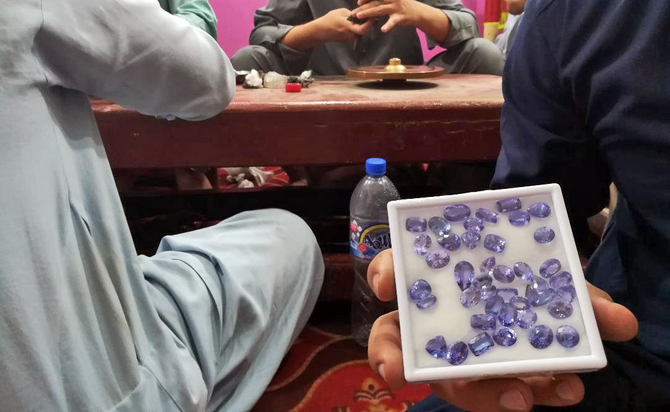
If gemstone traders here feel the buyer is merely browsing, they are unlikely to reveal their best-quality stones.
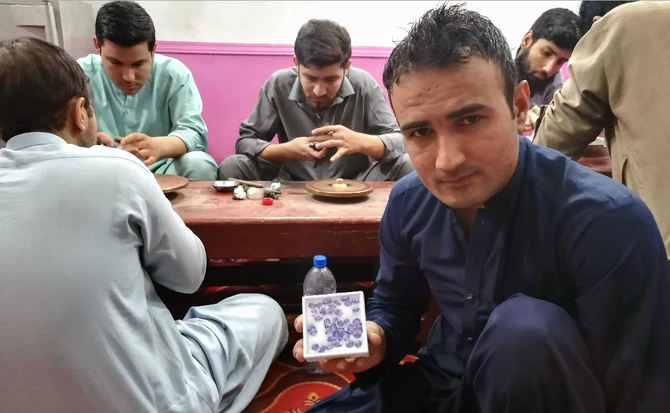
Rabbani, a 37-year old trader and owner of Rabbani Gems and Minerals, told Arab News that traders are loathe to share details of their gems even with fellow businessmen.
“They will only show you the gems if they are convinced that you are a ‘real buyer’ because they think the stones may lose value if shown to non-buyers,” Rabbani said.
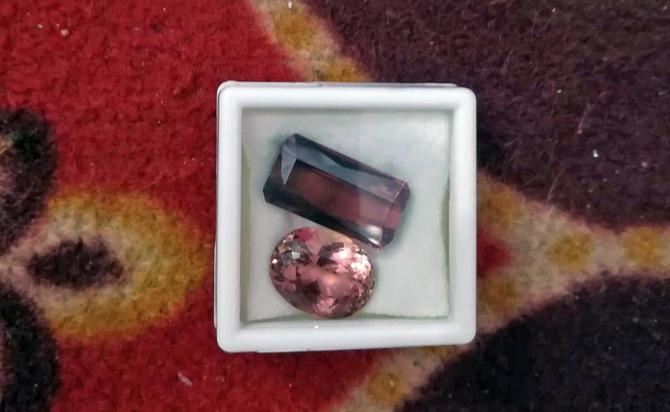
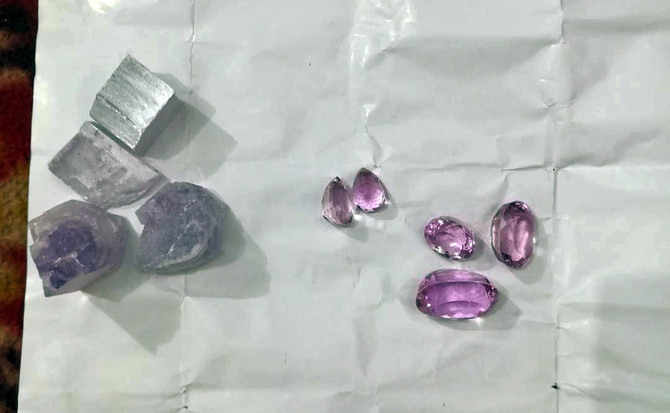
Rabbani deals in Kunzite and Tourmaline stones from Afghanistan, cut, polished and haggled for in Peshawar. “We export the stones to Thailand where traders sell locally or to other countries,” he explained.
A Chinese trader named Ziyambo — who has visited Peshawar frequently over the past 15 years — had come to the gemstone market with a guide “searching for quartz,” he told Arab
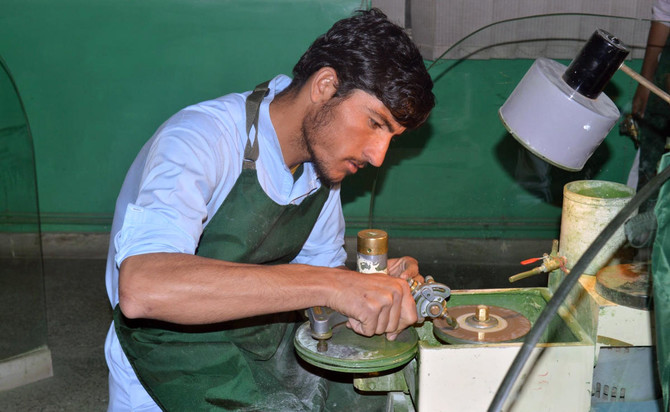
Shahzad, a skilled cutter and polisher of gems, was bent over his machine, glasses on and a light close to his forehead. His family have been in the business for over six decades.
“My father was a gemstone expert,” he said. “Me and my brothers used to work with him when we were college students.”
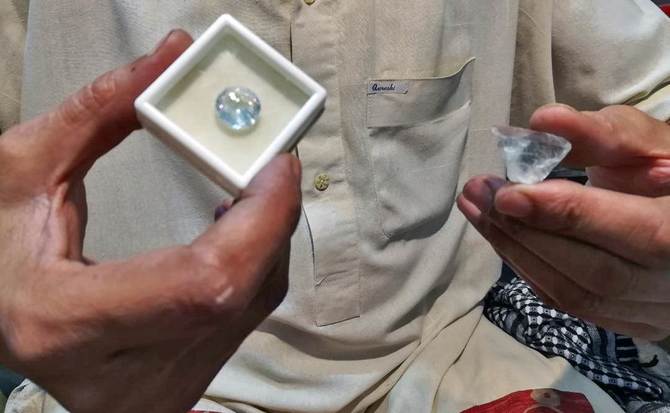
Shahzad had a variety of stones in his shop, including topaz, tourmaline, aquamarine, kunzite, and tapis.
He explained that traders get raw stones from Afghanistan and different parts of Pakistan; his job is to cut and polish them and then export them to countries including the US, UK, and China.
The Pakistani government has set up a Gems and Gemological Institute in Peshawar, where students are trained in three groups, gemology, faceting and carving.
The Institute’s director, Naveed Masood, told Arab News that the institute produces a skilled workforce for the gemstone industry.
“Since the institute was established in 2001, we have trained around 4,000 people,” he said, adding that the institute would like to send its trainers abroad “for advance training.”
Sources at the institute told Arab news that despite its efforts to produce a skilled labor force, “neither the federal nor the provincial government provides (us) with any funds, as the staff meets their expenses by offering trainings courses and other activities.”
The president of the Peshawar Gemstone Market Traders Union, Abdul Jalil, said that the market has more than 700 shops. However, he complained that they do not have the necessary facilities for proper exhibition of the stones.
Jalil, who is also the vice-chairman of the All Pakistan Commercial Exporters Association, said, “The government should build a road leading to the market and also set up a facility for exhibition of our gemstones.”


Inside Peshawar’s struggling gemstone industry



Inside Peshawar’s struggling gemstone industry

IMF hails Pakistan privatization drive, calls PIA sale a ‘milestone’
- Fund backs sale of national airline as key step in divesting loss-making state firms
- IMF has long urged Islamabad to reduce fiscal burden posed by state-owned entities
KARACHI: The International Monetary Fund (IMF) on Saturday welcomed Pakistan’s privatization efforts, describing the sale of the country’s national airline to a private consortium last month as a milestone that could help advance the divestment of loss-making state-owned enterprises (SOEs).
The comments follow the government’s sale of a 75 percent stake in Pakistan International Airlines (PIA) to a consortium led by the Arif Habib Group for Rs 135 billion ($486 million) after several rounds of bidding in a competitive process, marking Islamabad’s second attempt to privatize the carrier after a failed effort a year earlier.
Between the two privatization attempts, PIA resumed flight operations to several international destinations after aviation authorities in the European Union and Britain lifted restrictions nearly five years after the airline was grounded following a deadly Airbus A320 crash in Karachi in 2020 that killed 97 people.
“We welcome the authorities’ privatization efforts and the completion of the PIA privatization process, which was a commitment under the EFF,” Mahir Binici, the IMF’s resident representative in Pakistan, said in response to an Arab News query, referring to the $7 billion Extended Fund Facility.
“This privatization represents a milestone within the authorities’ reform agenda, aimed at decreasing governmental involvement in commercial sectors and attracting investments to promote economic growth in Pakistan,” he added.
The IMF has long urged Islamabad to reduce the fiscal burden posed by loss-making state firms, which have weighed public finances for years and required repeated government bailouts. Beyond PIA, the government has signaled plans to restructure or sell stakes in additional SOEs as part of broader reforms under the IMF program.
Privatization also remains politically sensitive in Pakistan, with critics warning of job losses and concerns over national assets, while supporters argue private sector management could improve efficiency and service delivery in chronically underperforming entities.
Pakistan’s Cabinet Committee on State-Owned Enterprises said on Friday that SOEs recorded a net loss of Rs 122.9 billion ($442 million) in the 2024–25 fiscal year, compared with a net loss of Rs 30.6 billion ($110 million) in the previous year.