NEW DELHI: The Feroz Shah Kotla in New Delhi is Indian cricket’s fortress, its answer to the “Gabbatoir” in Brisbane. In the 30 years since a magnificent fourth-innings hundred from Viv Richards inspired what was then a record run chase on Indian soil, India have won 10 of their 11 Tests here. Only Australia (2008) have escaped with a draw.
Yet, those numbers tell their own story. The Indian cricket board’s rotation policy — there are nine recognized Test venues, plus a whole host of new ones — and the absence of a clearly defined home season means that even the established grounds can’t boast of “traditional” Tests. There is no equivalent of Boxing Day in Melbourne or Lord’s in July.
Virat Kohli, India’s captain, made his Test debut in 2011, but this match against Sri Lanka starting today will be only his third appearance in front of his home crowd. Contrast that with Steve Smith, who has already played five Tests in Sydney, or Joe Root, who has five matches at Headingley on his resume.
For Kohli, who grew up in West Delhi, the Kotla is a storehouse of memories, both good and bad. In December 2005, he was a 17-year-old making waves in junior cricket when his idol, Sachin Tendulkar, scored what was then a record-breaking 35th Test century at the venue where Mumbai’s original little master, Sunil Gavaskar, had drawn level with Sir Donald Bradman’s tally of 29 in 1983.
A year and nine days after Tendulkar’s feat, Kohli made his way to the Delhi dressing room for the third day of a Ranji Trophy match against Karnataka. His teammates simply didn’t know how to react. In the early hours of that morning, while most Indian cricket fans were still celebrating a famous Test victory at The Wanderers in South Africa, Prem Kohli, Virat’s father, passed away.
The Kohli boys, Virat and Vikas, his older brother, had been taken to Rajkumar Sharma’s West Delhi Cricket Academy in the summer of 1997. By the summer of 2006, when Virat made a century for India Under-19s at Canterbury, against an English attack that included Steven Finn, Adil Rashid and Moeen Ali, many were already talking him up as an India prospect.
Then, the bottom fell out of his world. Sharma, his coach, was in Sydney at the time. After his father’s death, Kohli called him and asked what he should do. Mentor and pupil eventually decided that he should go to the ground and resume his innings with Delhi struggling to avoid defeat.
Unbeaten on 40 overnight, Kohli went on to make 90 before getting a poor caught-behind decision. Normally, the Karnataka players would have been all over an 18-year-old playing his maiden first-class season, but given the circumstances, barely a word was said. Once he was back in the dressing room, Kohli packed his kitbag and went home for his father’s cremation.
Nearly 11 years on, the team he leads stand on the brink of a record-equaling ninth consecutive series win. Under Kohli, India have won 20 and lost just three of 31 Tests. The win-loss ratio is currently better than Steve Waugh (41-9), while his win percentage tops even the mighty West Indies under Richards (54 percent).
But Kohli knows that those numbers will count for little once the calendar flips over to 2018. Over the next 18 months, India face tours of South Africa, England, Australia and New Zealand. MS Dhoni, his predecessor as captain, could tell him how such challenges change perceptions.
When Dhoni took the team to England in 2011, months after winning the World Cup, he had won 15 and lost only three of the first 27 Tests in which he had led. By the time he finished, derided by many as a lame-duck Test captain, he had lost 15 and won just 12 of the next 33 matches. That sequence included 4-0 and 3-1 thrashings in England, and a 4-0 rout in Australia.
Kohli and the team management asked for surfaces with a fair covering of grass against Sri Lanka because they felt they would otherwise be woefully underprepared for the South African challenge. India have never won a series in South Africa, and while they won’t take their eyes off the ball in New Delhi with a series to be won, captain, coach and team are already thinking of the overseas Tests that will define their legacy.


![]()
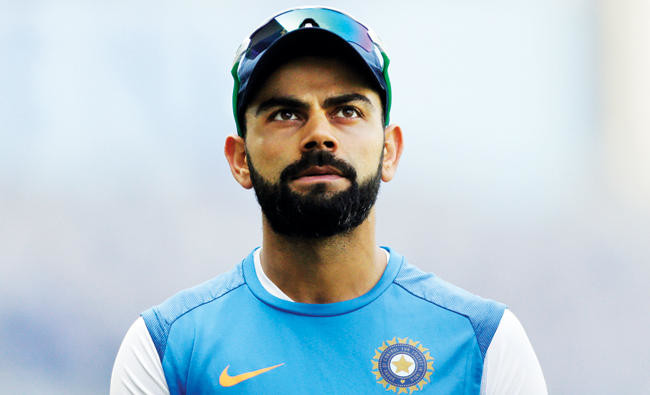
India’s cricket captain King Kohli ready to reign at home and abroad
India’s cricket captain King Kohli ready to reign at home and abroad

Latest updates





© 2026 SAUDI RESEARCH & PUBLISHING COMPANY, All Rights Reserved And subject to Terms of Use Agreement.