Aramco listing in Hong Kong to anchor huge Chinese demand for IPO

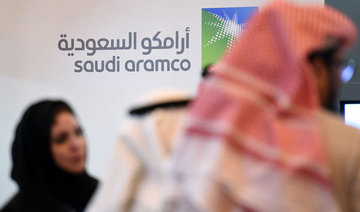
Saudi Aramco’s CEO said in October that exchanges such as New York, London, Tokyo, and Hong Kong have been looked at for a partial listing of the state company’s planned $100 billion IPO. (AFP)
Updated 29 November 2017
Follow

Aramco listing in Hong Kong to anchor huge Chinese demand for IPO

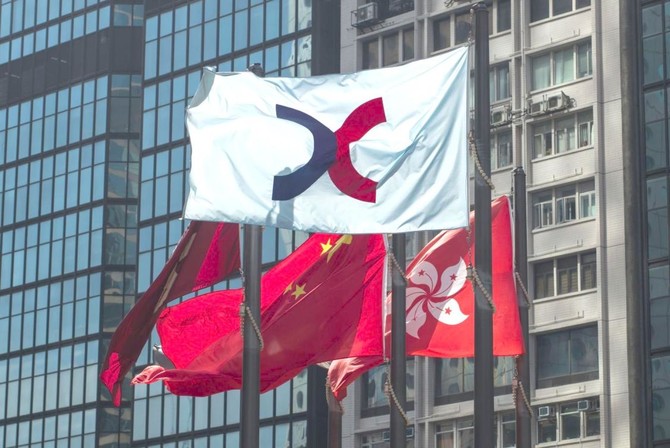
SINGAPORE: Hong Kong Exchanges & Clearing (HKEX) Chief Executive Charles Li said a Hong Kong listing by Saudi Aramco would help the oil giant to anchor huge Chinese demand for its planned IPO.
“It’s going to provide compelling benefit because they are able to use the listing to anchor very massive Chinese demand at the IPO,” Li told Reuters in an interview in Singapore, where HKEX opened its first overseas office on Wednesday.
Saudi Aramco’s CEO said in October that exchanges such as New York, London, Tokyo, and Hong Kong have been looked at for a partial listing of the state company’s planned $100 billion (SR375 billion) IPO.
“It will become a great platform for the two major sovereigns to use that as a potential platform for broader level of financial or strategic investment decisions,” Li said, referring to China and Saudi Arabia.


OPEC+ approves gradual output increase from April amid market uncertainty 

Updated 7 sec ago
Follow

OPEC+ approves gradual output increase from April amid market uncertainty 

RIYADH: Eight OPEC+ producers agreed to raise oil output gradually from April, citing healthy market fundamentals and a stable global economic outlook, after ministers met virtually to assess market conditions and determine future supply policy. 

Saudi Arabia, Russia, Iraq, the UAE, Kuwait, Kazakhstan, Algeria and Oman approved a production increase of 206,000 barrels per day for April, according to a statement. 

The increase marks the start of a gradual unwinding of 1.65 million barrels per day in voluntary reductions introduced in April 2023 to shore up prices.  

The move comes as the US-Israeli conflict with OPEC+ member Iran and Tehran’s retaliation have disrupted shipments in the Middle East. Oil, gas and other cargoes moving through the Strait of Hormuz have faced interruptions since Feb. 28 after shipowners received warnings from Iran that the area was closed to navigation, Reuters reported. 

In a statement released after the talks, the eight nations cited a “steady global economic outlook and current healthy market fundamentals, as reflected in the low oil inventories,” as the rationale for the measured production increase. 

The statement stressed that the full 1.65 million bpd “may be returned in part or in full subject to evolving market conditions and in a gradual manner.” 

They also stressed they retain flexibility to increase, pause or reverse the supply hike if needed. That includes the option of reinstating cuts announced in November 2023, when several members pledged additional voluntary reductions totaling 2.2 million barrels per day. 

The producers reiterated their commitment to the broader Declaration of Cooperation and said compliance with output targets, including voluntary adjustments, will continue to be monitored by the Joint Ministerial Monitoring Committee. 

The group also reaffirmed plans to compensate for any overproduction recorded since January 2024, saying the phased increase would allow participating countries to accelerate those efforts. 

Brent crude futures jumped on Feb. 27 to $73 per barrel, the highest level since July, amid fears of a wider Middle East conflict and potential supply disruptions through Hormuz, which accounts for more than 20 percent of global oil transit, Reuters reported. 

Oil prices are expected to rise, with Barclays lifting its Brent crude forecast to around $100 a barrel from $80 a day earlier, while analysts said prices could jump by as much as $20 per barrel when trading resumes on March 2 if tensions escalate further.

The eight countries will continue holding monthly reviews of market conditions, conformity and compensation levels, with the next meeting scheduled for April 5.