DUBAI: From the beach to the mall, Dubai developers are stalking potential investors as a glut of new homes triggers a marketing frenzy.
Property companies across the emirate are ramping up their investment in advertising and the results are visible across the city, from massive outdoor billboards to the appearance of pop-up sales stands advertising new developments.
On Dubai’s popular Jumeirah Beach, salespeople seek to snare passing sunbathers with the chance of buying their own floating home moored off The World archipelago of artificial islands.
Nearby at the Mall of the Emirates, a huddle of DAMAC salesmen try to catch the eye of passing shoppers with a model of its latest luxury offering.
Last month the developer reported a 20 percent decline in third-quarter profit despite hiking marketing expenses by a third to more than 96 million dirhams ($26 million). Its rivals are also plastering their projects across the city’s giant billboards.
A sharp slowdown in property sales may be punishing real estate investors, but the emirate’s advertising industry is reaping the rewards as developers are forced to work harder to attract new sales by splashing out on eye-catching campaigns.
“We have been noticing more outdoor activities for major real estate developers with a focus on small formats as well as big ones,” said Hassan Shoker, the regional head of investments at PHD, a unit of Omnicom Media Group.
“According to major outdoor suppliers real estate clients booked the majority of outdoor space, between 30 and 40 percent, followed by automotive, telcos, retail and FMCG,” he said.
The increased spending on marketing is reflected in the rising cost of sales reported by some publicly traded real estate companies this year.
At the same time overall sales are declining, according to data from the Phidar Advisory property consultancy.
“Developers appear to be increasing their marketing spend, which is understandable,” said Phidar Managing Director Jesse Downs.
She noted that demand was already tempered by the strong US dollar and weak oil price as well as an uptick in more recent regional political risk.
In a report published Sept.12, the consultancy said it expects to see more developers turning to “gimmicks” to sell homes “which create interesting media fodder but are often associated with low-value propositions.”
In response to rapid house price inflation, the Central Bank of the UAE introduced mortgage caps in late 2013 in an effort to prevent the market from overheating.
Those caps restricted the loan-to-value ratio for mortgages at 75 percent for expatriates and by 80 percent for Emiratis for properties costing less than 5 million dirhams.
But while the move solved one problem, it may have created another.
The mortgage caps succeeded in reducing mortgage lending, but property developers quickly moved in to fill the void by offering stage payment plans to investors unable to tap into traditional home loans.
As a result, off-plan apartment building boomed and many of the units launched at that time are now ready for handover, which is hitting both sales values and rents.
“The market is experiencing some very challenging headwinds, emanating both at a global and regional level. This has taken a toll on buyer demand, particularly at the top end of the market,” said Faisal Durrani, head of research at Cluttons.
“This, combined with the seemingly relentless launch of new projects, has meant that residential values have been in a state of decline for almost three years.”
Little wonder that developers are turning to advertising executives for advice on how to differentiate their projects from the competition.Outdoor advertising formats are particularly favored by developers seeking to directly draw the gaze of motorists on the city’s massive highways.
“There has been a shift toward sequence lamp posts because of the need to communicate different messages that promote multiple benefits, projects and prices at the same time, while keeping the large format for big branding and corporate campaigns,” said PHD’s Shoker.
Property broker JLL estimates that as many as 18,000 new units could be handed over in Dubai this year and spiking to 34,000 next year with another 28,000 due in 2019.
Such numbers are likely to keep advertising agencies in the emirate busy for many years to come.


![]()
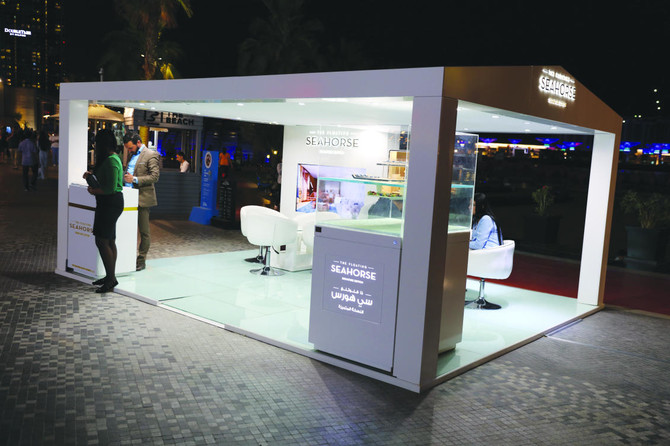
Dubai developers splurge on adverts to sell homes from beach to mall
Dubai developers splurge on adverts to sell homes from beach to mall
Latest updates




© 2026 SAUDI RESEARCH & PUBLISHING COMPANY, All Rights Reserved And subject to Terms of Use Agreement.