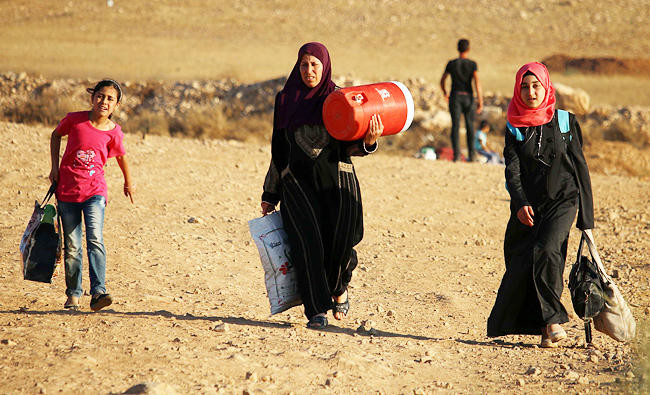
BEIRUT: More than 13 million Syrians are in need of aid despite a relative drop in violence in their war-torn country in recent months, the UN said on Tuesday.
Upwards of 330,000 people have been killed since Syria’s conflict erupted in March 2011 with anti-government protests, and the violence has displaced over half the population, both internally and abroad, as refugees.
“Entering the seventh year of the crisis, the scale, severity and complexity of needs across Syria remain overwhelming,” the report by the UN’s Office for the Coordination of Humanitarian Affairs said.
“Some 13.1 million people in Syria require humanitarian assistance. Of these, 5.6 million people are in acute need,” OCHA added.
The figure represents a slight drop, from 13.5 million people in need in 2016, according to the UN.
Earlier this year, government allies Russia and Iran and rebel backer Turkey signed a deal to set up four so-called “de-escalation zones” in Syria.
The zones have brought a relative drop in violence across the country, though there has been an uptick in clashes and strikes in recent weeks in the Eastern Ghouta region near Damascus.
The implementation of the zones has also done little to increase humanitarian access, despite repeated calls from UN officials and others for sustained access to people in need.
The UN said 40 percent of the needy were children, adding that people in besieged or so-called “hard-to-reach” areas were particularly vulnerable.
While the report noted there “has been a reduction in violence in some areas,” it added that the impact of the truce zones “has been mixed” for civilians.
It also warned that up to 1.5 million Syrians could be newly displaced over the course of the coming year, though it also expected to see up to a million existing internally displaced Syrians return home.
The report predicted ongoing fighting in certain areas, including Idlib province in northwest Syria where a de-escalation zone is currently in place.
Idlib province is dominated by a former Al-Qaeda affiliate, and observers expect the area to eventually be attacked by either Syria’s government or outside forces.
The UN also saw little respite in sight for Eastern Ghouta, another truce zone, where violence has escalated despite the “de-escalation” deal.
The fighter-held area has been under government siege since 2013, with food and medical shortages leading to a malnutrition crisis and deaths.
“Civilians in UN-declared besieged areas, particularly in East Ghouta, are likely to remain deprived of sustained humanitarian assistance and have limited access to basic commodities and services,” the report warned.


![]()
13m Syrians need aid despite violence drop: UN
13m Syrians need aid despite violence drop: UN

Latest updates


Recommended


© 2026 SAUDI RESEARCH & PUBLISHING COMPANY, All Rights Reserved And subject to Terms of Use Agreement.