RIYADH: Health experts have expressed their concern over the high prevalence of diabetes cases in Saudi Arabia and blamed sedentary lifestyles and unhealthy diet for this dangerous trend.
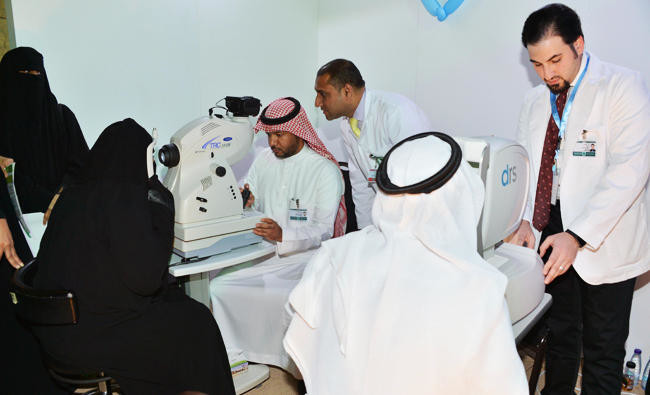
The Department of Pediatrics at the King Abdulaziz University Hospital recently launched a campaign to increase awareness about diabetes among the masses.
“Medical examinations of adults and children were conducted and a comprehensive report on the cases was prepared,” said Prof. Abdulmoein Eid Al-Agha, who supervised the campaign.
He said the prevalence of diabetes in the Kingdom is exacerbated by the consumption of junk food and beverages.
Al-Agha, also the acting chairman of the university’s Department of Pediatrics, said that some of the cases were referred to hospitals so that they could start receiving proper treatment. He said that during the campaign it was revealed that in most cases, people did not follow proper and healthy diets and were found to be consuming too much sugar and foods with a high-calorie count.
“Reports also showed excessive consumption of fast foods, which are the major cause of obesity,” said Al-Agha.
The health expert also blamed sedentary lifestyle for the spread of obesity and diabetes in the Kingdom.
The Lancet, a British medical journal, has ranked the Kingdom third in the world, after Malta and Swaziland, in terms of obesity and laziness, triggering warnings from Saudi experts such as Dr. Khalid Al-Ajaji.
Al-Ajaji expressed his concern over the high rate of diabetes cases in the Kingdom, adding that a local study found that 70 percent of Saudis were overweight and not obese.
“Many people mix obesity with being overweight. This differs as per the body mass index (BMI),” he said, adding that obesity is not a hereditary disease, but eating habits are mainly to blame for it.
“Habits such as staying awake at night and encouraging others to do so and indulging in eating just for fun lead to obesity and diseases like diabetes and (high) blood pressure,” he said.
He said that the most common cause of obesity is bad eating habits, lack of physical exercise, staying awake late at night and eating just before sleeping.
The British medical journal has put the ratio of laziness and obesity in the Kingdom at 86 percent, which is one of the causes of diabetes, which affects 25 percent of the Saudi population.
Obesity in Saudi Arabia is a growing health concern and it’s one of the leading causes of preventable deaths.
In 2013, it was estimated that almost 382 million people suffer from diabetes and Saudi Arabia was among the top 10 countries of the world with the highest prevalence.


Sedentary lifestyle, unhealthy diet identified as major causes of diabetes in Saudi Arabia
Sedentary lifestyle, unhealthy diet identified as major causes of diabetes in Saudi Arabia


Riyadh university takes part in academic conference
- The deanship said that its participation in the international conference aligns with a strategic direction to strengthen King Saud University’s institutional presence on specialized academic platforms
RIYADH: The Deanship of the Common First Year at King Saud University took part in the 45th Annual Conference on the First-Year Experience, held in Seattle, US.
This year’s edition focused on students’ academic and social transitions, guided advising, retention strategies and enhancing student engagement, in addition to showcasing successful institutional models for building sustainable transitional pathways.
The university’s participation aligns with a strategic direction that positions the first-year experience as a cornerstone of the quality of university outcomes.
During the scientific sessions and workshops, the dean delivered remarks highlighting the importance of intentionally designing the first-year student experience, emphasizing that academic support and advising programs should not be viewed as parallel services, but rather as an integral part of the educational experience’s structure.
He also reviewed models of the deanship’s initiatives to support new students, including early follow-up mechanisms and academic and skills development programs aimed at fostering university readiness from the first weeks of study.
The deanship said that its participation in the international conference aligns with a strategic direction to strengthen King Saud University’s institutional presence on specialized academic platforms and to leverage global expertise to develop policies and practices that support new students.


