Zimbabwe’s ruling party to expel Mugabe, war vets head says

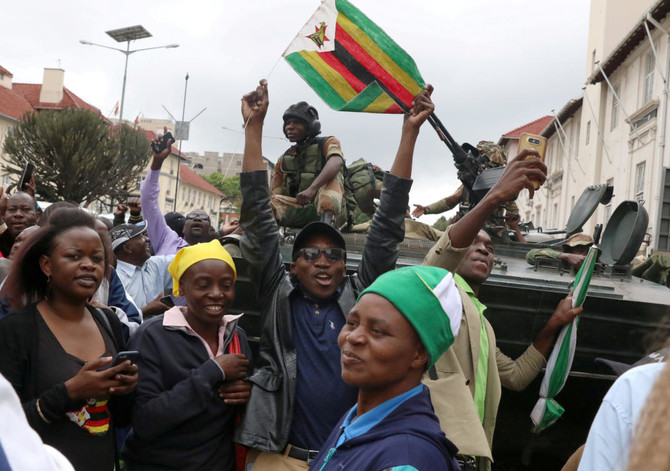
Protesters calling for Zimbabwean President Robert Mugabe to step down cheer in front of a military vehicle in Harare, Zimbabwe, November 18, 2017. (Reuters)
Updated 19 November 2017
Follow

Zimbabwe’s ruling party to expel Mugabe, war vets head says

HARARE: Zimbabwe’s ruling party will dismiss 93-year-old President Robert Mugabe as its leader on Sunday and kick him out, stripping its ruler for the last 37 years of one of his final vestiges of authority, the head of the liberation war veterans said.
Speaking to Reuters as he walked into an extraordinary meeting of ZANU-PF’s central committee, Chris Mutsvangwa said Mugabe was running out of time to negotiate his departure and should leave the country while he could.
“We are going all the way,” Mutsvangwa said. “He’s trying to bargain for a dignified exit.”
Mutsvangwa, who has spearheaded a campaign over the last 18 months to remove the only leader Zimbabwe has known, said ZANU-PF would also dismiss Mugabe’s wife Grace as head of its Women’s League and reinstate ousted vice president Emmerson Mnangagwa.
The former state security chief, known as “The Crocodile” is thought to be in line to head an interim post-Mugabe unity government that will focus on rebuilding ties with the outside world and stabilising an economy in freefall.
State television said late on Friday that Mugabe, who has so far resisted pressure to quit, would meet military commanders who seized power in a de facto coup four days ago, along with a Catholic priest who has been mediating between the two sides.
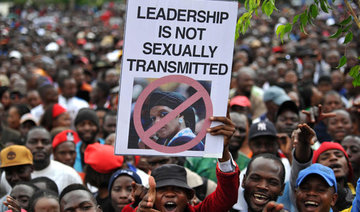
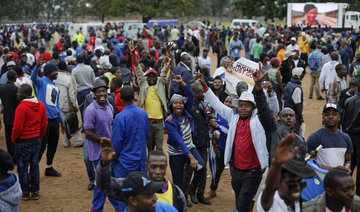
On Saturday, hundreds of thousands of people flooded the streets of Harare, singing, dancing and hugging soldiers in an outpouring of elation at Mugabe’s expected overthrow.
His stunning downfall in just four days is likely to send shockwaves across Africa, where a number of entrenched strongmen, from Uganda’s Yoweri Museveni to Democratic Republic of Congo’s Joseph Kabila, are facing mounting pressure to quit.
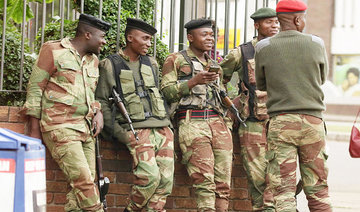
Men, women and children ran alongside the armored cars and troops who stepped in this week to oust the man who has ruled since independence from Britain in 1980.
Under house arrest in his lavish ‘Blue Roof’ compound, Mugabe has refused to stand down even as he has watched his support from party, security services and people evaporate in less than three days.
His nephew, Patrick Zhuwao, told Reuters the elderly leader and his wife were “ready to die for what is correct” rather than step down in order to legitimize what he described as a coup.
But on Harare’s streets, few seemed to care about the legal niceties as they heralded a “second liberation” for the former British colony and spoke of their dreams for political and economic change after two decades of deepening repression and hardship.
“These are tears of joy,” said Frank Mutsindikwa, 34, holding aloft the Zimbabwean flag. “I’ve been waiting all my life for this day. Free at last. We are free at last.”
The huge crowds in Harare have given a quasi-democratic veneer to the army’s intervention, backing its assertion that it is merely effecting a constitutional transfer of power, rather than a plain coup, which would entail a diplomatic backlash.
Despite the euphoria, some Mugabe opponents are uneasy about the prominent role played by the military, and fear Zimbabwe might be swapping one army-backed autocrat with another, rather than allowing the people to choose their next leader.
“The real danger of the current situation is that having got their new preferred candidate into State House, the military will want to keep him or her there, no matter what the electorate wills,” former education minister David Coltart said.
The United States, a long-time Mugabe critic, said it was looking forward to a new era in Zimbabwe, while President Ian Khama of neighboring Botswana said Mugabe had no diplomatic support in the region and should resign at once.


Pakistan killed over 80 militants in strikes on TTP camps in Afghanistan — official

Updated 59 min ago
Follow

Pakistan killed over 80 militants in strikes on TTP camps in Afghanistan — official

  • Saturday’s airstrikes followed a series of attacks inside Pakistan amid a surge in militancy
  • The Afghan Taliban authorities accuse Pakistani forces of killing civilians in the airstrikes

ISLAMABAD: Pakistan’s airstrikes in Afghanistan destroyed seven Tehreek-e-Taliban Pakistan (TTP) camps and killed over 80 militants, a Pakistani security official said on Sunday, with the Afghan Taliban accusing Pakistani forces of killing civilians in the assault.

Saturday’s airstrikes followed a series of attacks inside Pakistan amid a surge in militancy. Authorities say the attacks, particularly in Khyber Pakhtunkhwa province and the Pakistani capital of Islamabad, were carried out by the TTP and allied groups that Islamabad alleges are operating from sanctuaries in Afghanistan. Kabul denies this.

According to Pakistan’s information ministry, recent incidents included a suicide bombing at a Shiite mosque in Islamabad, separate attacks in Bajaur and Bannu, and another recent incident in Bannu during the holy month of Ramadan, which started earlier this week. The government said it had “conclusive evidence” linking the attacks to militants directed by leadership based in Afghanistan.

“Last night, Pakistan’s intelligence-based air strikes destroyed seven centers of Fitna Al-Khawarij TTP in three provinces of Nangarhar, Paktika and Khost, in which more than eighty Khawarij (TTP militants) have been confirmed killed, while more are expected,” a Pakistani security official, who spoke on condition of anonymity, told Arab News.


An earlier statement from Pakistan’s information ministry said the targets included a camp of a Daesh regional affiliate, the Islamic State Khorasan Province (ISKP), which claimed a suicide bombing at an Islamabad Shiite mosque that killed 32 people this month.

In an X post, Afghan government spokesperson Zabihullah Mujahid said Pakistani forces had violated Afghan territory.

“Pakistani special military circles have once again trespassed into Afghan territory,” Mujahid said. “Last night, they bombed our civilian compatriots in Nangarhar and Paktika provinces, martyring and wounding dozens of people, including women and children.”

 The Afghan Taliban’s claims of civilian casualties could not be independently verified. Pakistan did not immediately comment on the allegation that civilians had been killed in the strikes.

In a post on X, Afghanistan’s foreign ministry said it had summoned Pakistan’s charge d’affaires to Afghanistan Ubaid-ur-Rehman Nizamani and lodged protest through a formal démarche in response to the Pakistani military strikes.

“IEA-MoFA (The Islamic Emirate of Afghanistan’s Ministry of Foreign Affairs) vehemently condemns the violation of Afghanistan’s airspace and the targeting of civilians, describing it as a flagrant breach of Afghanistan’s territorial integrity & a provocative action,” it said in a statement.

“The Pakistani side was also categorically informed that safeguarding Afghanistan’s territorial integrity is the religious responsibility of the Islamic Emirate of Afghanistan; henceforth, the responsibility for any adverse consequences of such actions will rest with the opposing side.”

Tensions between Islamabad and Kabul have escalated since the Afghan Taliban returned to power in 2021. Pakistan says cross-border militant attacks have increased since then and has accused the Taliban of failing to honor commitments under the 2020 Doha Agreement to prevent Afghan soil from being used for attacks against other countries. The Taliban deny allowing such activity and have previously rejected similar accusations.

Saturday’s exchange of accusations marks one of the most direct confrontations between the two neighbors in recent months and risks further straining already fragile ties along the volatile border.