DUBAI: Saudi Arabia’s Alsalam Aerospace Industries aims to double turnover within two years and could consider becoming a public company.
The Riyadh-based outfit that repairs, maintains and overhauls aircraft, has formed an alliance with other aerospace industries in the Kingdom, said CEO Yahya Homoud Al-Ghoraibi in an interview on the sidelines of the Dubai Airshow.
Such an approach mirrors a similar recent consolidation of aerospace and defense-focused companies in the UAE, as both countries seek to add high-value aviation jobs in line with economic diversification plans aimed at creating more private sector employment for citizens.
The company currently generates revenues in the range SR1 billion ($266 million) to SR1.2 billion. But that is expected to grow to about SR2 billion by 2019, said Al-Ghoraibi.
He said a public listing could be considered over the next five years.
“With the new vision, a lot of projects are coming to Alsalam and we are working hand-in-hand with some of the other offset companies to form an industrial alliance,” he said.
Alsalam is one of a group of Saudi aviation groups that have signed an initial agreement to form an alliance to undertake manufacturing of aircraft parts as well as maintenance work.
The move was announced by TAQNIA Aeronautics on Monday. Other companies in the alliance include Middle East Propulsion, Advanced Electronics, Advanced Arabian Simulation, Saudia Aerospace Engineering Industries, Aircraft Accessories and Components and Saudi Rotorcraft Support.
Based next to King Khalid International Airport in Riyadh, Alsalam employs about 2,600 people — almost 60 percent of whom are Saudis.
Its corporate brochure shows a picture of the Douglas DC-3 plane that was gifted by President Roosevelt to King Abdul Aziz in 1945 — marking the birth of civil aviation in the country.
The company was established in 1988 as an “offsets” program, aimed at encouraging knowledge transfer from foreign companies winning big contracts in the country to local joint ventures.
Other Gulf states have developed their own offsets programs to attract more inward investment and the economic visions of both Saudi Arabia and the UAE identify aviation as a key focus.
The offset system prioritizes Saudi-origin products and stipulates that a proportion of the technical or services component of contracts are awarded locally.
But the acceleration of economic reforms in the Kingdom is putting even more pressure on foreign corporations hoping to win work in Saudi Arabia to demonstrate that they are helping to transfer skills, create jobs and build capacity.
BAE Systems, the world’s third-largest defense company, highlighted the importance of that process in winning work in the Kingdom.
“This is all driven by Vision 2030,” said Guy Griffiths, BAE Systems’ international managing director during the company’s first-half earnings webcast in August.
“In every negotiation that’s conducted, whether with us or other defense suppliers, a key component beyond the price and specifications of the product is what is the industrial, training, development and technology transfer contribution that goes with this order? It’s probably the most preeminent part of every negotiation,” he said.
Frost & Sullivan expects that the Saudi military offsets market will grow at an annual rate of 3.9 percent to reach $62.6 billion by 2021.


![]()
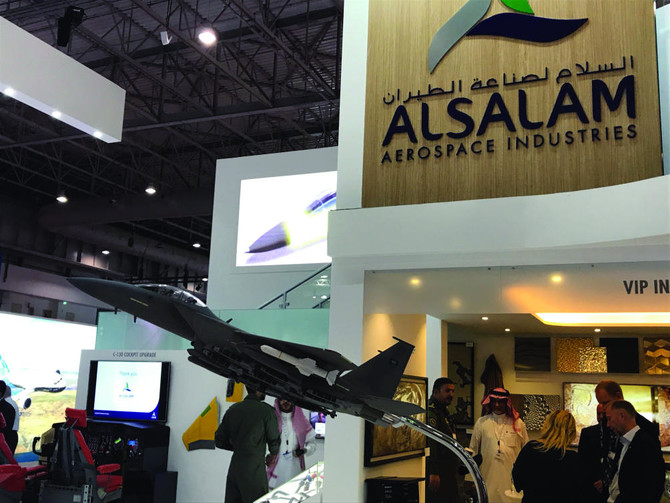
Saudi Arabia’s Alsalam Aerospace set to double turnover, mulls long-term IPO
Saudi Arabia’s Alsalam Aerospace set to double turnover, mulls long-term IPO
Latest updates


© 2026 SAUDI RESEARCH & PUBLISHING COMPANY, All Rights Reserved And subject to Terms of Use Agreement.