AL-QAIM, Iraq: They emerge timidly from houses to survey the debris-strewn streets of their town. As Iraqi forces hunt down diehard jihadists, Al-Qaim residents recall three years of hell in “open-air prison.”
“At last we’ll be able to sleep easily without worrying about air raids or being arrested,” says a smiling clearly relieved Qassem Derbi.
“We’re no longer afraid of going to prison or anything else.”
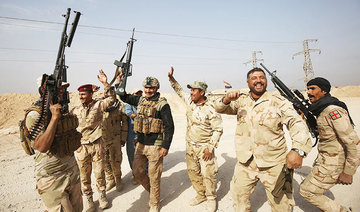
Iraqi forces took Al-Qaim, one of the last refuges in Iraq of the Daesh group, on Friday.
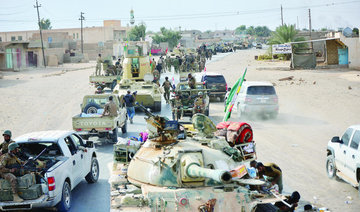
As members of Iraq’s military deploy in the streets of Al-Qaim, dust-covered not only from the destruction of warfare but also by a sandstorm, Derbi spoke of life under Daesh.
The jihadist group entered the important desert town a few kilometers from the border with Syria in 2014, and quickly made its presence felt.
“We weren’t allowed to use phones, we couldn’t sleep, we had no rights to do anything at all,” says the young Iraqi.
“We were living in an open-air prison where we were only allowed to walk around — anything else would be held against us.”
On Sunday, for the first time in more than three years, Iraq’s national flag was once again raised in Al-Qaim — by Prime Minister Haider Al-Abadi.
Iraq’s authorities are now battling the final pockets of jihadists in their last footholds around the town, and Syrian troops are also approaching, hemming them in on their side of the frontier.
After the Daesh offensive, Iraq’s western desert in Anbar province and its porous border entrenched itself as a jihadist smuggling and supply route.
Standing outside his home in Al-Qaim, a clean-shaven Aqil Mussa tells AFP of a life of “oppression and humiliation” under Daesh.
“We had access to nothing — no schools, no electricity, no water. We even lacked bread,” he says, his throat tightening.
Derbi says that patience paid off for the small number of Al-Qaim residents who stayed, out of the 50,000 who lived there before Daesh swept in.
“The security forces have liberated us,” he says, adding that the departure of the jihadists means the impending return of relatives who had fled their onslaught.
“We haven’t seen them for months, years in some cases,” he says.
“Today, if God wills it, they will return and we will see them again.”
Slightly further down the road, a small group of men, some holding white flags, has ventured out into streets where the burned out chassis of car bombs used by the jihadists stand.
Other streets are still partly blocked by earthen barricades put up by fighters of the “caliphate” and now crushed by bulldozers of the Iraqi forces.
Children flash the “V for victory” sign with their fingers at troops and soldiers as they pass in the street.
Since the jihadist group captured nearly a third of Iraq’s territory in 2014, Iraqi forces have taken almost all of it back.
Now only the nearby town of Rawa on the Euphrates River and the immediate desert area round it remains in Daesh hands.