TOKYO: Three high school girls, including a 15-year-old, were among the nine people mutilated by a suspected serial killer in Japan, reports said Monday, as one woman described how she had a lucky escape.
At least three of the victims were high school pupils from different regions and one of them was a 15-year-old girl who went missing in late August, several media quoted police sources as saying.
Not all of the victims have been identified but some were tracked down via bank cards and other items left in the apartment room of Takahiro Shiraishi, where the Japanese man allegedly murdered and hacked up nine young people.
Some cellphones also lost contact near the apartment, reports said.
On the morning of Halloween, police uncovered a grisly house of horrors behind Shiraishi’s front door: nine dismembered bodies with as many as 240 bone parts stashed in coolers and tool boxes, sprinkled with cat litter in a bid to hide the evidence.
He moved into the one-room apartment in Zama, a southwestern suburb of Tokyo, on August 22.
He is suspected of having lured people with suicidal tendencies via Twitter by telling them he could help them in their plans or even die alongside them.
He reportedly went ahead with killing people even after realizing what they had wanted was just to talk rather than to die.
“I had no intention of killing myself at all. None (of the victims) wanted to die actually,” the private Fuji television network quoted Shiraishi as telling investigators.
He allegedly hanged victims after giving them alcohol or sleeping pills or strangling them until they fainted.
He may have continued to kill if not arrested.
A woman in her 20s claims to have arranged a meeting with Shiraishi for the day after he was eventually arrested after discussing suicide via email and phone for two months.
He refused to talk when she said she could hear a woman groaning in the background during a telephone conversation on one October night.
“He had given me two options. One was that he makes me unconscious by putting sleep drug in my drink and then strangles me with a rope. The other was that he strangles me with a rope from behind while I’m watching TV or something,” she told the Fuji network.
“If I had met with him, I may have been dismembered like other victims. I may be lucky but I’m rather scared now.”


15-year-old girl among Japan ‘serial killer’ mutilation victims
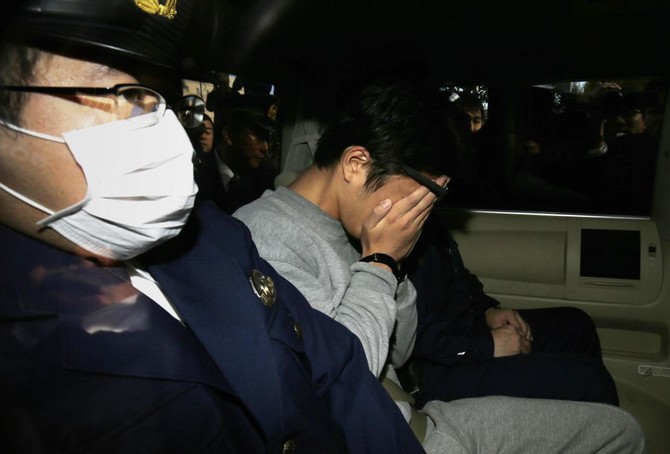
15-year-old girl among Japan ‘serial killer’ mutilation victims


Cambodia takes back looted historic artifacts handled by British art dealer
- The objects were returned under a 2020 agreement between the Ministry of Culture and Fine Arts and the family of the late Douglas Latchford, a British art collector and dealer who allegedly had the items smuggled out of Cambodia
PHNOM PENH, Cambodia: Cambodian officials on Friday received more than six dozen historic artifacts described as part of the country’s cultural heritage that had been looted during decades of war and instability.
At a ceremony attended by Deputy Prime Minister Hun Many, the 74 items were unveiled at the National Museum in Phnom Penh after their repatriation from the United Kingdom.
The objects were returned under a 2020 agreement between the Ministry of Culture and Fine Arts and the family of the late Douglas Latchford, a British art collector and dealer who allegedly had the items smuggled out of Cambodia.
“This substantial restitution represents one of the most important returns of Khmer cultural heritage in recent years, following major repatriations in 2021 and 2023 from the same collection,” the Culture Ministry said in a statement. “It marks a significant step forward in Cambodia’s continued efforts to recover, preserve, and restore its ancestral legacy for future generations.”
The artifacts were described as dating from the pre-Angkorian period through the height of the Angkor Empire, including “monumental sandstone sculptures, refined bronze works, and significant ritual objects.” The Angkor Empire, which extended from the ninth to the 15th century, is best known for the Angkor Wat archaeological site, the nation’s biggest tourist attraction.
Latchford was a prominent antiquities dealer who allegedly orchestrated an operation to sell looted Cambodian sculptures on the international market.
From 1970 to the 1980s, during Cambodia’s civil wars and the communist Khmer Rouge ‘s brutal reign, organized looting networks sent artifacts to Latchford, who then sold them to Western collectors, dealers, and institutions. These pieces were often physically damaged, having been pried off temple walls or other structures by the looters.
Latchford was indicted in a New York federal court in 2019 on charges including wire fraud and conspiracy. He died in 2020, aged 88, before he could be extradited to face charges.
Cambodia, like neighboring Thailand, has benefited from a trend in recent decades involving the repatriation of art and archaeological treasures. These include ancient Asian artworks as well as pieces lost or stolen during turmoil in places such as Syria, Iraq and Nazi-occupied Europe. New York’s Metropolitan Museum of Art is one of the prominent institutions that has been returning illegally smuggled art, including to Cambodia.
“The ancient artifacts created and preserved by our ancestors are now being returned to Cambodia, bringing warmth and joy, following the country’s return to peace,” said Hun Many, who is the younger brother of Prime Minister Hun Manet.


