UK defence secretary quits over sexual harassment allegation

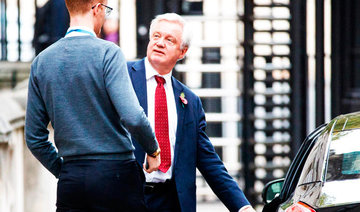
This file photo taken on October 31, 2017 shows Britain's Defence Secretary Michael Fallon leaving 10 Downing Street after the weekly meeting of the cabinet in central London. (AFP)
Updated 02 November 2017
Follow

UK defence secretary quits over sexual harassment allegation

LONDON: British defense minister Michael Fallon resigned from his position on Wednesday saying he accepted his conduct in the past had fallen below high standards.
Fallon was named in an a newspaper article earlier this week which said he had touched a radio presenter’s knee in 2002.
The BBC reported on Monday that Fallon’s spokesman said he had apologized for the incident at the time. The presenter tweeted that she considered the matter closed.
After sexual abuse allegations against Hollywood film producer Harvey Weinstein prompted hundreds of thousands of women and men to share stories about inappropriate behavior, Britain’s parliament — a bastion of tradition — has been no exception.
Earlier on Wednesday British Prime Minister Theresa May said action would be taken when there were allegations and evidence of sexual misconduct.
“I am very clear that we will take action against those where there are allegations that we see, and the evidence is there, that there has been misconduct,” she told lawmakers.


UK drops plans for mandatory digital ID for workers in latest U-turn, media reports

Updated 4 sec ago
Follow

UK drops plans for mandatory digital ID for workers in latest U-turn, media reports

  • The ‌digital ID would be held ‌on ⁠people’s mobile ​phones, the government ‌said
  • The plan drew criticism from political opponents and warning it could infringe on civil liberties

LONDON: Britain is set to drop plans to make it mandatory for workers to hold a digital identity document, The Times newspaper, the BBC and ​other media reported on Tuesday, potentially marking another policy U-turn for the Labour government.
Prime Minister Keir Starmer announced in September last year that his government would require every employee to hold a digital ID in an attempt to tackle illegal migration and reduce the threat from the populist Reform UK party.
The government ‌said the ‌digital ID would be held ‌on ⁠people’s mobile ​phones ‌and become a mandatory part of checks employers must make when hiring staff.
The plan drew criticism from political opponents, with some arguing it would not deter illegal migration and others warning it could infringe on civil liberties.
The Times said the government abandoned the plan amid concerns ⁠it could undermine public trust in the scheme, noting that when introduced ‌in 2029, digital IDs would ‍be optional rather than mandatory.
Other ‍forms of documentation, such as an electronic visa ‍or passport, would still be valid, The Times said.
“We are committed to mandatory digital right to work checks,” a government spokesperson said. “We have always been clear that details on the ​digital ID scheme will be set out following a full public consultation which will launch ⁠shortly.”
The spokesperson said current checks rely on a “hodgepodge” of paper-based systems, with no record of whether they were ever carried out, leaving the process open to fraud and abuse.
If plans for a mandatory digital ID are dropped, it would mark another policy climbdown for Starmer.
In December, the government scaled back a plan to raise more tax from farmers, months after it backed down on cuts to welfare spending and scaled back a ‌proposal to reduce subsidies on energy bills for the elderly.