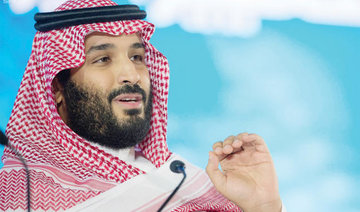
NEW YORK: Crown Prince Mohammed bin Salman’s efforts to modernize Saudi Arabia by returning to “moderate Islam” has been welcomed by the UN official charged with promoting traditional rights around the world.
Karima Bennoune, the UN’s special rapporteur in the field of cultural rights, praised the crown prince’s reforms as “very welcome steps” while also highlighting some areas in Saudi policy where she felt there was room for improvement.
The crown prince last week unveiled plans to return the Kingdom to a more moderate form of Islam that is more open to other religions and to “eradicate the remnants of extremism very soon.”
Bennoune, an Algerian-American and professor at the University of California Davis School of Law, welcomed the statement and praised last month’s decision to allow women to drive cars for the first time, which is due to come into effect next year.
“Certainly the suggestion of what was termed in the speech a more moderate form of Islam is something certainly to be recognized. What is absolutely, critically important now is to see the implementation of those words and what that means,” Bennoune told Arab News.
Bennoune addressed several steps Saudi leaders could take that would help the country realize the goal of a more tolerant, pluralist society that the crown prince described in his speech at the Future Investment Initiative (FII) conference in Riyadh.
She put emphasis on women, saying that some had faced pressure regarding artistic performances, while many others faced issues over “modest dress and punishments that can result if they don’t comply” with clothing rules.
Bennoune has been a human rights advocate for more than two decades and was appointed a UN rapporteur in October 2015. For the UN, she works under the Geneva-based Human Rights Council, but can speak independently of governments and the world body.
Last year, the Saudi crown prince unveiled plans, known as Vision 2030, to bring social and economic change to the oil-dependent Kingdom. To that end, he has proposed a partial privatization of state oil company Saudi Aramco and to boost the size of the nation’s sovereign wealth fund.


![]()

Saudi drive to ‘moderate Islam’ welcomed at UN
Saudi drive to ‘moderate Islam’ welcomed at UN
Latest updates


© 2026 SAUDI RESEARCH & PUBLISHING COMPANY, All Rights Reserved And subject to Terms of Use Agreement.