China angered over US aluminum foil anti-dumping duties

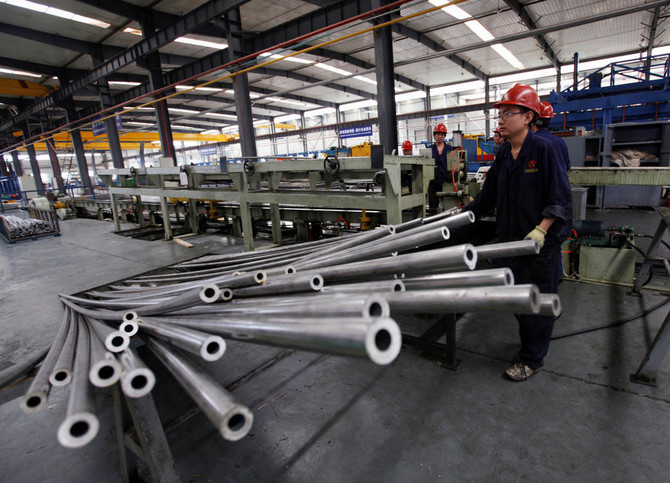
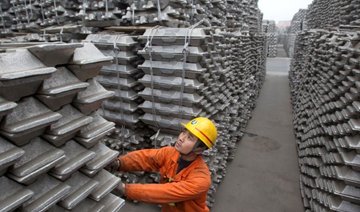
Above, workers at the Qinghai Guoxin Aluminium Industry Incorporated Company workshop in Qinghai province. Beijing has complained the US was still using “discriminatory” surrogate country pricing methods to put high duties on Chinese goods. (Reuters)
Updated 29 October 2017
Follow

China angered over US aluminum foil anti-dumping duties

BEIJING: China said it was “strongly dissatisfied” with the US decision to impose anti-dumping duties ranging from 97 percent to 162 percent on Chinese aluminum foil, urging Washington to correct its “mistaken methods.”
The preliminary ruling on Friday was a victory for US aluminum foil makers who filed a complaint with the Commerce Department accusing Chinese producers of dumping foil into the US market at below cost or fair market value.
In 2016, US aluminum foil imports from China were valued at $389 million, according to the Commerce Department, which said it would issue its final determination for the duties on February 23.
Chinese Commerce Ministry official Wang Hejun said in a statement late on Saturday that the United States was still using “discriminatory” surrogate country pricing methods to put high duties on Chinese goods.
The United States is not only harming the interests of Chinese companies, but also damaging the authority of multilateral trade rules, Wang said.
“We urge the United States to earnestly fulfill its international obligations, and take real action to correct its mistaken methods,” Wang said, adding that China would take steps to protect Chinese companies’ legal rights.
Beijing complains that the United States uses a now expired clause in China’s 2001 World Trade Organization accession deal that for years allowed other WTO members to use a third country’s prices to assess whether Chinese goods were being dumped.
The US Commerce Department said the aluminum foil duties were based on evidence using its standard methodology for determining dumping duties against non-market economies.
Washington has determined in the past that such measures were needed because China failed the test of whether it operates as a market economy, given the government’s control over price and output decisions of enterprises and other factors, such as the extent to which its currency is convertible.
US President Donald Trump’s administration has made enforcement of trade laws a top priority.
From January 20, the day Trump took office, through October 25, the Commerce Department said it initiated 77 anti-dumping and countervailing duty investigations, up 61 percent from the previous year.


Free trade negotiations between GCC, India mark new phase of partnership, says sec-gen

Updated 24 February 2026
Follow

Free trade negotiations between GCC, India mark new phase of partnership, says sec-gen

RIYADH: The Gulf Cooperation Council’s secretary-general affirmed that the negotiations for a free trade agreement between the GCC and India, and the signing of the joint statement, represents a new phase of strategic partnership.

Jasem Mohamed Al-Budaiwi said that this contributes to enhancing close cooperation and strengthening economic and trade ties, according to the Saudi Press Agency.

This came during the signing ceremony of the joint statement on launching the free trade agreement negotiations between the Al-Budaiwi and India’s Minister of Commerce and Industry, Piyush Goyal, which took place in New Delhi, on Tuesday.

During the signing ceremony, Al-Budaiwi said that the Terms of Reference, signed on Feb. 5, provide a comprehensive and clear framework for these negotiations. The two nations agreed to discuss enhancing cooperation in vital strategic areas, including trade in goods, customs procedures, and services.

Additionally, the framework covers Sanitary and Phytosanitary measures, intellectual property rights, cooperation on Micro, Small, and Medium Enterprises, along with other topics of mutual interest. This reflects the comprehensive nature of the agreement and its ability to keep pace with the future economy.

Al-Budaiwi expressed hope that these negotiations would lead to a comprehensive and ambitious free trade agreement that works to remove customs and non-customs barriers, enhance the flow of quality investments in both directions, and achieve further liberalization in trade and investment cooperation between the GCC and India for mutual benefit. 

This would provide a stimulating economic environment and an investment climate that opens broad horizons for the business sector, supports supply chains, and accelerates the pace of economic growth in line with the ambitious developmental visions of the GCC states. 

The top official affirmed the full readiness of the General Secretariat to host the first round of negotiations at its headquarters in Riyadh during the second half of this year.

The two sides held a meeting during which they reviewed the existing cooperation relations between the GCC and India and discussed ways to develop and elevate them to broader horizons, serving mutual interests and enhancing opportunities for strategic partnership between the two sides, particularly in the economic, investment, and trade fields.

They praised the role undertaken by the negotiating teams from both sides, appreciating the efforts contributing to reaching a comprehensive agreement that enhances economic integration and supports the smooth flow of trade between the two nations.