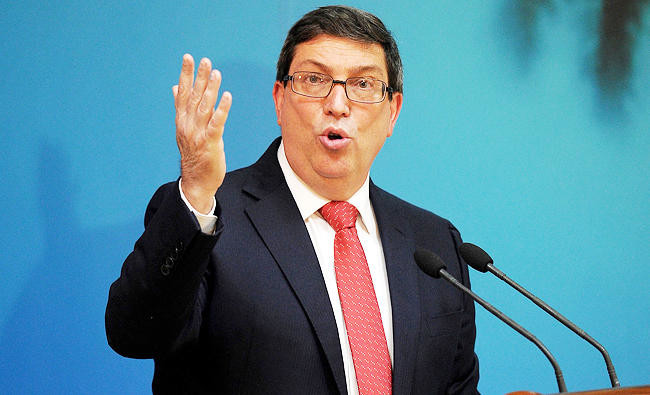
WASHINGTON: Cuba has hit out at allegations that mysterious sonic attacks made American diplomats ill in the country, dismissing them as “political manipulation” aimed at undermining relations.
At least 24 diplomats in Cuba suffered health problems from November 2016 to August 2017, in what US officials say may have been a result of attacks carried out with some kind of covert acoustic device.
Washington has not formally blamed Havana, but in mid-October Trump said that he holds Cuba responsible — and the White House has said it believes the country could bring the attacks to a halt.
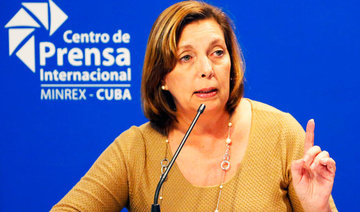
Cuban Foreign Minister Bruno Rodriguez said early Saturday it was “unacceptable and immoral” that any political differences between the two countries would translate into measures affecting their nationals.
“The so-called sonic attacks ... are totally false,” he said in a surprise appearance at a meeting of Cubans living in the United States, held in Washington.
He slammed the allegations as “political manipulation aimed at damaging bilateral relations.”
Ties with Havana were only fully restored in 2015 after a half-century Cold War breakdown, but have been strained since President Donald Trump took office in January.
Rodriguez said that given the allegations “there has been a serious deterioration in the relationship between both governments and both countries.”
Following the spate of illnesses, in late September the US withdrew more than half of its diplomatic staff in Cuba and expelled 15 Cuban diplomats from Washington.
Cuba insists it has shown good will by letting FBI investigators visit the island three times this year to investigate.
For a month now US officials have stopped issuing visas for Cubans to travel to the United States, a move Havana deems unjustified.
The State Department said that Cubans can process their immigrant visas at the US embassy in Colombia, and that other visas could be requested in other countries.
This procedure “will make the already discriminatory requirement” for obtaining visas “impossible,” Rodriguez said.
He decried having to travel abroad to “perform painful face-to-face interviews in the era of digital communications.”
Cuban state TV aired a documentary late Thursday rejecting any responsibility for the attacks and accusing the Americans of failing to cooperate.
A doctor on the investigative team, Manuel Villar, said Washington has refused to share the medical records of those affected or let US doctors talk to Cuban ones.
“There was zero cooperation and we have had only communications about these events that, in our opinion, were not expert-level,” said Villar.
Those who came down ill reported physical symptoms including hearing loss, headaches, nausea, cognitive issues, and difficulty sleeping.
The Cuban documentary said there is no evidence to confirm what may have caused these symptoms.
Cuba says its experts had considered the possibility of causes like toxins, electromagnetic waves or even insects.