Britain’s competition watchdog to investigate hotel booking sites

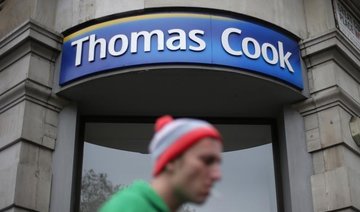
Britain’s competition regulator said it was concerned about the clarity, accuracy and presentation of information on sites such as Expedia. (Reuters)
Updated 27 October 2017
Follow

Britain’s competition watchdog to investigate hotel booking sites

LONDON: Britain’s competition regulator said on Friday it would investigate hotel booking websites over its concerns that they did not help people find the best deals and were potentially breaking consumer law.
The Competition and Markets Authority (CMA) said it was concerned about the clarity, accuracy and presentation of information on sites, which could mislead consumers.
Major hotel booking site operators include US companies Expedia, Booking.com, which is owned by The Priceline Group, Hotels.com and Germany’s Trivago, which is majority owned by Expedia.
The CMA said it would examine how hotels were ranked, for example whether results were influenced by how much commission a hotel pays over the customer’s requirements, and the use of pressure selling, such as claims about how many rooms were left.
It also had concerns over the discounts advertised for the rooms and hidden charges, including taxes and booking fees.
CMA chief executive Andrea Coscelli said around 70 percent of people looking for a hotel last year used the sites and they should all be confident they were getting a good deal.
“To do this, sites need to give their customers information that is clear, accurate and presented in a way that enables people to choose the best deal for them,” he said.
“But we are concerned that this is not happening and that the information on sites may in fact be making it difficult for people to make the right choice.”
If the CMA finds that sites’ practices or claims are false or misleading and are breaking consumer law, it can take enforcement action.


Saudi industrial output rises 8.9% in December: GASTAT 

Updated 16 sec ago
Follow

Saudi industrial output rises 8.9% in December: GASTAT 

RIYADH: Saudi Arabia’s industrial production rose 8.9 percent in December from a year earlier, driven by stronger mining and manufacturing activity, signaling continued momentum in the Kingdom’s non-oil and energy sectors. 

The Industrial Production Index reached 113.6 in December, up from 104.3 a year earlier, the General Authority for Statistics said.  

The latest IPI figures underscore continued momentum in the Kingdom’s industrial sector as Saudi Arabia pursues economic diversification under its Vision 2030 agenda. 

In its latest report, GASTAT stated: “Preliminary results indicate an increase of 8.9 percent in the IPOI in December 2025 compared to the same month of the previous year, supported by the rise in mining and quarrying activity, manufacturing activity and water supply, sewerage and waste management and remediation activities.”  

Mining and quarrying activity — the largest component of the index — increased 13.2 percent year on year after Saudi Arabia raised oil production to 10.1 million barrels per day from 8.9 million bpd a year earlier. Manufacturing expanded 3.2 percent, supported by a 13.4 percent rise in chemicals output and a 7.3 percent increase in food production. 

The sub-index of electricity, gas, steam and air-conditioning supply activity recorded an annual decrease of 2.5 percent. 

The sub-index of water supply, sewerage and waste management and remediation activities increased 9.4 percent. 

Compared to November, Saudi Arabia’s IPI recorded a marginal decline of 0.1 percent. 

On a monthly basis, the sub-index of mining and quarrying activity increased 0.3 percent. 

Manufacturing activities also rose 0.3 percent in December compared to the previous month, driven by a 2.8 percent increase in the manufacture of chemicals and chemical products. 

Compared to November, the manufacture of food products increased 9.6 percent in December. 

Overall, the index of oil activities advanced 10.1 percent year on year in December, while non-oil activities increased 5.8 percent. 

Compared to November, oil activities decreased 0.3 percent, while non-oil activities increased 0.4 percent. 

The IPI measures changes in industrial output based on the International Standard Industrial Classification framework and covers mining, manufacturing, utilities and waste management sectors.