Taipei: Taiwan’s president Tsai Ing-wen said Thursday that the end of China’s landmark party congress signals an “opportunity for change,” as she called for dialogue with Chinese leader Xi Jinping.
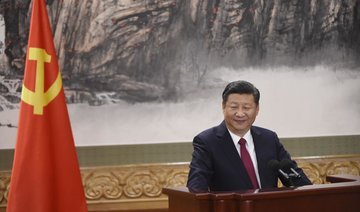
Tsai was speaking publicly for the first time since Xi was handed a second term during the 19th Communist Party meeting that concluded this week, which cemented the Chinese president’s grip on power.
Ties between Taiwan and China have become increasingly frosty since Tsai was elected president last year.
Beijing cut off official communication with her government shortly after it took office due to her refusal to publicly accept the principle that both sides belong to “one China.”
The rivals split after a civil war in 1949 and Taiwan is a self-governing democracy today, although it has never formally declared independence.
China still sees it as part of its territory to be reunified, by force if necessary.
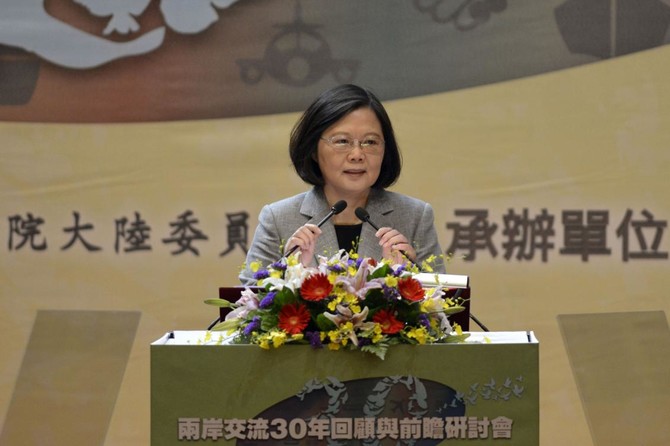
At an event Thursday marking the 30th anniversary of cross-strait exchanges, Tsai said she hoped communications could now resume.
“I must once again call on leaders from both sides to uphold tact and balanced, traditional political wisdom, to find a breakthrough,” she said.
She added that they should also work toward “permanently abolishing fears of hostility and war.”
Tsai recalled that it had been 30 years since Taiwan began allowing Nationalist soldiers who fled to the island after the Communists’ victory on the mainland to return home to China to visit relatives.
It was a “milestone” in cross-strait development, Tsai said.
During the party congress, Xi stood by Beijing’s offer to restore communication with Taiwan if Tsai’s government readopts the “1992 consensus.”
The so-called consensus agrees that there is only “one China” without specifying which is its rightful representative.
It was acknowledged by Tsai’s predecessor Ma Ying-jeou, paving the way for an unprecedented thaw in relations.
But Tsai shows no sign of changing her stance — her Democratic Progressive Party is traditionally pro-independence.
Xi delivered a stern warning to Taiwan during the twice-a-decade congress, saying Beijing would thwart any attempts to push for Taiwan independence.
Since relations have worsened under Tsai, China has attempted to intimidate Taiwan by sailing its sole aircraft carrier and flying jets near the island during military exercises.
It has also blocked the island from participating in key international events.
Tsai has previously called on Beijing to find “new modes” for cross-strait interactions and has insisted Taipei will not cave into pressure.


![]()
Taiwan leader hopes for ‘breakthrough’ with China
Taiwan leader hopes for ‘breakthrough’ with China


Latest updates


© 2026 SAUDI RESEARCH & PUBLISHING COMPANY, All Rights Reserved And subject to Terms of Use Agreement.