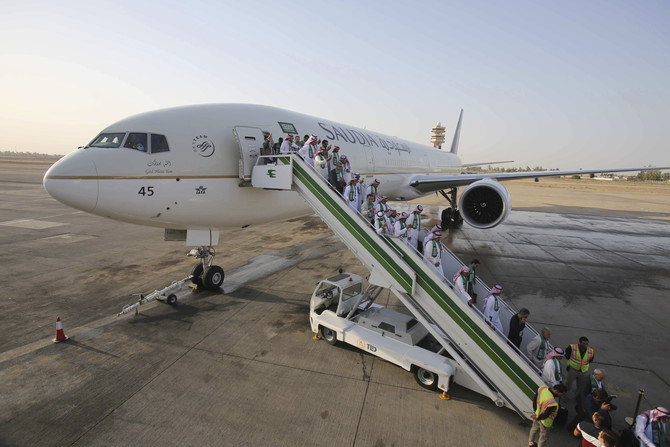
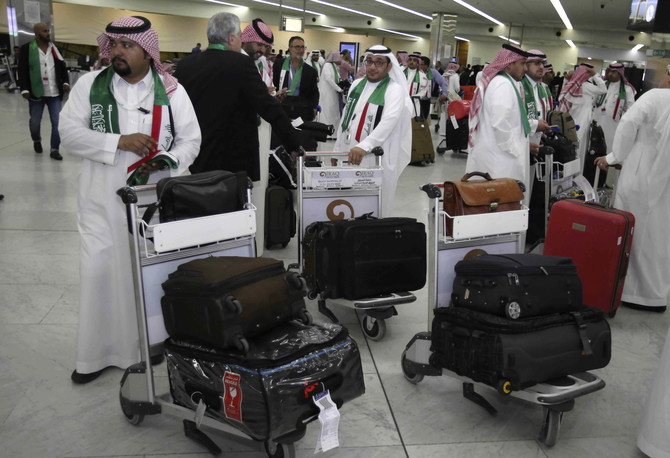
RIYADH: Saudi Airlines inaugurates its first flight to the Iraqi capital Baghdad on 30 October 2017 according to Sabq. This will be the first flight after 27 years of interruption.
The Saudi chargé d’affaires in Baghdad, Abdul Aziz Al-Shammari, had previously confirmed that over 20 weekly flights will be operating between Iraq and Saudi Arabia.
On Wednesday, Saudi Arabian budget airline, Flynas, made the first direct flight from the kingdom to Iraq since 1990.

Saudi Airlines to operate regular Baghdad route late October
Saudi defense chief rallies international support amid escalating Iranian strikes
- Iran unleashes wave of drone strikes on Kingdom’s Eastern Province
- Missiles fired at Prince Sultan Air Base intercepted, destroyed
RIYADH: Saudi Defense Minister Prince Khalid bin Salman held separate phone calls with his Turkish, Romanian, and South Korean counterparts as Iranian attacks on Gulf facilities continued on Thursday.
Iran escalated strikes on its Gulf neighbors in retaliation for ongoing US-Israeli attacks on Iranian territory.
After a brief pause Wednesday, drone attacks on Saudi Arabia resumed at 9 p.m., targeting the Eastern Province and the Shaybah oil field in the Empty Quarter. All the drones were stopped, the Saudi Ministry of Defense confirmed.
Missiles aimed at Prince Sultan Air Base in Al-Kharj were also intercepted and shot down, the ministry added.
In his call with Turkish Defense Minister Yasar Guler, Prince Khalid reaffirmed commitment to joint security measures and condemned Iranian aggression.
His conversation with Romanian counterpart Radu Miruta covered regional threats to global stability.
A call with South Korea’s Ahn Gyu-back similarly focused on condemning Iran’s actions and reviewing the broader regional picture.
The crisis traces back to February 28, when US and Israeli forces struck Iran. Tehran has since targeted Gulf states and US-Israeli assets across the region.
Iran has also declared a blockade on energy shipments through the Strait of Hormuz — a critical chokepoint for global oil and gas flows — sending commodity prices surging.