GENEVA: Some 582,000 Rohingya refugees have fled their homes in Myanmar and arrived in Bangladesh since late August, the United Nations said Tuesday, warning that thousands more were stranded at the border.
The UN said 582,000 members of the Rohingya community had crossed into Bangladesh since August 25, marking a jump of 45,000 from the 537,000 figure given at the weekend.
Marixie Mercado, a spokeswoman for the UN children’s agency, told reporters in Geneva though that the hike was not likely due to a sudden influx, but rather to improved access to some areas where many refugees had previously gone uncounted.
The Rohingya are fleeing violence in Myanmar’s Rakhine state, where the UN has accused troops of waging an ethnic cleansing campaign against them.
The numbers have soared since August 25, when militant attacks on Myanmar’s security forces in Rakhine sparked a major military backlash.
UN refugee agency (UNHCR) spokesman Andrej Mahecic expressed deep concern over the “condition of thousands of new arrivals who are stranded near the Bangladesh-Myanmar border.”
“Since Sunday night, an estimated 10,000-15,000 Rohingya refugees have entered Bangladesh through the Anjuman Para border crossing point in Ukhia district in the country’s south-east,” he told reporters.
He said many of them had chosen to remain in their homes in Myanmar’s northern Rakhine state despite repeated threats to leave or be killed.
“They finally fled when their villages were set on fire,” he said.
He said UNHCR staff had spoken with people who described walking for around a week to reach the Bangladesh border.
Most are still squatting in paddy fields in Bangladesh, and were waiting for permission to move away from the border, he said.
“UNHCR is advocating with the Bangladesh authorities to urgently admit these refugees fleeing violence and increasingly-difficult conditions back home,” Mahecic said.
“Every minute counts, given the fragile conditions they’re arriving in,” he stressed.


![]()
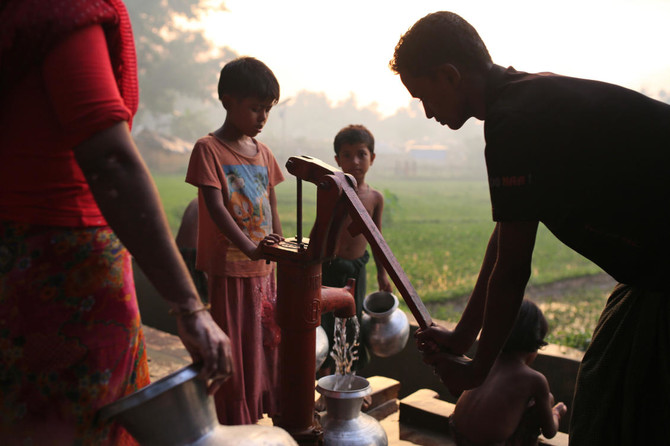
582,000 Rohingya to Bangladesh from Myanmar since August 25: UN
582,000 Rohingya to Bangladesh from Myanmar since August 25: UN

Latest updates


Recommended


© 2026 SAUDI RESEARCH & PUBLISHING COMPANY, All Rights Reserved And subject to Terms of Use Agreement.