286 Saudi islands on offer for tourism investment in southern Jazan

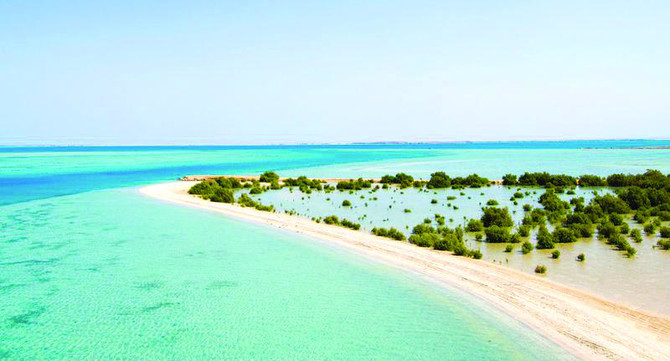
The 286 Farasan Islands are one of the biggest island groups in the southern part of Red Sea.
Updated 13 October 2017
Follow

286 Saudi islands on offer for tourism investment in southern Jazan

JAZAN: The Saudi Commission for Tourism and National Heritage (SCTH) has announced that 286 islands off the Jazan coast will be on the market for tourism investment to raise the state’s income.
Rustom Al-Kubaisi, head of the SCTH’s branch in Jazan, said that an executive committee has been formed to encourage tourism investment by Jazan Gov. Prince Mohammed bin Nasser bin Abdul Aziz on Wednesday, along with a center for tourism investment services.
Al-Kubaisi, who was appointed secretary-general of the committee, told Sabq e-newspaper that forming this committee aims to publicize the Jazan region and the tourism investments available, facilitate and accelerate investment procedures so that the region can attract more investors from the tourism sector and make a qualitative shift to tourism services, in accordance with the Kingdom’s Vision 2030.
The committee aims to raise the competitiveness of the tourism investment environment in Jazan by resolving obstacles facing investors; accelerating investment procedures; offering investment opportunities in a professional way; studying investors’ needs, wishes and reasons keeping them from investing; creating a well-studied and intensive marketing campaign to introduce the region; and offering investment opportunities through the participation in specialized exhibitions in the Kingdom as a first step, and in the Arab Gulf as a second step.
The 286 Farasan Islands, are one of the biggest island groups in the southern part of Red Sea, and one of the most important touristic locations, thanks to its natural beauty.
The SCTH has allocated SR3 billion ($800 million) to develop and transform the islands into a touristic environment. Farasan is the largest island of the Farasan Islands, located some 50 km offshore from Jazan. A number of uninhabited islands serve as breeding sites for large numbers of birds and Arabian gazelles.
Farasan Island was considered a major part of the trade in pearls in the Indian Ocean and the Red Sea in ancient times.


Experimental farm in Al-Lith looks into future of Saudi Arabian agriculture

Updated 58 min 22 sec ago
Follow

Experimental farm in Al-Lith looks into future of Saudi Arabian agriculture

  • Research initiative reflects strategic transformation

JEDDAH: An experimental farm in Saudi Arabia’s Al-Lith Governorate is one of the research initiatives reflecting the strategic transformation taking place in the Kingdom’s agricultural sector.

The farm uses highly efficient, sustainable production models that combine scientific research with commercial application, contributing to strengthening the country’s food security system and the sustainability of water resources.

Located in the Ghumaiqa Center on an area of about 10 hectares, the cutting-edge farm is a testing platform for modern agricultural technologies that tackle the challenge of water scarcity.

The farm includes developed open fields and modern greenhouses, supported by smart irrigation encompassing drip and sprinkler irrigation alongside surface and subsurface technologies.

All the systems operate via smart controls that enable the monitoring of water consumption and ensure improved efficiency, thereby achieving a balance between agricultural production and water conservation.

The farm also uses treated and diluted low-salinity seawater.

It aims to diversify agricultural water sources, reduce reliance on freshwater, and open new horizons for agriculture in coastal and semi-arid environments.

The project represents a promising investment opportunity in the field of smart agriculture, enabling the development of commercially scalable production models, particularly for high-value vegetables and fruits, while reducing operational costs associated with water and energy, enhancing the economic feasibility of future agricultural projects.

In addition, the project contributes to transferring and localizing agricultural expertise, supporting local food supply chains, and creating an attractive environment for agricultural investment.

This aligns with Sustainable Development Goals and enhances the efficiency of the private sector in adopting innovative agricultural solutions.

Yahya bin Abdulrahman Al-Mahabi, the director of the Ministry of Environment, Water and Agriculture office in Al-Lith Governorate, told the Saudi Press Agency that the project represented the future of agriculture in the Kingdom.

He explained that the vision was based on investing in technology, enhancing the return on water per unit, and integrating scientific research with investment opportunities.

Al-Mahabi spoke of the experimental farm as a modern, scalable and replicable model applicable in several regions of the Kingdom, particularly in coastal environments.

Al-Mahabi highlighted the Ministry of Environment, Water and Agriculture’s commitment to supporting distinctive projects that contributed to achieving food security while developing rural areas and enhancing agricultural production efficiency, in line with the objectives of the Kingdom’s Vision 2030.