SILIVRI, Turkey: Almost 150 former Turkish military personnel went on trial Monday over clashes on an Istanbul bridge during last year’s failed coup that claimed dozens of lives, including a key aide of President Recep Tayyip Erdogan.
The bridge across the Bosphorus strait in Istanbul was the scene of bloody fighting between Erdogan’s supporters and renegade soldiers seeking to oust the elected government on the night of July 15, 2016.
It was later renamed by the government as July 15 Martyrs’ Bridge.
The dead included Erdogan’s campaign manager Erol Olcok and his 16-year-old son Abdullah Tayyip, who were killed when soldiers opened fire on protesters on the bridge which connects Asia and Europe.
Erol Olcok had named his son after Erdogan and his predecessor as president, Abdullah Gul.
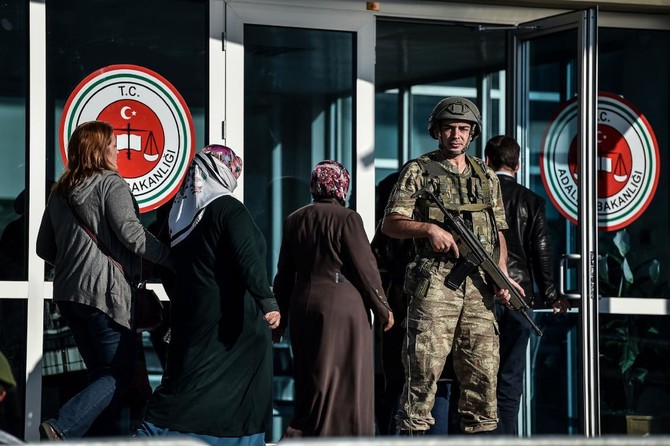
A total of 143 suspects, including 30 officers, appeared in court. All the suspects barring eight are being held under arrest.
They are accused of crimes ranging from murder to attempting to overthrow the parliament and the government, according to the 1,052-page indictment.
If convicted, the suspects each face 37 life sentences, according to the state-run Anadolu news agency.
Many civilians rushed to the bridge on the night of the coup, heeding Erdogan’s call to quash the putsch bid, but the renegade soldiers then shot at them.
Fatmanur Goksu, 24, was one of those shot on the bridge as well as her father.
“The same bullet hit my arm and then my father’s,” she told AFP outside the court, where some of the victims’ relatives gathered wearing T-shirts with the word “martyr” and the name of their dead loved one.
Goksu said she got out onto the streets “without any second thought” after Erdogan’s call.
Thirty-four civilians and seven coup plotters were killed on the Bosphorus bridge, according to the indictment.
But by the early morning hours, the soldiers surrendered to police, laying down their arms on the bridge and raising their hands in an enduring image of the coup’s defeat.
Erdogan attended the funeral of the Olcoks and others two days after the coup bid, weeping openly in a rare show of emotion.
“We’re here today to settle accounts with those who attempted to invade our country,” Mahir Unal, ruling Justice and Development Party (AKP) spokesman told reporters before the trial began.
Monday’s trial is one of several legal processes seeking to bring to justice those believed to have played a role in the coup bid which left 249 people dead, not including the putschists.
Veysel Kilic, the father of one of the military academy students being held, said he did not have any hope in the “unsound” justice system.
Kilic took part in the main opposition leader Kemal Kilicdarogu’s month-long foot march in July to protest against alleged injustices under Erdogan.
Like many relatives, Kilic said his air force academy student son was “deceived” and “told to join an unplanned exercise to measure their obedience to their commander.”
“The students were totally unaware. They did not fire. Those children remained neutral,” adding that more would have been killed if the students had taken sides.
Last week, a court in southwestern Turkey handed life sentences to 40 people convicted of plotting to assassinate Erdogan at an Aegean hotel.
Erdogan has vowed to purge all state institutions to clean the “virus” of US-based Muslim preacher Fethullah Gulen whom his government blames for the putsch.
The cleric, who lives in Pennsylvania, has denied any involvement.
Over 50,000 people have been arrested since last July, accused of links to the Gulen movement, while more than 140,000 public sector employees have been sacked or suspended.


![]()
Almost 150 go on trial over Turkey coup bridge massacre
Almost 150 go on trial over Turkey coup bridge massacre


Latest updates


Recommended


© 2026 SAUDI RESEARCH & PUBLISHING COMPANY, All Rights Reserved And subject to Terms of Use Agreement.