BERLIN: The Alternative for Germany (AfD) claims to be a force of “patriots” but some of its new lawmakers have shocked with xenophobic and revisionist comments and have been linked to far-right groups.
The AfD is the first hard-right nationalist party to enter the German Bundestag in large numbers in the post-World War II era, an epochal event that stunned most Germans.
Since the party’s breakthrough in Sunday’s vote, the country has been scrutinizing the biographies of the often little-known newcomers, elected on a platform of rejecting migrants, Muslims and Chancellor Angela Merkel.
Among them are police officers, prosecutors and judges, academics and business leaders, soldiers and scientists, a one-time radio host, an undertaker and a former fighter pilot.
A disproportionate number are from Germany’s ex-communist and poorer east, where the AfD was the number one party for male voters and won outright in the state of Saxony.
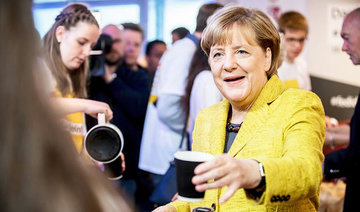
The AfD rails against “traitor” Merkel as public enemy number one, for opening German borders to an “invasion” of more than one million migrants since 2015.
Some MPs have links to PEGIDA, short for Patriots Against the Islamization of the Occident, a street movement that emerged in the Saxony state capital of Dresden.
Other lawmakers have reported links to shadowy fraternities, football hooligans, Russian ultra-nationalists and the nativist Identitarian Movement, which is being watched by the BfV domestic security service.
One has reportedly driven a car with “AH1818” on its number plates, the Tagesspiegel daily wrote — neo-Nazi code for Adolf Hitler’s initials, followed by the number of those letters in the alphabet, listed twice.
And Jens Maier, a judge in Dresden, has drawn fire for voicing a degree of understanding for Norwegian mass murderer Anders Breivik, reportedly saying that he had acted “out of desperation” over multiculturalism when he killed 77 people in 2011.
Still giddy from the election, which made the AfD Germany’s third strongest party, its 93 freshly baked lawmakers gathered this week in a modernist concrete-and-steel annex building to the glass-domed Reichstag that is still pockmarked from Word War II battles.
Lawmaker number 94 stayed away — Frauke Petry, the former face of the AfD, had theatrically walked out of a party press conference the day before to protest against its bitter infighting and radicalization.
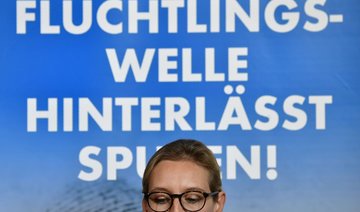
Co-Leader Beatrix von Storch, picking up her new parliamentary ID card, said it was time for the party to “get to work.”
Asked whether the AfD, with slogans like “Bikinis not Burkas,” is far right, she replied: “We want to cap refugee numbers, we are against Islamization, we want to preserve our culture, we want to protect our borders.
“We are for the classic family unit, we don’t want a United States of Europe, but a Europe of fatherlands. I think these are perfectly normal topics.”
The MPs include at least 13 with ultra-right views, 30 “nationalist-conservatives,” and 18 comparative “moderates,” according to a count by Die Zeit weekly, which said the allegiances of others were unclear.
Among the new MPs is Leif-Erik Holm, 47, a former radio host who has claimed Germany is being turned “into a caliphate,” and who ran against Merkel in her Baltic Coast electorate.
Merkel lost a lot of votes, he said, but “beating her would have been the icing on the cake.”
Some members are veterans of the AfD’s founding days in 2013, when it railed mainly against eurozone bailouts to crisis-hit Greece.
Others call for tougher law and order, traditional “family values” and fighting against what they consider a left-leaning establishment spreading its lies via a complicit media.
On the far right, leaders have shocked with taboo-breaking comments that challenge Germany’s culture of atonement over World War II and the Holocaust.
One is co-leader Alexander Gauland, 75, a defector from Merkel’s conservative bloc, who has urged Germans to be proud of their veterans from two world wars.
Another, Martin Renner, has criticized Germany’s “guilt cult.”
Asked about the comment, he stuck by the phrase but added that he had only learnt later that it was commonly used by the far-right and anti-Semitic NPD party.
Dozens of members are close to regional party leader Bjoern Hoecke, who has demanded “a 180-degree turn” in Germany’s culture of remembrance and called Berlin’s Holocaust monument a “memorial of shame.”


![]()

Anti-migrant, revisionist: Germany’s hard-right AfD
Anti-migrant, revisionist: Germany’s hard-right AfD
Latest updates


© 2026 SAUDI RESEARCH & PUBLISHING COMPANY, All Rights Reserved And subject to Terms of Use Agreement.