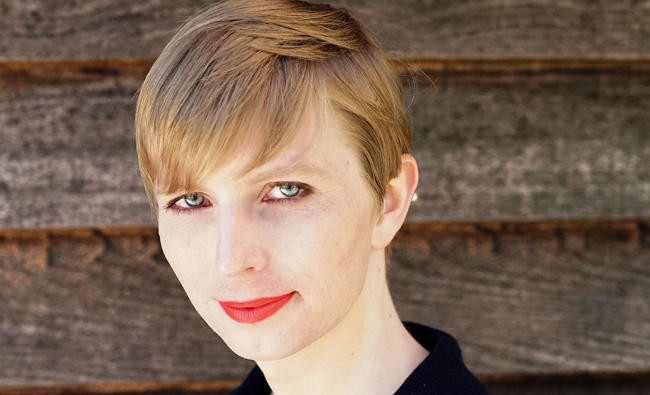
OTTAWA, Ontario: Chelsea Manning said Monday she was denied entry into Canada because of her criminal record in the United States.
The transgender woman was known as Bradley Manning when she was convicted in 2013 of leaking a trove of classified documents. She was released after serving seven years of a 35-year sentence, which was commuted by President Barack Obama in his final days in office.
On Monday, she posted a letter from Canadian immigration officials to her Twitter account that said she was not admitted because she was convicted of offenses deemed equivalent to treason in Canada. She had tried to cross at the official border office at Lacolle, Quebec, on Friday.
Manning said she would challenge the decision.
Canadian Public Safety Minister Ralph Goodale suggested Monday that he would think hard before overruling a border officer’s decision.
“No such request has been made to me with respect to that matter,” Goodale said. “And, when a Canada Border Services officer has exercised appropriately within their jurisdiction the judgment that they are called upon to make, I don’t interfere in that process in any kind of a light or cavalier manner.”
People whose criminal records make them ineligible to enter Canada aren’t necessarily out of luck. They can apply for what is known as a “temporary residency permit,” either before trying to enter the country or at the border. To be eligible, the person has to prove their need to enter or stay in Canada outweighs any risk they might pose to Canadian society.
Whether Manning attempted to apply for such a permit is unknown.
Immigration lawyer Peter Edelmann said either the minister of public safety or immigration could also step into allow her to enter Canada, perhaps on humanitarian grounds. “Both ministers could make an exception if they wanted,” he said.
Prime Minister Justin Trudeau declined to comment on the case, saying he wanted further details.

Chelsea Manning says she was denied entry to Canada
France’s screen siren Brigitte Bardot dies at 91
- French PM Emmanuel Macron hails the actor as a legend who 'embodied a life of freedom'
- Film star also courted controversy, embracing far-right views in her later years
PARIS: French film sensation Brigitte Bardot, a symbol of sexual liberation in the 1950s and 1960s who reinvented herself as an animal rights defender and embraced far-right views, died on Sunday aged 91, her foundation said.
She died in her Saint-Tropez home, La Madrague, on the French Riviera.
“The Brigitte Bardot Foundation announces with immense sadness the death of its founder and president, Madame Brigitte Bardot, a world-renowned actor and singer, who chose to abandon her prestigious career to dedicate her life and energy to animal welfare and her foundation,” it said in a statement sent to AFP.
The cause of death was not given. But Bardot was briefly hospitalized in October for what her office called a “minor” procedure. Bardot at the time had lambasted “idiot” Internet users for speculation that she had died.
Tributes were immediately paid to the star who was known as “BB” in her home country, with President Emmanuel Macron calling her a “legend” of the 20th century.
Born on September 28, 1934 in Paris, Bardot was raised in a well-off traditional Catholic household. Married four times, she had one child, Nicolas-Jacques Charrier, with her second husband, actor Jacques Charrier.
Bardot became a global star after appearing in “And God created Woman” in 1956, and went on to appear in about 50 more movies before giving up acting in 1973.
She turned her back on celebrity to look after abandoned animals, saying she was “sick of being beautiful every day.”
Far-right leanings
“With her films, her voice, her dazzling glory, her initials (BB), her sorrows, her generous passion for animals, and her face that became Marianne, Brigitte Bardot embodied a life of freedom,” Macron wrote on X, referring to the Marianne image used as the female symbol of the French republic.
His tribute, though, made no reference of Bardot’s alignment with far-right views in her post-cinema years, which alienated many of her fans.
Bardot was convicted five times for hate speech, mostly about Muslims, but also the inhabitants of the French island of Reunion whom she described as “savages.”
A supporter of far-right politician Marine Le Pen, Bardot declared herself “against the Islamization of France” in a 2003 book, citing “our ancestors, our grandfathers, our fathers have for centuries given their lives to push out successive invaders.”
The head of Le Pen’s far-right National Rally party, Jordan Bardella, was among the first to pay homage.
“Today the French people have lost the Marianne they so loved,” he wrote on X, calling her an “ardent patriot.”
Le Pen, who has been barred from public office pending an appeal trial in January, also paid tribute to Bardot as “incredibly French: free, untamable, whole.”
In her final book, Mon BBcedaire (“My BB Alphabet“), published weeks before her death, Bardot fired barbs at what she described as a “dull, sad, submissive” France and at her home town of Saint-Tropez, now packed with the wealthy tourists she helped attract.
The book also contained derogatory remarks about gay and transgender people.
Saint-Tropez retreat
After retiring from cinema, Bardot withdrew to her home in the Riviera resort of Saint-Tropez where she devoted herself to fighting for animals.
Her calling apparently came when she encountered a goat on the set of her final film, “The Edifying and Joyous Story of Colinot.” To save it from being killed, she bought the animal and kept it in her hotel room.
Bardot went on to found the Brigitte Bardot Foundation in 1986, which now has 70,000 donors and around 300 employees, according to its website.
“I’m very proud of the first chapter of my life,” she told AFP in a 2024 interview ahead of her 90th birthday.
“It gave me fame, and that fame allows me to protect animals — the only cause that truly matters to me.”
She added that she lived in “silent solitude” in her home “La Madrague,” surrounded by nature and content to be “fleeing humanity.”
On the subject of death, she warned that she wanted to avoid the presence of “a crowd of idiots” at her funeral and wished for a simple wooden cross above her grave, in her garden — the same as for her animals.
She died in her Saint-Tropez home, La Madrague, on the French Riviera.
“The Brigitte Bardot Foundation announces with immense sadness the death of its founder and president, Madame Brigitte Bardot, a world-renowned actor and singer, who chose to abandon her prestigious career to dedicate her life and energy to animal welfare and her foundation,” it said in a statement sent to AFP.
The cause of death was not given. But Bardot was briefly hospitalized in October for what her office called a “minor” procedure. Bardot at the time had lambasted “idiot” Internet users for speculation that she had died.
Tributes were immediately paid to the star who was known as “BB” in her home country, with President Emmanuel Macron calling her a “legend” of the 20th century.
Born on September 28, 1934 in Paris, Bardot was raised in a well-off traditional Catholic household. Married four times, she had one child, Nicolas-Jacques Charrier, with her second husband, actor Jacques Charrier.
Bardot became a global star after appearing in “And God created Woman” in 1956, and went on to appear in about 50 more movies before giving up acting in 1973.
She turned her back on celebrity to look after abandoned animals, saying she was “sick of being beautiful every day.”
Far-right leanings
“With her films, her voice, her dazzling glory, her initials (BB), her sorrows, her generous passion for animals, and her face that became Marianne, Brigitte Bardot embodied a life of freedom,” Macron wrote on X, referring to the Marianne image used as the female symbol of the French republic.
His tribute, though, made no reference of Bardot’s alignment with far-right views in her post-cinema years, which alienated many of her fans.
Bardot was convicted five times for hate speech, mostly about Muslims, but also the inhabitants of the French island of Reunion whom she described as “savages.”
A supporter of far-right politician Marine Le Pen, Bardot declared herself “against the Islamization of France” in a 2003 book, citing “our ancestors, our grandfathers, our fathers have for centuries given their lives to push out successive invaders.”
The head of Le Pen’s far-right National Rally party, Jordan Bardella, was among the first to pay homage.
“Today the French people have lost the Marianne they so loved,” he wrote on X, calling her an “ardent patriot.”
Le Pen, who has been barred from public office pending an appeal trial in January, also paid tribute to Bardot as “incredibly French: free, untamable, whole.”
In her final book, Mon BBcedaire (“My BB Alphabet“), published weeks before her death, Bardot fired barbs at what she described as a “dull, sad, submissive” France and at her home town of Saint-Tropez, now packed with the wealthy tourists she helped attract.
The book also contained derogatory remarks about gay and transgender people.
Saint-Tropez retreat
After retiring from cinema, Bardot withdrew to her home in the Riviera resort of Saint-Tropez where she devoted herself to fighting for animals.
Her calling apparently came when she encountered a goat on the set of her final film, “The Edifying and Joyous Story of Colinot.” To save it from being killed, she bought the animal and kept it in her hotel room.
Bardot went on to found the Brigitte Bardot Foundation in 1986, which now has 70,000 donors and around 300 employees, according to its website.
“I’m very proud of the first chapter of my life,” she told AFP in a 2024 interview ahead of her 90th birthday.
“It gave me fame, and that fame allows me to protect animals — the only cause that truly matters to me.”
She added that she lived in “silent solitude” in her home “La Madrague,” surrounded by nature and content to be “fleeing humanity.”
On the subject of death, she warned that she wanted to avoid the presence of “a crowd of idiots” at her funeral and wished for a simple wooden cross above her grave, in her garden — the same as for her animals.
© 2025 SAUDI RESEARCH & PUBLISHING COMPANY, All Rights Reserved And subject to Terms of Use Agreement.