IRBIL, Iraq: Iraqi Kurds started voting in an independence referendum Monday in defiance of Baghdad which has warned of “measures” to defend Iraq’s unity and threatened to deprive their region of lifeline oil revenues.
The non-binding vote on the Kurds’ long-cherished dream of independence, initiated by veteran leader Masoud Barzani, has angered not only the federal government but also neighboring Turkey and Iran, concerned it could stoke separatist aspirations among their own sizeable Kurdish minorities.
Polling stations are scattered across the three northern provinces of autonomous Iraqi Kurdistan — Irbil, Sulaimaniyah and Dohuk — as well as in disputed bordering zones such as the oil-rich province of Kirkuk.
In Sulaimaniyah, second city of the autonomous region, 40-year-old Diyar Omar came to cast his vote wearing traditional Kurdish clothes.
“We will seize our independence through the polls. I’m delighted to be the first voter,” he said as he arrived at a polling station in the city.
“I’m so happy I could take part in this independence vote during my lifetime,” he added.
Outside a polling station in regional capital Irbil, voters formed a long queue from early morning, most dressed in traditional clothes for the occasion.
“I came very early to be the first to vote for a Kurdish state,” Diyar Abubakr, 33, said.
“It’s a day of celebration today. That’s why I’ve put on our traditional outfit, which I bought for the occasion,” he said.
One voter even brought a cow to slaughter before the start of the referendum.
“I brought this cow as today the state is born and it’s tradition to slaughter a cow for a birth,” Dalgash Abdallah, 27, said.
A total of 12,072 polling stations for the more than 5.3 million registered voters are to stay open for 12 hours.
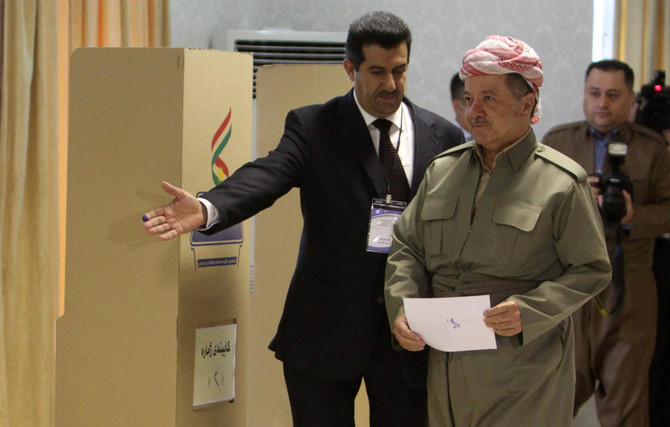
Barzani, smiling and wearing a traditional outfit, cast his vote early in the morning, Kurdish news agency Rudaw said.
In disputed Kirkuk, mosque loudspeakers blared out calls for residents to take part in the vote.
Initial results are expected to be announced 24 hours after the vote but an overwhelming “Yes” outcome is not in doubt, with Kurdish flags festooned in all the streets, on cars and outside homes across Iraqi Kurdistan.
As Barzani pledged on Sunday to go ahead with the historic referendum after having resisted a barrage of international pressure to call it off, Iraq’s leader pledged to take all the “necessary measures” to protect the country’s unity and his government targeted the Kurds’ oil sales.
Prime Minister Haider Al-Abadi said that taking the Kurds’ unilateral decision to stage a referendum affected both Iraqi and regional security, and was “unconstitutional and against civil peace.”
“We will take the necessary measures to preserve the unity of the country,” he said, without elaborating.
Hours later, the Iraqi government at a meeting of its security cabinet called on all countries “to deal only with it on matters of oil and borders.”
The Iraqi Kurds export an average 600,000 barrels per day (bpd) through a pipeline running through Turkey to Ceyhan on the Mediterranean.
Tehran also upped the pressure on Sunday, saying it had blocked all flights to and from Iraqi Kurdistan at Baghdad’s request.
Washington and many Western states had opposed the vote, saying it would hamper the fight against the Islamic State jihadist group in which cooperation between Baghdad and the Kurds has been key.
But Barzani said the Kurds’ “partnership with Baghdad” since the ousted of dictator Saddam Hussein in the 2003 US-led invasion had failed and urged his people to turn out and vote.
“We expect reactions from one side or another but we are convinced that whatever the risk and the price, it’s better than waiting for a dark outcome,” he said.
“The referendum is not for defining borders or imposing a fait accompli. We want a dialogue with Baghdad to resolve the problems, and the dialogue can last one or two years,” Barzani said of zones such as Kirkuk.


![]()
Iraq Kurds in historic independence vote in defiance of Baghdad
Iraq Kurds in historic independence vote in defiance of Baghdad
Latest updates



Recommended


© 2026 SAUDI RESEARCH & PUBLISHING COMPANY, All Rights Reserved And subject to Terms of Use Agreement.